



Namibia is widely hailed for its conservation successes, from thriving wildlife populations to community-based natural resource management.
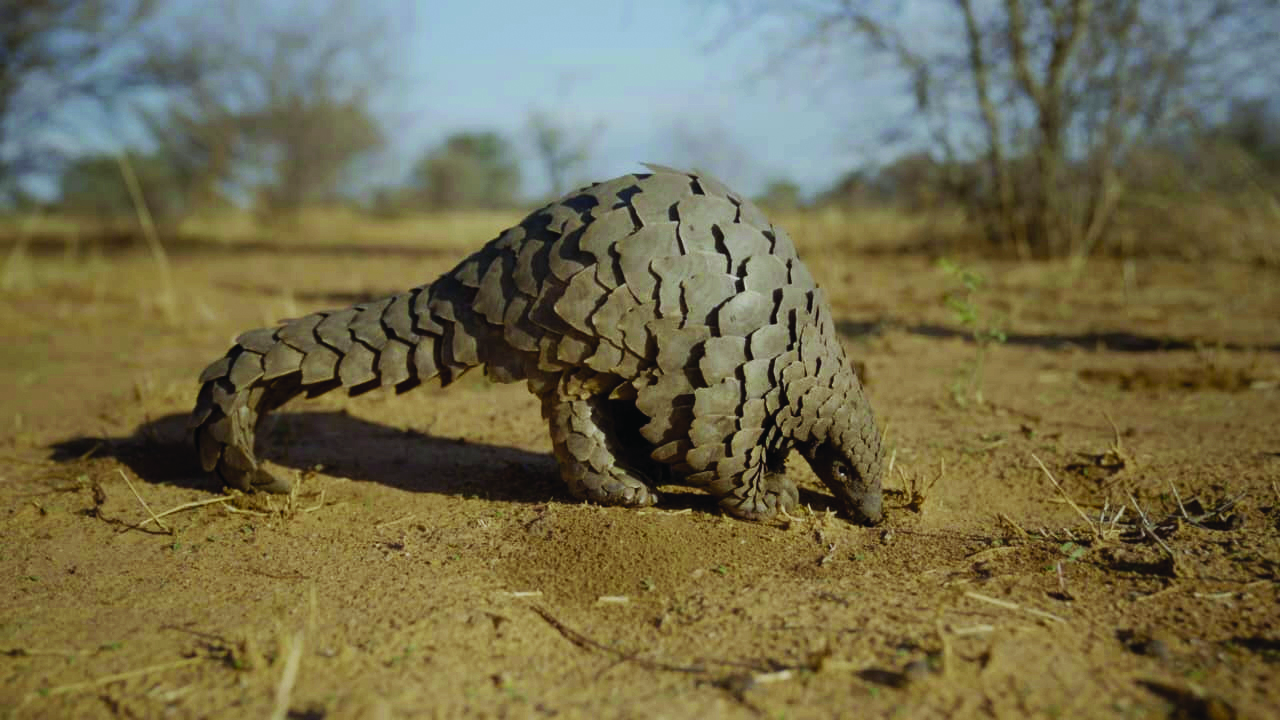
Yet one of the world’s most trafficked and least understood mammals continues to quietly fight for survival: the Temminck’s ground pangolin.
Beyond their vulnerability, pangolins play a crucial ecological role. A single pangolin can consume up to 15 000 ants and termites in one night, helping regulate insect populations that could otherwise damage crops and grazing lands.
“Having a healthy pangolin population reduces crop loss and improves grass availability for livestock and wildlife,” says wildlife biologist Kelsey Prediger. “Without them, ecosystems lose balance.”
Pangolins occur across much of Namibia but are absent from true desert regions. At this year’s World Pangolin Day commemoration in Windhoek, grief, responsibility and resilience took centre stage as Prediger underscored the progress and the painful setbacks in the fight to protect the species.
VANISHING IN SILENCE
Prediger, founder of the Pangolin Conservation and Research Foundation (PCRF), spoke candidly about the animals her team could not save and how those losses help shape a stronger, science-driven response.
Poaching hotspots include parts of the Kavango-Zambezi region, where there have been multiple live rescues and confiscations in recent months.
“We want to talk about success in conservation,” she told the audience. “But the truth is that the heartbreak shapes us more than we can imagine.”
She spoke of Rue, who died after six weeks of intensive care, and an unnamed female that passed away before reaching rehabilitation.
“Their lives mattered,” Prediger said. “And the only way to honour them is to ensure the next pangolin we rescue has a better chance.”
Since 2018, at least 650 pangolins have been poached in Namibia in cases linked to registered crimes. But Prediger warned the true figure could be significantly higher.
“For every rhino or elephant, there is a carcass left behind, a visible crime scene,” she said. “With pangolins, there is no carcass in the open, no tusks to count. They simply vanish.”
Namibia’s average rhino horn recovery rate is around 18%. If a similar recovery rate applies to pangolins, the 650 confirmed cases could represent closer to 3 600 animals removed from the wild.
“When a species is nocturnal, elusive and naturally rare, and there is limited funding to understand what populations are left, the scale of removal is unknown and catastrophic,” Prediger said.
Since 2014, pangolins have been the most trafficked mammals in the world. Their scales and body parts are used in traditional medicine in parts of Asia, and in some cultures the meat is considered a delicacy.
“In Africa, traditional beliefs have never put the species under this level of pressure. The demand is largely driven by Asian markets,” Prediger said.
PCRF has responded to 46 rescued pangolins nationwide over the past four years.
Initially, survival rates after rescue and release were 40%. Since 2023, that figure has risen to more than 90%.
“It’s not luck,” she said to applause. “It’s science, partnership and commitment.”
ONE HEALTH’ CONCEPT
Improved veterinary care, structured rehabilitation protocols and post-release monitoring using GPS transmitters have dramatically increased survival rates.
“Because pangolins are territorial, we track them closely. Even months later, if one heads toward a main road, we can intervene to keep it safe.”
PCRF now holds spatial data from more than 60 wild pangolins across different habitats, which helps inform better release decisions and long-term conservation planning.
On one study site, PCRF and its ‘pangolin guardians’ – local citizen scientists – documented 950 species in just three years through biodiversity surveys. Some species identified may even be new to science.
“Who would be looking for those species if we weren’t there?” she asked.
Prediger linked pangolin protection to broader economic and environmental sustainability, referencing the One Health concept, which recognises the interconnectedness of people, wildlife and ecosystems.
“You cannot have healthy populations without healthy ecosystems,” she said. “Protecting pangolins is about protecting natural capital, sustainability and economic resilience.”
PCRF aims to expand its project to high-risk areas. It is close to establishing a dedicated rehabilitation and research centre after years of operating from rented land and limited facilities.
“We’ve had six rangers and four team members caring for up to five pangolins at a time in a two-bedroom apartment,” Prediger noted. “For most of these years, it was me, myself and my car, living out of my car to respond to rescues.”
Future plans include strengthening rapid response capacity, finalising national rehabilitation guidelines, supporting the release of a National Species Plan, and building the next generation of Namibian conservation scientists through internships and training programmes.
CALL TO ACTION
Prediger called for collective responsibility. “We don’t just exist to save animals in crisis,” she said. “We exist to change the systems that put them in crisis.”
She urged businesses, conservancies, tourism operators and citizens to support science-based conservation and invest in partnerships that demonstrate measurable impact.
“Don’t just admire pangolins,” she said. “Stand with them.”
The message is clear: behind the quiet, curled silhouette of one of Africa’s most elusive mammals lies a battle against a largely invisible trade and a growing movement determined to ensure the species does not vanish in silence.
In an age of information overload, Sunrise is The Namibian’s morning briefing, delivered at 6h00 from Monday to Friday. It offers a curated rundown of the most important stories from the past 24 hours – occasionally with a light, witty touch. It’s an essential way to stay informed. Subscribe and join our newsletter community.

The Namibian uses AI tools to assist with improved quality, accuracy and efficiency, while maintaining editorial oversight and journalistic integrity.
Stay informed with The Namibian – your source for credible journalism. Get in-depth reporting and opinions for
only N$85 a month. Invest in journalism, invest in democracy –
Subscribe Now!