




BLANTYRE – Malawi has one of the world’s highest rates of HIV, with sex workers considerably more likely to contract the infection. Rates of unwanted pregnancy and sexually transmitted infections are also high.
Since 2014, medical charity Medecins Sans Frontieres (MSF) has been working with Malawi’s ministry of health and partners to increase healthcare for sex workers, including access to condoms and PEP (post-exposure prophylaxis), a drug which reduces the risk of HIV transmission.
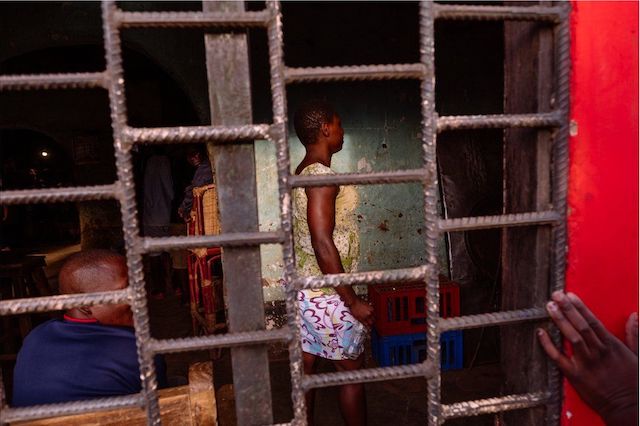
Isabel Corthier took portraits of some of the women, obscuring their identity, and MSF’s Kate Ribet talked to them about their stories, and to some of the MSF workers.
The names of the sex workers have been changed to protect their identity.
Bernadette was born in a family of 11. She lost her parents when she was seven years old, and was raised by her sister, and later by her grandparents.
With little financial support from her family, she found herself going hungry at school and started having sex in exchange for food, pens and books. She soon fell pregnant, and dropped out of school at 18.
Today, she is a mother of six children. Her last partner was abusive and left her destitute, so she turned to selling sex in 2018, seeing it as the best option to survive.
“I heard of MSF’s services in November 2018 when their staff came to the bar to share information and screening about STIs and HIV,” she says.
“This was the very first time I was given information on issues like HIV testing, sexual health. Before this, I didn’t know anything. I felt liberated, happy, because I was hearing things I never knew about.
“With these services, I feel more empowered than before and I’m able to negotiate protection with clients. I know how to put a condom on properly and we now have lubricant which prevents accidents.”
Maria (36) was married for 11 years, selling farm produce with her husband. After suffering years of abuse, Maria was abandoned by her husband. Struggling to support herself and her young daughter, she turned to sex work.
“Sometimes clients will be violent or they won’t pay,” she says. “Two years ago, I had a client. We slept together but afterwards he didn’t pay.
“During sex, he deliberately broke his condom. Things got violent and he knocked out my front tooth. And then afterwards he wouldn’t pay.”
“Before MSF came here, we were being called whores and prostitutes. If we went to the police, they would send us away.
“Now we can get medication at the hospital without any problems.”
Adeline started as a community health worker in February 2015.
“As a community health worker, I’ve learned to take care of myself as a person and to live a healthy life,” she says.
“Having knowledge means you can go to the hospital to get medical attention, you can do your job (as a sex worker) and help your family and community.”
Adeline has been a sex worker since 2005. Previously she had been married with two children, but after her divorce she found she could not support her family.
She says: “A friend came to me and said, ‘Why are you suffering? There’s this alternative. You can make money with sex work’.
“I tried it and realised that I was making more than other ways to make money. So I decided to take this route.”
But sex work comes with risks, she adds.
“In 2007, I was working in Blantyre one night and a group of men beat me and my friend up. They left us naked with nothing.
“Another time, a client raped me during a session. I never went to the police. The guy was well known in the area and had raped other women and would come after those who reported it. It was better to just keep quiet, so I did nothing.”
Chrissie has worked as part of the sex-worker project for two years.
“For someone to say, ‘I’m a sex worker’ can be difficult because of the culture, the stigma, the discrimination that goes with it.
Chrissie explains the perceived difference between types of sex workers in Malawi.
“Most people mean ‘commercial’ sex workers when they talk about sex work, because it’s a job for her. She wakes up, gets dressed and goes to find a customer.
“But for the ‘transactional’ sex worker, she might be working-class, going to her normal job, and having multiple partners in exchange for goods, but she won’t accept that she’s a sex worker.
In an age of information overload, Sunrise is The Namibian’s morning briefing, delivered at 6h00 from Monday to Friday. It offers a curated rundown of the most important stories from the past 24 hours – occasionally with a light, witty touch. It’s an essential way to stay informed. Subscribe and join our newsletter community.

The Namibian uses AI tools to assist with improved quality, accuracy and efficiency, while maintaining editorial oversight and journalistic integrity.
Stay informed with The Namibian – your source for credible journalism. Get in-depth reporting and opinions for
only N$85 a month. Invest in journalism, invest in democracy –
Subscribe Now!