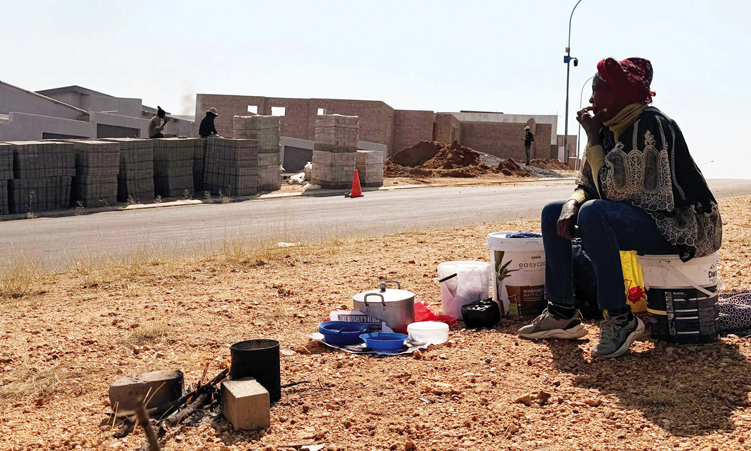






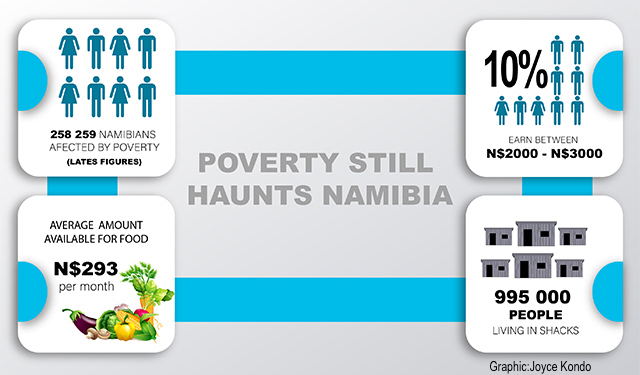
OVER 10% of the Namibian population is living in abject poverty, translating to about 258 259 people affected, the latest figures have shown.
Although these are 2016 figures, they are the latest figures, which showed a drop of more than half when compared to the 21,9% seen in 2004.
The Namibia Statistics Agency (NSA)’s Labour Force Survey for 2018 launched in May this year showed that Namibia’s population was approximately 2,4 million.
The overall poverty rate stood at 17,4% in 2016, a significant drop from the 37,7% recorded in 2004.
The poverty figures were according to the sustainable development goals’ (SDGs) baseline report for Namibia for 2019, launched on Tuesday by the NSA.
Namibia’s extreme poverty line stands at N$293 per month for food for households. This is the average amount available to families to live on per month.
The SDG baseline report stated that as economic growth after 2016 has been declining, currently standing at -2% during the first quarter of 2019, it is not certain whether the poverty decline will continue. However, it stated that the overall picture is promising.
Social expert Herbert Jauch said poverty is difficult to account for because it is measured against the set national poverty rate, and does not look at the actual cost of living of Namibians.
He said an individual or household can thus be out of the poverty line, but they would still be poor as they fail to meet their basic monthly needs.
“The SDG report may show that more Namibians are moving out of poverty, but it might not have taken into consideration the cost of living of those who are statistically out of poverty,” Jauch added.
Meanwhile, statistics by the Shack Dwellers Federation of Namibia for 2018 stated that 995 000 people are living in shacks in the urban centres of the country.
There are 308 informal settlements in Namibia’s urban areas, with about 228 000 shacks.
The latest Namibia Financial Inclusion Survey 2017, launched in August last year, showed that the percentage of Namibians who earn less than N$1 000 monthly stood at 33%, compared to the 9,7% of Namibians who earn over N$11 000.
Moreover, the percentage of Namibians who earn between N$1 001 and N$2 000 was 29,1%, the second-highest figure, followed by 10% of adult Namibians, who earn between N$2 000 and N$3 000. Additionally, the country’s unemployment rate is recorded at 33,4%.
According to the SDG report, Namibia’s poverty rate has not been declining further in recent years, while in some groups, it has slightly increased because of economic stagnation.
The rate remained stagnant after Namibia achieved the first millennium development goal in 2013, according to the National Planning Commission.
From 2013 to 2017, the poverty rate was stagnant between 10% and 11%.
This poverty drop was in line with the first SDG, which is ‘End poverty in all its forms everywhere’, of which Namibia covered nine out of the 14 indicators under this goal.
“Namibia has reached the status of an upper-middle-income country, which correlates with a significant reduction of poverty since independence. Despite the recent stagnation in poverty reduction, the proportion of people living in improvised houses and the food poverty rate declined moderately,” said the report.
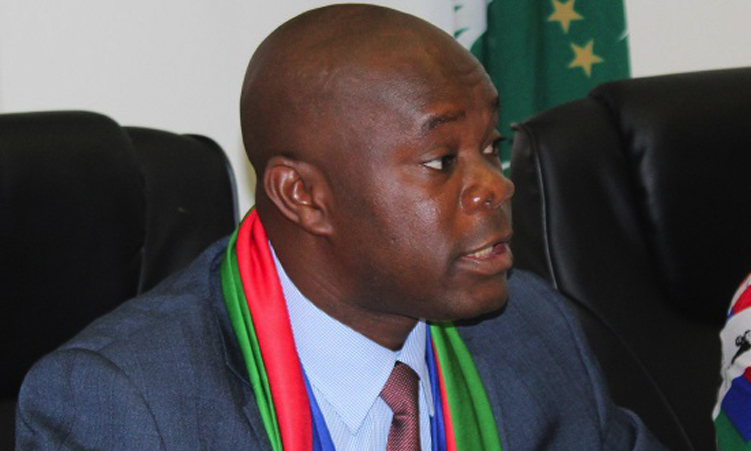
Economic planning minister Obeth Kandjoze, during the report launch, said the global community, through the SDGs, is determined to end poverty and hunger in all forms and dimensions, and ensure that human beings can live to their potential dignity and equality in a healthy, sustainable environment.
“SDGs also aim to ensure that all humans enjoy prosperous lives through economic, social and technological progress in harmony with nature, and further foster peaceful, just and inclusive societies as no sustainable development occurs without peace,” he noted.
The minister said Namibia has covered roughly 70% of the SDG indicators through national and international sources, and although it is a substantial level of data available, “I believe that more frequent information is available in the country, and we, the government, must take action to ensure that this information is shared and made available broadly.”
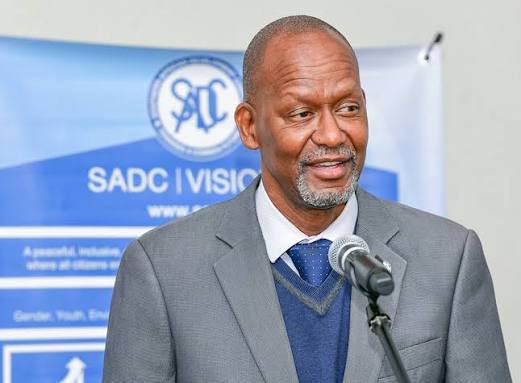
Speaking on the report also during its launch, NSA statistician general Alex Shimuafeni said it will serve as a reference on how Namibia is monitoring the SDGs until 2030, and the progress towards the achievement of the targets.
He added that further investigations are necessary in the next few years on how to broaden the monitoring scope best in terms of horizontal and vertical data groups.
“Despite the challenges, I am proud to inform the nation that in general, substantial data speaking to the SDGs’ indicators are produced in Namibia,” Shimuafeni said.
– charmaine@namibian.com.na; Twitter: Char-Ngatjiheue.