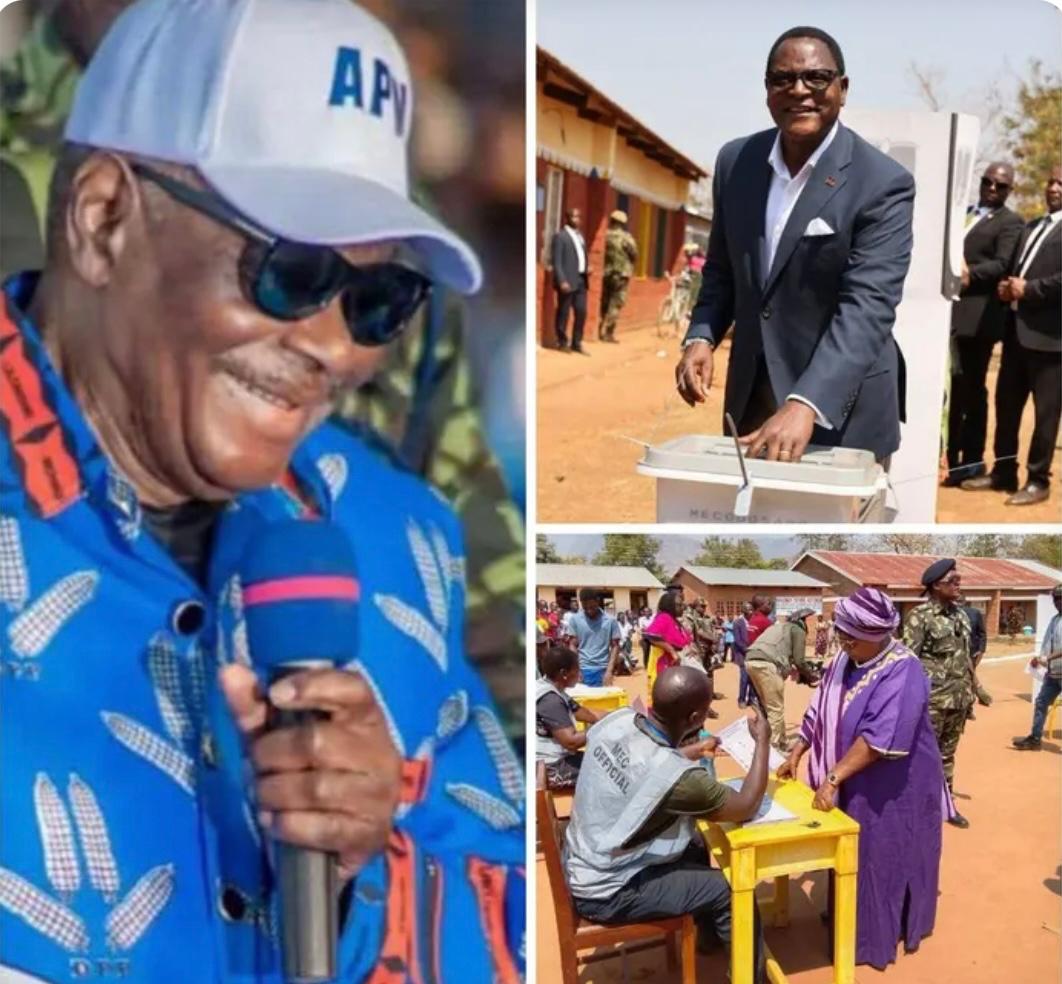
As Malawians and other Africans eagerly await the results of Tuesday’s elections, where people queued to elect the president, members of the National Assembly and local government councillors, a political analyst says “very old” leaders weaken democracy.
Analysts say the election was a two-horse race between incumbent president Lazarus Chakwera (70) of the Malawi Congress Party (MCP), and his arch-rival, former president of Malawi Peter Mutharika (85) of the Democratic Progressive Party (DPP). Also in the tough race is another former president, Joyce Banda, aged 74.
The ages of the frontrunners in the elections have been a topic of discussion among voters and commentators, with concerns about leadership experience versus age and physical fitness.
Speaking to IOL, political commentator and international relations expert Gideon Chitanga said:
“You could say at the elite level, the top elite level, the highest level of leadership, we still have a lot of these geriatrics dominating structures of power. But the situation is changing. Botswana and Mozambique recently showed us that the demographic getting into these most influential positions is increasingly becoming younger people.
“I was also impressed when I looked at the composition of the cabinet and parliament in the government of Zimbabwe, including within the Zanu PF party. Interestingly, the top leadership could be older; we are talking about the president, the vice presidents and senior ministers, but they are fewer. The majority in parliament and in cabinet is an interesting balance with relatively young people. I am talking about people who are in their late 20s, 30s, 40s and those in their early 50s.”
Chitanga, a researcher at Maximilians Universitat Muchen, Germany, told IOL the transition towards younger leaders in influential political positions has also been seen in South Africa.
“The demographic proportion is a concern to the extent that the top leadership who wield the real power in African politics are still the elderly statesmen. We are seeing a gradual transition to a younger demography between 35 to 55, which is really great,” he said.
The elections in Malawi were held amid a severe economic crisis in the small, donor-dependent southern African nation, which relies significantly on foreign aid for its national budget and various sectors, including health.
Ahead of the elections, Malawian voters raised concerns about soaring inflation, food and fuel shortages, and a high cost of living.
The vote on Tuesday was the first national election since the 2019 presidential vote was annulled by a court due to widespread irregularities, which led to a historic rerun election in 2020 that Chakwera won.
According to Malawian electoral laws, a presidential candidate must win more than 50% of the vote. Vote counting is currently underway, and some analysts believe the election will likely go to a run-off between Chakwera and Mutharika.
Chitanga said disgruntlement is growing among the youth in Malawi.
“There is a perspective that the main candidates, that is president Chakwera and former president Mutharika, do not really give much in terms of raising optimism or the possibility of transforming the economic fortunes. This election faced the risk of increasing voter apathy among young people. This is a common trend around the continent, where the recycling of political elites who have failed to deliver or the people who are just too old is really eating into political participation, especially for young people.
“It also affects the role of elections in terms of strengthening democratic participation and economic participation. People view elections as an opportunity to choose leaders who can deliver and transform their fortunes, improving their economic conditions.
“In the case of Malawi, as is the case in other African countries where we have these very old people in power, or wanting to get into power, or the elites who have been in power but failed to deliver, they are increasingly implicated in corruption. They basically create conditions of security risks, weaken political legitimacy and obviously they aggravate mistrust of democracy as a system – a situation which can cause instability,” said Chitanga.
– IOL News, jonisayi.maromo@iol.co.za
In an age of information overload, Sunrise is The Namibian’s morning briefing, delivered at 6h00 from Monday to Friday. It offers a curated rundown of the most important stories from the past 24 hours – occasionally with a light, witty touch. It’s an essential way to stay informed. Subscribe and join our newsletter community.

The Namibian uses AI tools to assist with improved quality, accuracy and efficiency, while maintaining editorial oversight and journalistic integrity.
Stay informed with The Namibian – your source for credible journalism. Get in-depth reporting and opinions for
only N$85 a month. Invest in journalism, invest in democracy –
Subscribe Now!