



ERASTUS NGARUKAEVERY livestock farmer should strive for optimal productivity while keeping the cost of production down.
Fundamentally, productivity depends on the functionality and performance of the animal, the environmental characteristics, prevailing conditions, and the management regime.
In essence, this means the animals genetic abilities can be influenced by its environment and through human manipulation. Moreover, the production efficiency of any livestock enterprise is directly linked to the efficiency of livestock selection.
To maximise productivity, a livestock farmer should establish breeding objectives and goals, and implement a selection process that will meet the set objectives.
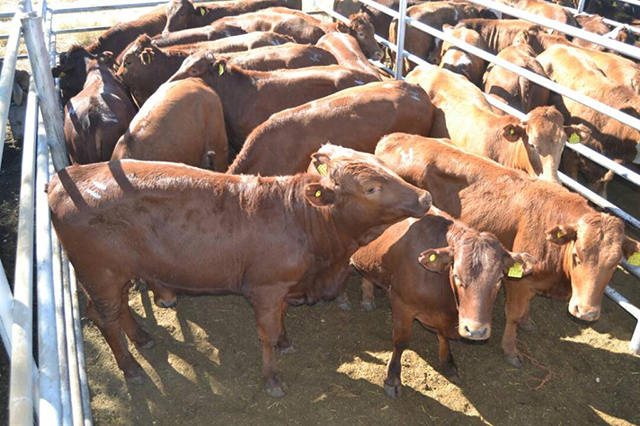
The purpose of livestock selection and breeding, among others, is to improve herd or flock productivity, for example, by targeting higher conception and birth rates, higher growth rates and weight gains to meet market demands, and ultimately, increase farm income.
There are several factors that hinder livestock improvement, and these include high costs and availability of improved breeding animals (bulls, rams, bucks, cows, ewes and does) that poses a challenge to many farmers.
Uncontrolled breeding practices: absence of selection, inbreeding, delayed castrations, and uncontrolled mating especially in communal areas.
Absence of livestock breeding and performance records.
With no records, it is difficult to trace or monitor livestock performance; these include breeding dates, birth weight, pregnancy, weaning weight, market weight, calving interval, etc.
Lack of skills, knowledge, and access to livestock breeding information, especially for upcoming farmers makes it difficult for them to adopt contemporary livestock improvement practices.Unfavourable climatic/and environmental conditions such as drought, floods, and extreme temperatures negatively affect livestock performance in terms of feed intake, breeding, and reproduction for example.
Selection is key to optimal livestock performance, and the objective is to retain and maintain superior breeding materials that will pass the most desired traits onto future generations.
To achieve that, three common approaches can be used in combination to complement each other to help the farmer make a well-informed decision to achieve the desired breeding goals.
These are: visual assessment (phenotypic): This type of selection is based on descriptive standards set to identify an ideal animal based on its physical soundness, for example the body conformation, posture, frame size, muscling, etc.
Genetic assessment (genotypic): This assessment is based on known inherited characteristics which are influenced by the animals genotype. This is done by advanced genetic evaluation methods such as estimated breeding value or expected progeny differences among others.
Classing and culling (visual and history): This is visual assessment of the animal, and the use of its performance history by looking at attributes such as the calving interval, birth defects or abortions, retained placentas, and prolapses.
When it comes to the selection of livestock breeds, farmers need to consider the environmental conditions and individual management abilities to ensure that animals performance potential is not compromised by the environment, or by weaknesses in the management regime.
To this end, what is expected is a productive and adaptive animal, and the management should complement this objective by fulfilling the animal requirements in terms of health and nutrition, and general animal welfare practices.
* Erastus Ngaruka is an Agribank technical adviser: livestock and rangeland management