



When two scientists went looking for fossil fuels beneath the ground of northeastern France, they did not expect to discover something which could supercharge the effort to tackle the climate crisis.
Jacques Pironon and Phillipe De Donato, both directors of research at France’s National Centre of Scientific Research, were assessing the amount of methane in the subsoils of the Lorraine mining basin using a ‘world-first’ specialised probe.
A couple of hundred metres down, the probe found low concentrations of hydrogen.
“This was not a real surprise for us,” Pironon has told CNN.
But as the probe went deeper, the concentration ticked up.
At 1 100m down it was 14%, at 1 250m it was 20%.
This was surprising, Pironon says.
It indicated the presence of a large reservoir of hydrogen beneath.
They ran calculations and estimated the deposit could contain between six million and 250 million tonnes of hydrogen.
This could make it one of the largest deposits of ‘white hydrogen’ ever discovered, Pironon says.
AS GOOD AS GOLD
White hydrogen – also referred to as ‘natural’, ‘gold’ or ‘geologic’ hydrogen – is naturally produced or present in the earth’s crust, and has become something of a climate holy grail.
Hydrogen produces only water when burned, making it very attractive as a potential clean energy source for industries like aviation, shipping and steel-making that need so much energy it’s almost impossible to meet through renewables such as solar and wind.
But hydrogen generally exists combined with other molecules.
Currently, commercial hydrogen is produced in an energy-intensive process almost entirely powered by fossil fuels.
The most promising from a climate perspective is ‘green’ hydrogen, made using renewable energy to split water.
Yet production remains small scale and expensive.
That’s why interest in white hydrogen, a potentially abundant, untapped source of clean-burning energy, has ratcheted up over the last few years.
‘NOT LOOKING IN THE RIGHT PLACES’
Geoffrey Ellis, a geochemist with the US Geological Survey, says: “Hydrogen’s out there, we know it’s around.”
But scientists used to think big accumulations weren’t possible.
Then he found out about Mali. Arguably, the catalyst for the current interest in white hydrogen can be traced to this West African country.
In 1987, in the village of Bourakébougou, a driller was left with burns after a water well unexpectedly exploded as he leaned over the edge of it while smoking a cigarette.
The well was swiftly plugged and abandoned until 2011, when it was unplugged by an oil and gas company and reportedly found to be producing a gas that was 98% hydrogen.
The hydrogen was used to power the village, and more than a decade later, it is still producing.
When a study came out about the well in 2018, it caught the attention of the science community, including Ellis.
His initial reaction was that there had to be something wrong with the research, “because we just know that this can’t happen.”
Then the pandemic hit and he had time on his hands to start digging.
The more he read, the more he realised “we haven’t been looking in the right places”.
The recent discoveries are exciting for Ellis, who has been working as a petroleum geochemist since the 1980s. He witnessed the rapid growth of the shale gas industry in the US, which revolutionised the energy market.
“Now,” he said, “here we are in what I think is probably a second revolution.”
White hydrogen is “very promising”, agrees Isabelle Moretti, a scientific researcher at the University of Pau et des Pays de l’Adour and the University of Sorbonne and a white hydrogen expert.
“Now the question is no longer about the resource… but where to find large economic reserves,” she tells CNN.
A SLEW OF START-UPS
Dozens of processes generate white hydrogen but there is still some uncertainty about how large natural deposits form.
White hydrogen deposits have been found throughout the world, including in the US, eastern Europe, Russia, Australia, Oman, as well as France and Mali.
Some have been discovered by accident, others by hunting for clues, like features in the landscapes – sometimes referred to as ‘fairy circles’ – shallow, elliptical depressions that can leak hydrogen.
Ellis estimates globally there could be tens of billions of tons of white hydrogen.
This would be vastly more than the 100 million tonnes a year of hydrogen that is currently produced and the 500 million tonnes predicted to be produced annually by 2050, he says.
“Most of this is almost certainly going to be in very small accumulations or very far offshore, or just too deep to actually be economic to produce,” he says.
But if just 1% can be found and produced, it would provide 500 million tonnes of hydrogen for 200 years, he says.
It’s a tantalising prospect for a slew of start-ups.
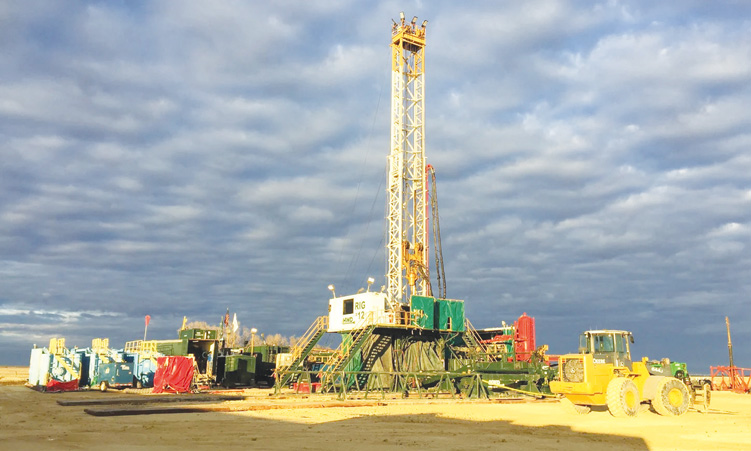
Australia-based Gold Hydrogen is currently drilling in the Yorke Peninsula in South Australia.
It targeted that spot after scouring the state’s archives and discovering that back in the 1920s, a number of boreholes had been drilled there which had very high concentrations of hydrogen.
The prospectors, only interested in fossil fuels, abandoned them.
“We’re very excited by what we’re seeing,” says managing director Neil McDonald.
There is more testing and drilling to do, but the company could get into early production possibly in late 2024, he tells CNN.
Some start-ups are seeing eye-popping investments.
Koloma, a Denver-based white hydrogen start-up, has secured US$91 million from investors, including the Bill Gates-founded investment firm Breakthrough Energy Ventures – although the company remains tight-lipped about exactly where in the US it is drilling and when it is aiming for commercialisation.
Another Denver-based company, Natural Hydrogen Energy, founded by geochemist Viacheslav Zgonnik, has completed an exploratory hydrogen borehole in Nebraska in 2019 and has plans for new wells.
The world is “very close to the first commercial projects,” Zgonnik says.
“Natural hydrogen is a solution which will allow us to get get to speed” on climate action, he says.
The challenge for these businesses and for scientists will be translating hypothetical promise into a commercial reality.
“There could be a period of decades where there’s a lot of trial and error and false starts,” Ellis says.
THE NEED FOR SPEED
But speed is vital.
“If it’s going to take us 200 years to develop the resource, that’s not really going to be of much use.”
But many of the start-ups are bullish.
Some predict years, not decades, to commercialisation. “We have all necessary technology we need, with some slight modifications,” Zgonnik says.
Challenges remain.
In some countries, regulations are an obstacle.
Costs also need to be worked out.
According to calculations based on the Mali well, white hydrogen could cost around US$1 per kilogramme to produce – compared to around US$6 per kilogramme for green hydrogen.
But white hydrogen could quickly become more expensive if large deposits require deeper drilling.
Back in the Lorraine basin, Pironon and De Donato’s next steps are to drill down to 3 000m to get a clearer idea of exactly how much white hydrogen there is.
There’s a long way to go, but it would be ironic if this region – once one of western Europe’s key coal producers – became an epicentre of a new white hydrogen industry.
– CNN