



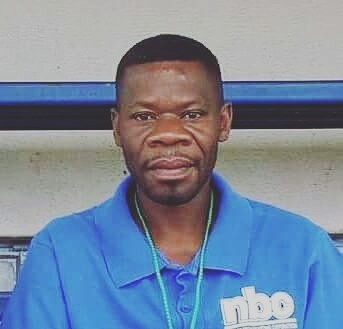
Since last week when news broke of the death of NBC Damara/Nama radio service announcer and producer, Salath //Hoëseb, thousands of listeners and his followers have been paying tribute to the young man who changed many lives through his programmes.
•MATTHEW GOWASEB
SALOMON Salath //Hoëseb, journalist and radio broadcaster who has died a week ago aged 43, made his name presenting the //Goa !Haob radio programme early every week day on the Damara/Nama service of the NBC. Salath was born on 21 May 1974 at !Aemas in the Outjo district.
His popularity was such that following his death, many songs have been recorded in his memory and circulated on social media.
This small-in-stature man with the distinctive baritone voice crawled into the hearts of listeners of the Damara/Nama service. His radio career began in 1995 when he started as a freelance presenter, and later became a full-time presenter at the Damara/Nama service.
Salath’s talent was discovered by Josef !Garab, station manager of the Damara/Nama service. When !Garab visited the Paresis Secondary school in the Otjozondjupa region to do recordings for a youth programme, he found Salath at the soccer field of this rural school, where he was ‘broadcasting’ a school soccer match between his school and a visiting team with a self-made wooden microphone. Amazed by the talents of this young man, !Garab regularly invited him on youth and sports programmes, which Salath later co-hosted.
Why so much fuss about this man whose career path at the NBC seems ordinary? Salath was made of sterner stuff. Through the //Goa !Haob programme, Salath touched many hearts through his humanity and selflessness.
Salath, indeed, achieved what many broadcasters have tried and failed. He connected with his listeners, and turned his morning programme into a platform to help the voiceless and the poor.
When a fire destroyed a kambashu, when a child needed specialised treatment, or when parents were unable to buy school uniforms, Salath would use //Goa !Haob to appeal for contributions from listeners.
//Goa !Haob gradually became a magnet for Damara/Nama service listeners of all walks of life. The morning programme evolved into a social platform that took on a life of its own, and sports tournaments and cultural events took shape, with //Goa !Haob clubs formed across the country. A rooster (Anib in Khoekhoegowab) became the logo of the clubs because every day at 6 am, a rooster would crow and wake the nation.
!Garab remembers Salath as a man of many skills.
“He could virtually do any programme with passion, ranging from the very challenging chat show or people’s parliament to sports, entertainment and drama. Sometimes the news would be read from the two regional offices at Otjiwarongo or Keetmanshoop, and at times technology would fail us, but Salath would read the news straight from an English script into Khoekhoegowab without any mistakes,” !Garab says.
“What a genius he was! He was exceptionally gifted, with an ability to draw large crowds at outside broadcast events. His morning show had an immense impact in the community he worked for, and he used his show for worthy causes to improve the lives of his community.”
There is no doubt about the respect and adulation that Salath had garnered, and the Damara/Nama service listeners and community regard Salath as a hero.
And why not. In a nation where national heroes are drawn from political and military leaders, it is, indeed, refreshing to see that a community spontaneously accorded hero status to Salath.
//Goa !Haob listeners love and honour Salath not only because they owe him lots of gratitude, but because they see in him the kind of man or woman they would like to be. After all, the possibilities of the heroic are in almost all of us. Through his unique abilities, Salath was able to explain the complexities of this world to his community.
As one of his colleagues put it: “Salath became a bearer of truth for the communities. Public announcements on a national issue would only be taken as the truth if Salath confirms it on his morning programme. Without a doubt, Salath has reaffirmed the potency of radio as a means to uplift communities, as well as its usefulness for public dialogue and entertainment.”
In an age of information overload, Sunrise is The Namibian’s morning briefing, delivered at 6h00 from Monday to Friday. It offers a curated rundown of the most important stories from the past 24 hours – occasionally with a light, witty touch. It’s an essential way to stay informed. Subscribe and join our newsletter community.

The Namibian uses AI tools to assist with improved quality, accuracy and efficiency, while maintaining editorial oversight and journalistic integrity.
Stay informed with The Namibian – your source for credible journalism. Get in-depth reporting and opinions for
only N$85 a month. Invest in journalism, invest in democracy –
Subscribe Now!