




Namibians are not targets of an anti-immigrant movement in South Africa, despite xenophobic attacks on foreign nationals reported in the neighbouring country.
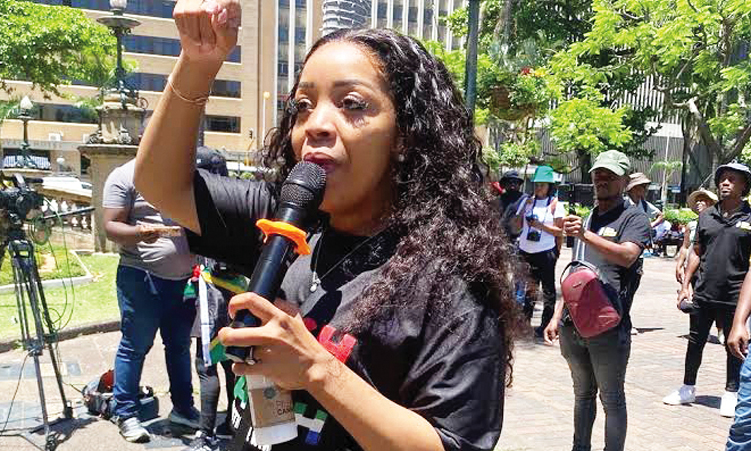
Jacinta Ngobese-Zuma, the founder of the March and March organisation in South Africa which focuses on illegal immigration, says Namibians in South Africa are “law-abiding citizens”.
Speaking to The Namibian yesterday, Ngobese-Zuma said her organisation has “no issues” with Namibians, adding that the most problematic nationals are Nigerians, who often enter South Africa without legal documentation.
“We are not attacking anyone as it is being portrayed in the media. Nor do we have any issues with Namibians.
However, the most problematic ones are Nigerians, who come here and hijack buildings, start selling drugs, and prostitution.
“These people do not have documents and bribe their way into the country,” she said.
Ngobese-Zuma’s comments come as a Namibian bus from Mbishi Transport was hijacked in Johannesburg last Tuesday and is yet to be found.
South Africa says it has repatriated about 2 700 foreign nationals in one week, according to reports by DWAfrica.
Ngobese-Zuma denied reports that her organisation is “hunting” foreigners, adding that their marches are peaceful.
“We are not hunting foreigners down, and the 700 Mozambicans you saw boarding buses going back, that is nothing. We have millions of them walking freely.
“So please, people should stop saying we’re killing or hunting foreigners down, because we are not.
We are marching to our government,” she said.
Meanwhile, Mbishi Transport owner Ufemia Mbishi yesterday said despite ongoing efforts to trace the 24-seater bus, the company has received limited assistance from both the South African Police Service and the Namibian high commission in South Africa.
“Yes, I can confirm that one of our buses was hijacked in Johannesburg.
The drivers were held at gunpoint for seven hours, but were later released unharmed. As we speak, all 12 passengers, together with the two drivers, are already on their way back to Namibia,” he said.
Mbishi said the company had to dispatch another bus to Johannesburg to collect the stranded passengers while efforts to locate the missing vehicle continue.
Acting executive director of international relations and trade Secilia Hiskia says the ministry is aware of the matter and has been following developments through the Namibian high commission in Pretoria.
“The matter falls within the jurisdiction of the South African authorities, and the ministry will continue to rely on official information from those authorities regarding the investigation and the motive,” she says.
Hiskia says the ministry currently has no credible evidence confirming that the hijacking was xenophobia related.
The incident appears more consistent with criminality or local transport sector conflict, she says.
Hiskia says the ministry will continue to monitor the matter closely and will engage the relevant South African authorities where necessary.
Namibians in South Africa who require consular assistance are encouraged to contact the Namibian high commission in Pretoria or the nearest Namibian consular office.
Landless People’s Movement national youth leader Duminga Ndala says Namibians living in South Africa remain safe.
This, she says, is because most comply with South African laws and immigration requirements.
“It is very important that the government ensures all Namibians in South Africa are documented so that should anything happen, we know where to locate them and can ensure their safety,” she says.
President Netumbo Nandi-Ndaitwah met with South African president Cyril Ramaphosa last week.
The Presidency has not revealed whether the safety of Namibians living in South Africa was discussed during this meeting.
“That meeting was a one-on-one. So what was discussed was between the two of them,” presidential press secretary Jonas Mbambo said yesterday.
Independent Patriots for Change shadow minister for international relations Rodney Cloete says the hijacking of a Namibian bus in South Africa comes less than a week after minister of international relations and trade Selma Ashipala-Musavyi was questioned about what the government was doing to keep Namibians in the neighbouring country safe.
“The minister’s response, in essence, was that our people were safe, that they required no assistance,” he said.
Lawyer Florian Beukes says the government can protect its citizens during xenophobic attacks by urgently engaging the South African government through diplomatic channels.
“It should assist affected citizens through the Namibian embassy by providing emergency travel documents, legal assistance and evacuation where necessary.
The government must also warn citizens about dangerous areas and keep families informed through regular public updates,” he says.
The Namibian embassy in South Africa can also provide support through safe houses, Beukes says.
Asoli Progressive Party president Josef Kauandenge says the Namibian government has not done enough to protect Namibians living in South Africa.
“My honest opinion is that really the government hasn’t done much as far as our people are concerned in South Africa,” he says.
Kauandenge says other African countries have taken steps to assist or relocate their citizens from areas affected by violence, while Namibia has not announced similar measures.