


On 17 July, nearly one year after it was signed in Istanbul, Russia decided to not renew the Black Sea Grain Initiative (BSGI) that allows Ukraine to export agricultural goods to global markets.
As underlined by the secretary general of the United Nations, this initiative has been “a beacon of hope in a world that desperately needs it”.
Before the war against Ukraine, a critical global food supplier, a fifth of the world’s barley came from Ukraine, as well as a sixth of the maize and an eighth of wheat.
After Russia invaded Ukraine, attacking grain fields and silos and blocking Ukrainian ports, global food prices spiked to record levels and endangered much-needed food supplies for many countries.
KEY ACCESS
The BSGI aimed to re-establish a vital route for agricultural exports from Ukraine and to lower global food prices.
Despite many challenges, it achieved its key purpose.
Since August 2022, the export of almost 33 million tonnes of grain and food from Ukraine to 45 countries played an instrumental role in reducing global food prices by some 25% since the record high reached shortly after Russia’s attack. As public trade data shows, over half of the grain, including two-thirds of the wheat, went to developing countries.
In addition, the BSGI ensured continued access to grain for the World Food Programme (WFP).
In 2023, Ukraine supplied 80% of the wheat procured to support humanitarian operations in the most food insecure countries like Afghanistan, Djibouti, Ethiopia, Kenya, Somalia, Sudan and Yemen.
Without the Black Sea route, the WFP has to get its grain elsewhere at higher prices and with a longer lead-time at a time when the world is facing an unprecedented food crisis.
Russia’s decision was taken despite the UN secretary general’s renewed proposals to work to address its concerns.
VOLATILITY
In order to shift blame, Russia claims its own agricultural exports were not sufficiently facilitated.
This is not borne out by publicly available trade data, which shows Russia’s agricultural exports are thriving.
Russia also gained important benefits from the agreement with the UN on fertiliser exports, which was brokered parallel to the BSGI.
The UN has worked relentlessly to clarify regulatory frameworks and to find dedicated solutions across banking and insurance sectors.
These efforts have been conducted in close collaboration with the EU and its partners.
Contrary to what Russia claims, the EU has ensured that our sanctions have no impact on global food security.
There are no sanctions on Russian export of food and fertiliser to third countries and the EU has provided extensive guidance to economic operators, clarifying that these transfers to third countries are permitted.
We have also worked with the UN to allow related payments.
Despite these verifiable facts, Russia pulled out of the BSGI, using food as a weapon and endangering global food supply.
Hours after withdrawing from the initiative, Russia started to destroy Ukraine’s grain storage facilities and port infrastructure with daily targeted attacks, not only in the Black Sea itself, but also in the Danube.
Wholesale wheat and maize prices immediately saw their biggest increase since the start of the war.
The increased food price volatility is likely to persist as long as Russia puts global food supply under deliberate stress, aggravating the global cost-of-living crisis and most acutely for food-insecure people in import-dependent countries.
This is unacceptable and should be resolutely condemned.
CYNICISM
As the world deals with disrupted supplies and higher prices, Russia is now approaching vulnerable countries, notably in Africa, with bilateral offers of limited grain shipments, pretending to solve a problem it created itself.
This is a cynical policy of deliberately using food as a weapon.
In response to Russia’s actions, the EU is active along three main lines.
First, we will continue to support the tireless efforts of the United Nations and Türkiye to resume the Black Sea Grain Initiative.
Second, we continue to strengthen our ‘Solidarity Lanes’ as alternative routes for Ukrainian agricultural exports to reach global markets through the EU.
Third, we increased our financial support to countries and people most in need, providing €18 billion to address food security until 2024.
We urge the international community and all countries to step up their own assistance in support of global food security.
We ask all our partners to urge Russia to return to negotiations as the African Union has already done, as well as to refrain from targeting Ukraine’s agricultural infrastructure.
The world has a shared interest in responsible stewardship of global food security. We owe it to the people most in need.
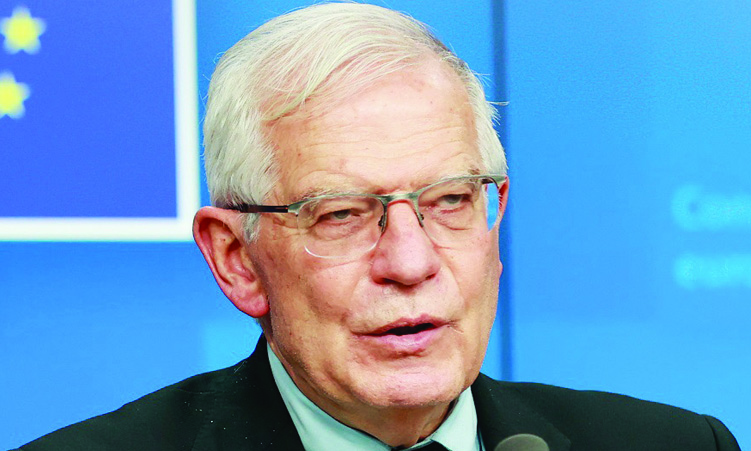
- Josep Borrell Fontelles, high representative of the Union for Foreign Affairs and Security Policy and vice president of the European Commission.
In an age of information overload, Sunrise is The Namibian’s morning briefing, delivered at 6h00 from Monday to Friday. It offers a curated rundown of the most important stories from the past 24 hours – occasionally with a light, witty touch. It’s an essential way to stay informed. Subscribe and join our newsletter community.

The Namibian uses AI tools to assist with improved quality, accuracy and efficiency, while maintaining editorial oversight and journalistic integrity.
Stay informed with The Namibian – your source for credible journalism. Get in-depth reporting and opinions for
only N$85 a month. Invest in journalism, invest in democracy –
Subscribe Now!