

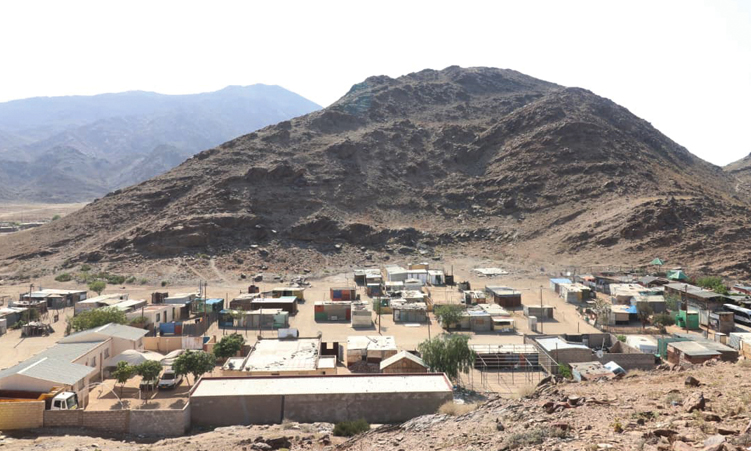
Rosh Pinah’s Tutungeni informal settlement faces rising concerns over more than 50 shebeens, where children are allegedly paid to clean amid growing substance abuse risks at the 1 000-household settlement.
Roshkor Township (Pty) Ltd, which manages the mining town, has confirmed this number to The Namibian.
Residents, however, reckon the figure is closer to 54.
Tutungeni resident Immanuel Gomachab (54) says children often visit the shebeens shortly after school to clean the establishments in exchange for money.
He says some also drink and use drugs at the shebeens.
There have been discussions about a possible programme involving the Ministry of Gender Equality and Child Welfare to help the children, but it is unclear how far these efforts have progressed, he says.
“They are sniffing glue, drugs, and alcohol,” Gomachab says, adding that some young people drink late into the night.
Additionally, some children and young people clean the shebeens during early hours of the morning so they won’t be seen.
“They don’t sleep.
Shebeens are running up to 03h00 or 04h00,” he says.
Another resident, who prefers to remain anonymous, says the number of shebeens in the area has resulted in schoolchildren spending time at the venues, particularly at those that operate into the early hours of the morning.
“In the location, there are too many shebeens. That’s the truth.
We can see it with our eyes,” he says.
The resident says the presence of children at the shebeens is concerning because of the associated alcohol and drug use.
He says some parents also drink, making it hard to keep the children away.
Daily newspaper New Era in 2025 reported on the efforts of a local football academy to steer young people away from substance abuse, petty crime and other risks facing the town’s youth.
Constituency councillor for Oranjemund and ||Kharas Regional Council member Nestor Sheimi yesterday said he was not aware of children cleaning shebeens, but said the constituency has a responsibility to ensure they attend school.“Of course, the issue of mushrooming shebeens or bars is all over the country, and it’s something we’re not happy with as leaders,” he said.
He said the community should, however, be encouraged to pursue other forms of income generation.
“For now, that’s what they observe, and they think it’s the only means to make income. But you also cannot make an income through something that’s destroying society.”
Sheimi said the management of Rosh Pinah falls under RoshSkor and that liquor licences are handled by the liquor licensing authorities.
Roshkor says it is aware of concerns about the number of shebeens at Tutungeni but adds regulating them is difficult.
The company says some residents establish businesses because they struggle to find employment.
“People don’t find jobs easily. So then they will apply for a business.
And before you know it, they are running a shop, or maybe they are making some traditional liquor.
You can’t control that,” the company says.
Roshkor says the community and authorities need to work together to address the problem.
It could consider limiting the issuing of liquor licences, it says.
“From our point of view, we can also say no more issuing of licences, which is another way of stopping them from mushrooming in the town.
We can do that,” the company’s management says.
This would, however, have to be handled properly to avoid discriminating against those who operate shebeens legally while addressing those who break the law, it says.