



The parliamentary standing committee on natural resources’ recommendation that Headspring Investments proceed with uranium exploration and mining in the Stampriet Artesian Basin has sparked renewed controversy, with former agriculture minister Calle Schlettwein calling for the report to be rejected.
The committee, chaired by Tobie Aupindi, tabled its report in the National Assembly on Tuesday, arguing that allowing the project to proceed would enable the government to gather scientific data on natural contamination and develop mitigation strategies.
Schlettwein, who previously revoked Headspring’s drilling licence, says the recommendation lacks scientific grounding.
“The committee has no clue whatsoever of the situation underground and their report must be rejected by the National Assembly. I am disappointed because this is a wrong decision based on nothing,” he says.
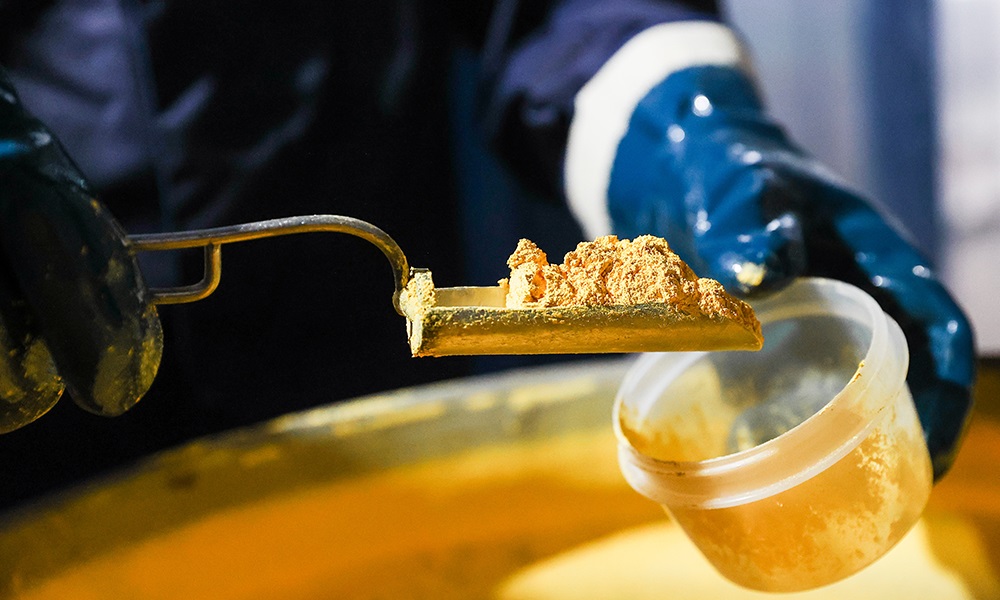
Responding to questions, Rosatom says the project would use the in-situ recovery (ISR) method, which it describes as both economically efficient and environmentally responsible.
According to Rosatom, ISR does not disturb geological structures, produce waste rock dumps or require tailings dams.
The company says wells would be sealed after mining, infrastructure dismantled and the land rehabilitated for future use, including agriculture.
Schlettwein, however, warns that the aquifer – declared a protected water reserve due to its strategic importance and transboundary reach into Botswana and South Africa – could be permanently damaged.
“It is the only aquifer providing farms, small towns and villages in the arid south with the cleanest drinking water.
The committee is playing a dangerous game with people’s lives,” he says, adding that uranium could be mined elsewhere.
The Stampriet Aquifer Uranium Mining Association (Sauma), representing farmers and lodge owners, says it was not consulted during the committee’s review.
“This raises fundamental questions about transparency and credibility,” Sauma says, criticising the committee for presenting what it called a one-sided view.
Sauma also highlights the absence of a comprehensive, independent hydrogeological flow study reflecting current water use in the basin – a step previously recommended by another standing committee.
The parliamentary committee has defended its position, describing Rosatom as a global leader in uranium and nuclear technologies with the necessary expertise to undertake the project safely.
Aupindi said the uranium resource is estimated at 50 000 metric tonnes, valued at about N$18 billion.
The proposed in-situ leach mining project targets a high-quality freshwater aquifer in the Stampriet Artesian Basin.
Critics argue ISR is typically used in saline aquifers, not key drinking water sources. Supporters point to potential jobs and economic benefits for areas such as Leonardville.
Schlettwein disputes these claims, saying there is no evidence the project will create significant local employment or lasting benefits.
The project remains under scientific and legal review. The government has indicated that any final decision will be based on scientific assessments, including input from international experts such as the International Atomic Energy Agency.
– Email: matthew@namibian.com.na
In an age of information overload, Sunrise is The Namibian’s morning briefing, delivered at 6h00 from Monday to Friday. It offers a curated rundown of the most important stories from the past 24 hours – occasionally with a light, witty touch. It’s an essential way to stay informed. Subscribe and join our newsletter community.

The Namibian uses AI tools to assist with improved quality, accuracy and efficiency, while maintaining editorial oversight and journalistic integrity.
Stay informed with The Namibian – your source for credible journalism. Get in-depth reporting and opinions for
only N$85 a month. Invest in journalism, invest in democracy –
Subscribe Now!