



•Morris KirugaDuring the recent Burkinabé protests that ousted the country’s president Blaise Compaore, a common household tool became the symbol of defiance and revolution.
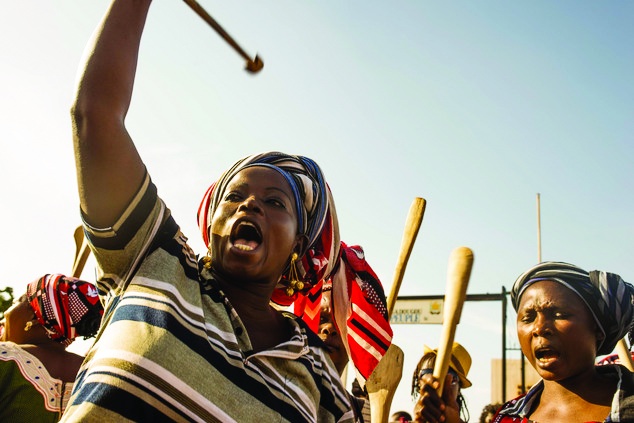
Wooden spoons all but disappeared from the kitchens around the capital Ouagadougou and appeared on the streets. Women wielded them as they sang songs of protest.
In one image, a protester holds a wooden spoon while she blows a whistle. Two other such spoons can be seen in the background. In another, a protester wearing a striped shirt is holding what looks like a club in the air, and in the background, another club and at least five wooden spoons are visible.
As @MasindeDavids put it on Twitter: “Burkinabé women with wooden spoons actually cooked revolution soup”. The hot soup that brought down a 27-year old regime that began with the assassination of the country’s charismatic leader Captain Thomas Sankara in 1987.
By the time the spoons were placed back in the kitchens, Blaisé Compaore was a visitor of circumstance in neighbouring Cote d’Ivoire.
The use of household items such as wooden spoons and kitchen pans as symbols of disobedience is a global phenomenon. It is hardly ever about the tool being used but what it symbolises.
In Burkina Faso, the wooden spoon is used to prepare tô, the country’s traditional corn pasta. If a woman points the spoon to a man, she implies that she strongly suspects him of something untoward or disapproves of his conduct.
In traditionally patriarchal societies where the kitchen is managed wholly by women, the wooden spoon is the nearest weapon. To the children in the homestead, it is to be both feared and revered. It is not unusual for mothers to use it to discipline errant little ones.
When the women put the spoon to Compaore, it symbolised all the above.
The wooden spoon was not alone as an unusual tool of political protest in Africa.
Younger protesters have taken the creativity of protest tools a snort higher. On 14 May 2013, Kenyan activist and photographer Boniface Mwangi led a protest that involved releasing a pig and her dozen piglets outside parliament. They then spilled blood on the pigs to “show that the MPs are greedy like pigs”.
The pigs protest was inspired by George Orwell’s pig characters in ‘Animal Farm’, the seasoned protester says. “They symbolised the simile ‘as greedy as a pig’,” he adds in an e-mail conversation.
“We bought them the day before the protest to ensure that our plans were not thwarted.” To make the image of the derogatory phrase ‘MPigs’, a play on the abbreviation for member of parliament and pigs, they dressed the pigs with ties but the animals removed them before they got to parliament.
The Kenyan activist believes protest must be an art. “Without symbolism, any protest, revolution, movement, is dead.”
True to form, his portfolio of protests includes street graffiti, a photo series called ‘Diaper Mentality’ where characters don adult diapers, a protest where people carried coffins painted black and set them on fire, and many others.
Mwangi’s ideals have clearly inspired a revolution in how East Africans protest. It is no longer enough to simply go out and demonstrate.
In neighbouring Uganda two students, Robert Mayanja and Norman Tumuhimbise, released two piglets painted yellow (the colours of the ruling National Resistance Movement party) into parliament in July. The animals were smuggled into the grounds and were only arrested as they made their way to the main entrance of the chamber. They had tags attached to them reading ‘Corruption Constituency’ and other messages of opposition to unemployment and political corruption.
In South Africa, the Congress of South African Students (Cosas) used pigs’ heads to make a global and religious statement. They placed the severed heads in the kosher section of Woolworths stores to protest Israel’s actions in Gaza.
The protest was inspired by a common belief, although now considered largely untrue, that the clothes store was doing business with Israeli companies.
Perhaps the most powerful tool of protest is the human body. Mohammed Bouazizi’s self-immolation in Tunis sparked of what we know today as the Arab Spring. Such self-sacrifice is extreme and painful but it creates such a strong symbol as to inspire people to make it count.
It is, however, uncommon when compared to the use of nudity across Africa. Naked protests have taken place in Nigeria, Kenya, Cameroon, Uganda, and Liberia.
Female nudity holds a special place in most African cultures.
In some cultures such as the Igbo of South-eastern Nigeria, unmarried girls were allowed to be naked. Women covered their nudity once they got married. It was considered an ill omen to see the nakedness of your mother or any woman older than you. A man who saw his mother’s nudity would be so ashamed that he could become suicidal. This African view toward nakedness of older people was further reinforced by Christianity, especially through the Biblical story of the Curse of Ham.
The aggressive grabbing and pinching of Turinawe’s breast by the police happened during an arrest and was recorded on video, sparking the protest.
Nigerian women famously went topless during the Women’s War in 1929. The old women launched a protest against taxation, and demanded a return to pre-colonial cultural practices. They stripped and exposed their genitals while hurling obscenities.
Their aim was to push for a greater say in governance, rooted in their traditional role within Igbo culture. While men held positions of power, women organised themselves into powerful groups and often got their way. British colonialists appointed Warrant Chiefs and distorted this balance. The protest began when one of the chiefs went to count an old woman during the census, an indication that the government intended to tax women.
In an age of information overload, Sunrise is The Namibian’s morning briefing, delivered at 6h00 from Monday to Friday. It offers a curated rundown of the most important stories from the past 24 hours – occasionally with a light, witty touch. It’s an essential way to stay informed. Subscribe and join our newsletter community.

The Namibian uses AI tools to assist with improved quality, accuracy and efficiency, while maintaining editorial oversight and journalistic integrity.
Stay informed with The Namibian – your source for credible journalism. Get in-depth reporting and opinions for
only N$85 a month. Invest in journalism, invest in democracy –
Subscribe Now!