


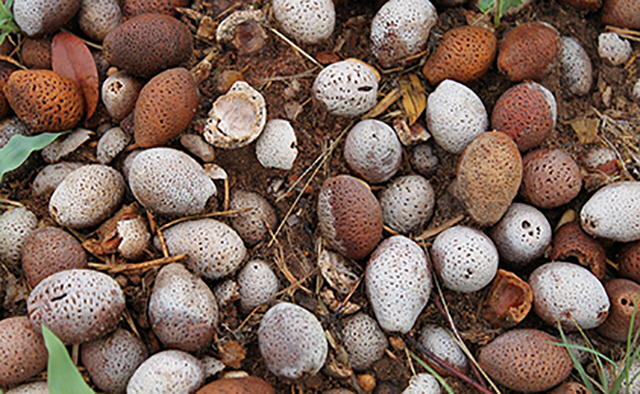
THE Centre for Research, Information, Action in Africa and Southern Africa Development and Consulting (CRIAA-SA-DC) is conducting research on the manketti, one of Namibia’s indigenous tree species, to find out what more can be derived from its fruits and nuts.
The research is being done with the financial support from the Biodiversity Management and Climate Change II (BMCC II) project in the Ministry of Environment and Tourism, funded by the German Technical Coorperation (GIZ).
“The resource and the oil derived from it is well-known but we want go deeper to see what more can be derived from this resource,” the head of CRIAA-SA-DC, Michelle Mallet told The Namibian last week.
He said CRIAA-SA-DC will host a national workshop on the manketti tree in Windhoek in November this year to solicit information on the benefits that can be derived from the manketti tree, which is found mostly in the north-eastern parts of Namibia.
CRIAA SA-DC, a membership-based non-governmental organisation established in 1996, has been conducting research on a number of natural resources in Namibia working with Phytotrade Africa, a trade association interested in buying and selling commercialised natural products.
It supports rural communities to benefit from the sale of indigenous natural products and smallholder crops.
The outer flesh/pulp of the plum-shaped manketti fruit is used as a relish and eaten raw or cooked. The flesh is also used in brewing a hot liquor known as ombike (in Oshiwambo).
The nut can be finely crushed and added to meat or vegetables to make tasty soup or gravy while the shell of the nuts is used as fuel and the leaves from the tree are used as fodder.
The nuts are the most valuable parts of the fruit as they yield a high-quality oil used in food preparations and for making cosmetics.
In October this year, GIZ-South Africa will host a southern African workshop on the uses of the marula tree. The workshop will look at how the region can cooperate on the sustainable use of this tree.
South Africa, said Mallet, has a lot of marula trees and is looking for regional cooperation on the use of the resource.
The marula tree occurs in many countries in southern Africa, including Namibia.
Like the manketti, the marula fruit has many uses including making an alcoholic beverage, oil and the peel can be used as stock feed.
In an age of information overload, Sunrise is The Namibian’s morning briefing, delivered at 6h00 from Monday to Friday. It offers a curated rundown of the most important stories from the past 24 hours – occasionally with a light, witty touch. It’s an essential way to stay informed. Subscribe and join our newsletter community.

The Namibian uses AI tools to assist with improved quality, accuracy and efficiency, while maintaining editorial oversight and journalistic integrity.
Stay informed with The Namibian – your source for credible journalism. Get in-depth reporting and opinions for
only N$85 a month. Invest in journalism, invest in democracy –
Subscribe Now!