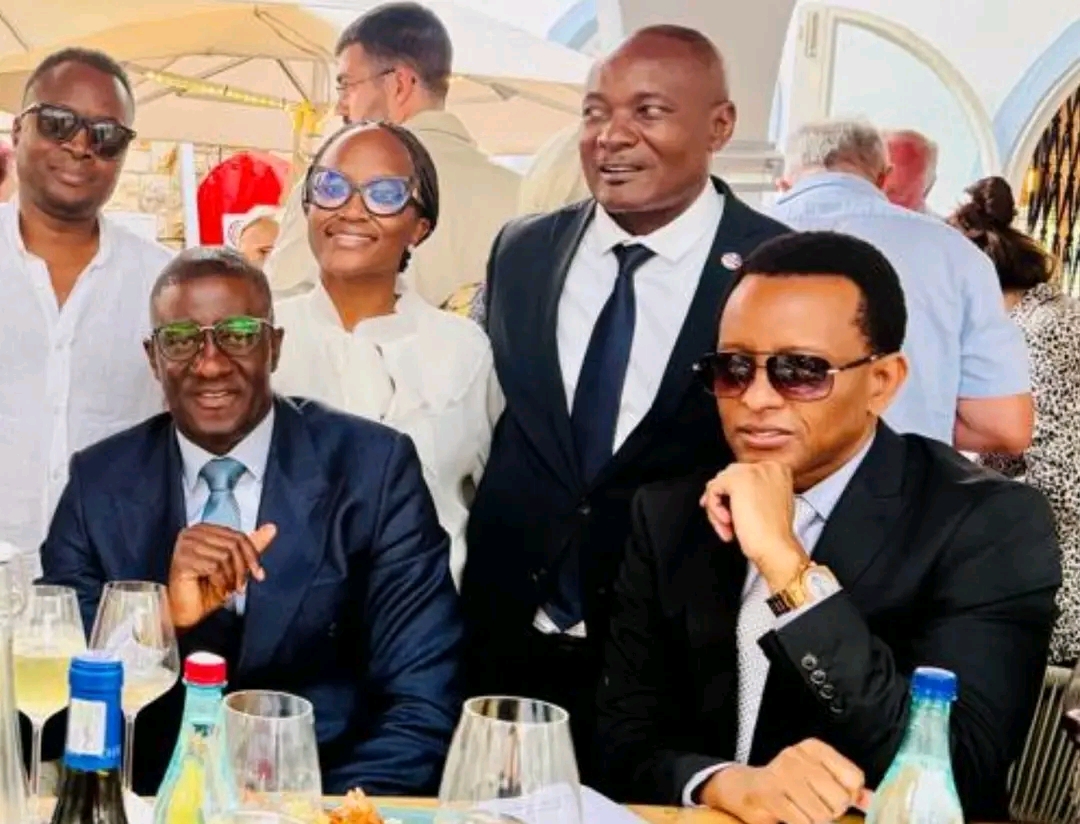



• Orde LevinsonGood art brings in its wake an emotional response and sometimes it is a missing link gathering people. It is therefore wonderful to see this gathering, and one whereby after many years of perhaps public neglect in Namibia (despite the torch bearers), it is focused on a revival of John Ndevesia Muafangejo and his work.
My mother, Olga, was president of the Namibian Arts Association for many years, and it was she who introduced me to Muafangejo’s work in the early 1970s.
In fact, she is one of the many people to whom he offers gratitude in his work ‘Zimbabwe House’, an intriguing piece which harkens back to my studies of Picasso and the autobiographical nature of art.
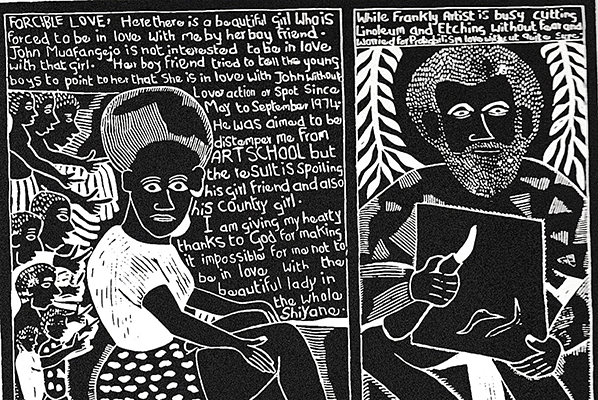
Through text and images, it poured out Muafangejo’s emotions on a variety of subjects: Madness, love, finance and human need.
On his depressive states – his reason: “They were just worried me too much… because I was loneliness”.
‘Zimbabwe House’ was different from his other works at the time, like ‘Angola’ and South West Africa’ (1976). Here he shows us not what he observes before him, but what he knows. The finest of art contains this cosa mentale. Merely showing what you see is usually decoration. And so very different to the poetic, he is thinking about art.
A thinker under a tree with rich fruit which his one hand is leaning towards, the other hand delicately on his head and the patterns of stemmed grass leaning up to the very solid black tree with its abundant leaves in front of him.
Muafangejo has a further innate sense of the unity of the picture plane. His background designs vary in shape, in direction, in stroke, in thickness – he does not repeat.
They are executed with great mastery and it is worth remembering once he makes an incision, he cannot change it. It is a natural and inborn sense.
Muafangejo focused on his life – where he was born and lived, what was going on around him, where he travelled, the animals surrounding him, and even what it meant to be Kwanyama.
In 1976, I wrote to him, inquiring about his biographical details, and his reply exuded integrity. From then on, I researched his work with the intention of writing a catalogue raisonee. I like these sorts of books, as they enable me not only to learn fully about the artists, but also to present the work to others in an uncensored and unbiased fashion. It is a proper way to pay homage to an artist.
I was asked to write the play ‘Forcible Love’ for the Namibian Independence celebrations, and I used it as an opportunity to write something about what it means to be an artist, what makes an artist.
There were some 15 scenes which most artists experience and present in their works: Childhood, family, studying, exhibitions, loneliness and work. At times, I was lucky enough to be able to use Muafangejo’s words; ‘Forcible Love’ is the title of one of his works, and it sums up the fact that he felt things which he needed to express in his art. It was forcible; it had to come out.
His works are not just autobiographical; they are grounded in emotion, feeling and understanding. Take his invention of the phrase ‘Mister Nobody’, who destroyed the printing presses; this was not a political polemic but an ironic statement.
Take ‘Mother and Child’ (1983), which naturally exemplifies all of modernism – the rhymes and rhythm of the back of the mother echoing the pregnant belly, with the protective hand over the child’s head. Compare these hands to the carefree playful hand of the child. The mother is a sentinel in protection, as well, as shown in the wonderful use of lines back grounding the tree and the leaves. His essential vision of mother and child.
What makes Muafangejo great is not just the erlebnis of his work – the lived emotion expressed by him – but that his subject matter is wide and changing. From Swakopmund to a snowy Finland, to people, events and places. He uses his own interview experiences, such as the wonderful interview at UCT. He was true to his emotions and values.
I once wrote to him, stating that what makes him so vital and distinguished today is the purity, honesty and accomplishment in his work, and even more so his moral nobility. That stands true today, as we will pass the test all art has to undergo. It will emerge from all cycles of taste with its value enhanced.
Nevertheless, there are perhaps some reasons why his art is not appreciated enough in Namibia. I think one of the main causes is that there is so little of his work on display: Postcards, posters, mugs, T-shirts, everyday objects. Books are fine, but they have a limited audience; his work needs to be displayed and seen and talked about.
This is one of the goals of the John Muafangejo Trust, which has organised a travelling museum in the UK to display his work and assisted with exhibitions and collections around the world.
In an age of information overload, Sunrise is The Namibian’s morning briefing, delivered at 6h00 from Monday to Friday. It offers a curated rundown of the most important stories from the past 24 hours – occasionally with a light, witty touch. It’s an essential way to stay informed. Subscribe and join our newsletter community.

The Namibian uses AI tools to assist with improved quality, accuracy and efficiency, while maintaining editorial oversight and journalistic integrity.
Stay informed with The Namibian – your source for credible journalism. Get in-depth reporting and opinions for
only N$85 a month. Invest in journalism, invest in democracy –
Subscribe Now!