



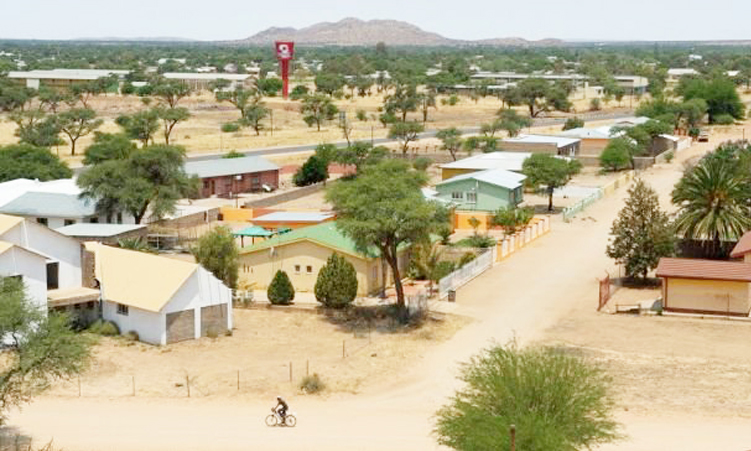
The looming bulk water supply interruption to Rehoboth in the Hardap region is expected to send home more than 10 000 pupils and affect about 200 inmates in holding cells at the town’s police station.
The Rehoboth Town Council yesterday issued a notice to residents, informing them of a possible bulk water suspension by Namibia Water Corporation (NamWater) due to the municipality’s outstanding debt.
The council owes the utility the second-highest amount out of all local authorities – N$100 million.
In total, local authorities, town councils and rural communities owe NamWater N$2.8 billion, threatening the security of water provision.
The Rundu Town Council owes the biggest amount, with over N$300 million.
Hardap education director Paulus Lewin says any bulk water supply suspension would send home more than 10 000 pupils from the 13 schools at Rehoboth.
“We do not have alternatives, but to send the pupils home. It will be a hygiene and sanitation nightmare if schools accommodating between 500 and 1 200 pupils can’t flush toilets or have running water for drinking,” he says.
The education director says it would affect learning and teaching time, which is currently insufficient to complete the syllabus required for primary and secondary school pupils in time.
“Just today I sent out a communique urging schools to start learning support programmes, such as afternoon classes, weekend classes and holiday schools, due to the time constraints we are faced with,” he says.
Lewin urges the intervention of political leaders to avert any water supply interruption and says the directorate will ensure its utility account is paid.
Hardap crime investigations coordinator deputy commissioner John Mwatonga says the Rehoboth Town Council yesterday informed them that water rationing would start today.
He says the situation would have been manageable if only the station was without water and they could be supplied with water from other departments.
“This thing could be disastrous. We have 164 inmates to date at that station. It could require crowd control because of riots,” Mwatonga says.
He says even if the police made a water tanker available, it would not last long.
“We can only preserve water once it’s restored, should such an eventuality take place,” the deputy commissioner says.
The Rehoboth Town Council says it is consistently engaging with NamWater to find an amicable solution.
“We are in talks with the water utility in efforts to avoid the suspension of the bulk water supply to the town and the taps running dry.
“In the meantime, we urge residents to use water sparingly,” the notice reads.
The council says NamWater has not given it a time frame for the water cuts to be enforced.
“The information on our website and Facebook pages is all that is available for now,” the council says.
NamWater spokesperson Lot Ndamanomhata says the company has communicated with all its clients and customers concerning their debts.
He says 10 town councils owe NamWater a combined almost N$1 billion.
“NamWater reiterates that while water is an essential service, its treatment, storage, conveyance, and distribution require substantial and continuous financial resources,” he says.
In an age of information overload, Sunrise is The Namibian’s morning briefing, delivered at 6h00 from Monday to Friday. It offers a curated rundown of the most important stories from the past 24 hours – occasionally with a light, witty touch. It’s an essential way to stay informed. Subscribe and join our newsletter community.

The Namibian uses AI tools to assist with improved quality, accuracy and efficiency, while maintaining editorial oversight and journalistic integrity.
Stay informed with The Namibian – your source for credible journalism. Get in-depth reporting and opinions for
only N$85 a month. Invest in journalism, invest in democracy –
Subscribe Now!