





Self-taught carpenter Onesmus Mamwanga has not allowed his refugee status to keep him from becoming an entrepreneur and creating jobs for seven others.
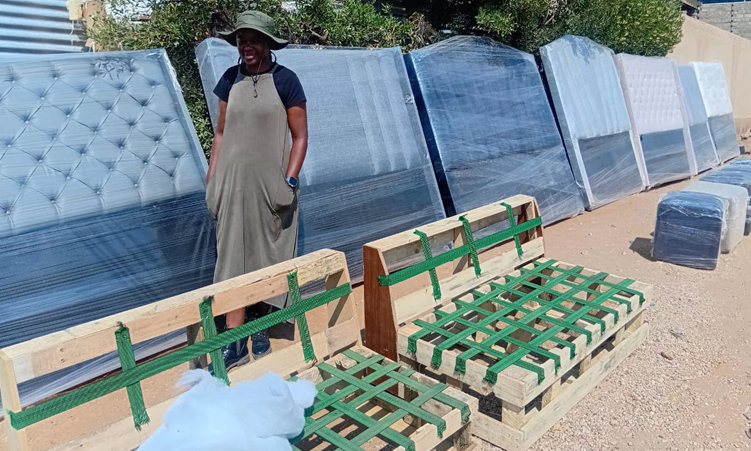
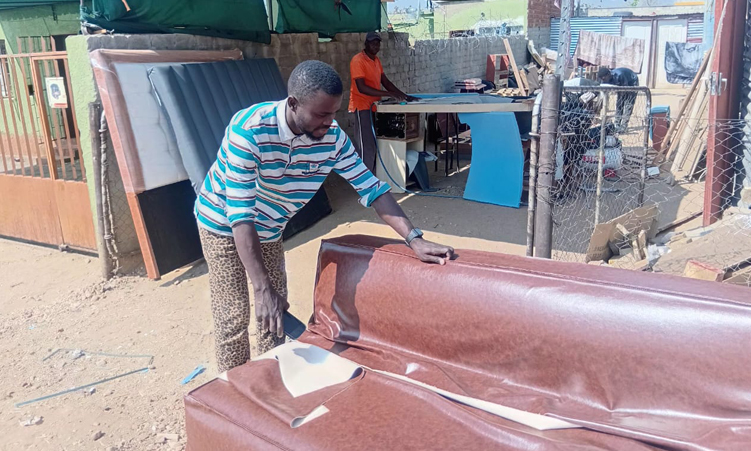
He runs a carpentry enterprise, Classic Furniture, at Katutura.
Mamwanga came to Namibia from the Democratic Republic of Congo (DRC) with his parents and six siblings in 2008.
They were accommodated at the Osire refugee camp, about 200km north of Windhoek in the Otjozondjupa region.
After completing Grade 12 at the refugee camp, Mamwanga realised he needed more education than that to survive and moved to Windhoek.
“As refugees it was hard to get money, so we took up odd jobs to sustain ourselves, but it was not enough for me, my parents and siblings, so I moved to Windhoek in 2016 and started selling tomatoes on the street.
“This did not bring in much, compounded by the way the police treated us, so I looked for something else,” the entrepreneur says.
Before coming to Namibia, Mamwanga had learnt carpentry basics in the DRC and decided to join a group of carpenters
who manufactured different kinds of furniture at Soweto, Katutura, where he honed his skills.
“I learnt more on the trade from these friends and through the internet until I could make pieces of furniture on my own. I then decided to start my own shop,” he says.
Mamwanga specialises in making headboards, wardrobes, shoe racks and sofas, as well as doing upholstery.
He employs seven people – four Namibians, one Angolan national and two Congolese nationals, of which one is his brother.
“My parents and other younger siblings are still at Osire and I support them from the proceeds of this business venture,” he says.
He says he tries to set prices that suit everyone, but at times clients are reluctant to pay deposits for orders because they fear being conned.
“At times we use our own resources to make furniture for people, but then the client does not come to pick up the item and we end up struggling to sell that item,” he says.
The entrepreneur says apart from the congested market, space to work at is expensive.
He is appealing to the authorities to make land available to small businesses or create more incubator workshops for their businesses.
“When some unscrupulous landlords see you selling a headboard or two, they start scheming and raising the rent.”
He says if he had the power to change anything in the sector, he would seek subsidies for raw materials to make furniture cheaper and also set quotas for furniture shops to buy from small manufacturers.
“No furniture shop has come to us yet, but that would be our dream,” he says.
Mamwanga advises aspiring entrepreneurs to persevere.
He urges the government to continue providing equipment to assist budding entrepreneurs.
“We sometimes get orders, but because of a shortage of equipment, they sometimes fail to deliver on time, and this frustrates customers,” he says, adding that he trains all his workers on using available machinery.
– email: matthew@namibian.com.na