


APARTHEID – a system of institutionalised racial segregation – relied firmly on ‘divide and conquer’ tactics to carry out oppression and division in Namibia and South Africa.
From the late 1940s to the 90s, this systematic maltreatment of black and coloured people saw hundreds of families forcibly relocated according to race and tribe.
Katutura and Khomasdal were two such locations in Windhoek which, like many other South African and Namibian cities, felt the impact of the Group Areas Act of 1950.
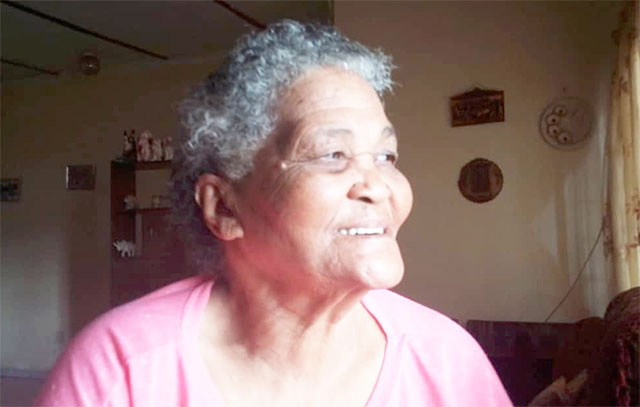
Senior citizen and long-time Khomasdal resident ouma Sarah Spannenberg (81) shares memories of the then Coloured-designated neighbourhood with The Weekender.
Spannenberg, a South African-born woman who has been living in Khomasdal for over 40 years and as a community servant and church woman, has lived through almost every experience in her community.
“On 9 January 1977, I moved from Upington, South Africa,” she says, noting that her spouse had landed a job in Namibia. “He worked at Oshakati and I could only see him on holidays,” she reminisces.
This all changed when he applied for housing from the Windhoek municipality as he was travelling through the city.
“I decided to move to Namibia to ease the strain of travelling back and forth on such a long distance. We stayed in a back room of his family, and on 11 March that year, I got this house that I’m sitting in and through the grace of God, I’m still here.”
In a time of political unrest, communities like these relied on camaraderie and support to survive, and thus the neighbourhood was a safe haven for its citizens.
“There was nothing in Khomasdal that really scared me. I stayed here with my children while their father was away,” she says, adding that the streets today are not what they used to be.
Spannenberg notes that the area was a more tranquil space where adults could sit outside on their stoep late into the night without fear of being attacked.
“We could sit outside late at night, we were free. Not how things are today. I have to lock the doors when I come in and then I have to double-check that they are locked.”
In the year she arrived in Namibia, Spannenberg was part of the Dutch Reformed Church through which she joined various sub-organisations and groups which served the community. She was a part of many groups that would visit the elderly, have fundraisers and cook, along with many other tasks.
“We walked the streets of Khomasdal to do this work.”
“”. (“We served in the community.”)
Spannenberg notes that this was one of the most blessed endeavours she has ever embarked on in her life and she is proud to be able to tell stories about it.
There’s no doubt that she’s seen the community change around her over the last four decades. “Khomasdal is the same as it was, but the people have changed. The streets are rowdier; we as senior citizens cannot walk around anymore as we used to,” she says.
Spannenberg, who lives close to Gammams Primary School and the infamous former Star Hotel, recalls the impact this recreational centre had on the community.
“I live close to the Star and it was always such a major issue. The noise was too much in the street. Our young people died, they were stabbed to death and so many other atrocities occurred there. Many years ago, we would get up early on Sunday mornings and go to pray at the Star Hotel. Then a change came,” she says, referring to the place closing down a few years ago.
“There were always people all over the place and I thank God that they never came into this yard to harm us.”
Spannenberg says through these times of Covid-19, the community will have to do much more to survive and be prosperous.
“Now that this virus is sweeping through the country, we need to be more unified, we need to support each other more and pray like never before. We must trust God to pave the way forward. That’s my wish for today – that we pray without giving up.”
– Jonathan Sasha on social media
In an age of information overload, Sunrise is The Namibian’s morning briefing, delivered at 6h00 from Monday to Friday. It offers a curated rundown of the most important stories from the past 24 hours – occasionally with a light, witty touch. It’s an essential way to stay informed. Subscribe and join our newsletter community.

The Namibian uses AI tools to assist with improved quality, accuracy and efficiency, while maintaining editorial oversight and journalistic integrity.
Stay informed with The Namibian – your source for credible journalism. Get in-depth reporting and opinions for
only N$85 a month. Invest in journalism, invest in democracy –
Subscribe Now!