




A PUBLIC hearing into racism and discrimination by the Office of the Ombudsman has unearthed that while racism does not define Namibians’ social interactions, corporate structures, especially in the financial services sector, are racially telling.
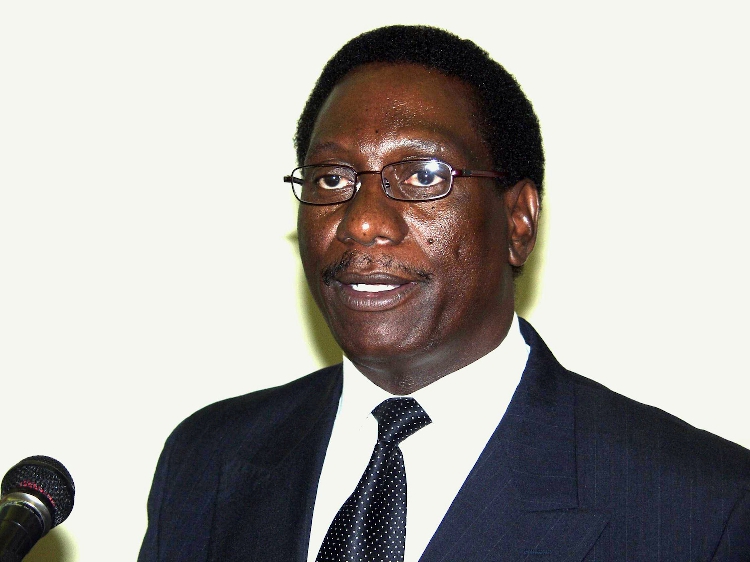
Namibia’s equity commissioner, Vilbard Usiku, revealed at the public hearing on ‘Racism, Racial Discrimination, Tribalism and Discrimination in General’ that the latest affirmative action (AA) report indicated that achieving a racial balance in employment has been slow, especially at the helm of most large companies, despite the AA laws in place. Usiku singled out commercial banks and insurance companies, saying that he has observed what he termed the “Irish coffee structure” in the sector.
The “Irish coffee structure” denotes a workplace that is predominantly black at the bottom, brown in the middle and white at the top. “The structures there remain unacceptably skewed in favour of white employees,” he stated.
“The continuous marginalisation of the racially disadvantaged and their appointments to lower-level jobs, where pay and benefits are generally poor, perpetuate the income inequality along the racial divide.”
He said the income gaps along racial lines were still alive and well in Namibia, although the country’s AA laws required that all Namibians enjoyed equal opportunities in employment. However, he conceded that a lack of diversity could not always be blamed on the unwillingness of employers because in some cases, companies might not have a sufficient pool of suitably qualified candidates from amongst the previously disadvantaged.
“In instances where there is a vacancy, there might not be any qualified person from a designated group, and they have to opt for the person that is suitably qualified because of the history of education and the marginalisation of the previously disadvantaged in terms of education,” Usiku said, furthermore pointing to black business people who were also once considered previously disadvantaged for not helping up others who remain marginalised.
He also fielded questions about “reverse racism” and tribalism, with some participants arguing that there was a perception around AA that those meant to benefit are not necessarily black people, but Aawambo people.
Usiku said although this was a perception, the reality was that Oshiwambo speakers are more than 50% of Namibia’s population.
“People sometimes forget that wherever you find Namibians, it is natural that you will find the majority [among them]. I’m not saying that those perceptions are not well-founded, they might be. There is a trend whereby many opportunities are taken by Aawambo people, but those perceptions must also take into account the numbers,” he said.
Legal Assistance Centre (LAC) director Toni Hancox, who was on the panel, said there has been a lot of criticism about AA policies focusing more on outputs and statistics, such as how many black people a certain company employs, but that not enough focus was on inputs to empower employees. She added that if a certain group felt excluded, then the country was not going to achieve its goal of “One Namibia, One Nation”.
The three-day public hearing, which started on Tuesday, will compile presentations by stakeholders on the topics of racism, tribalism and discrimination. The panel consists of Ombudsman John Walters, Out-Right Namibia director Linda Baumann, and the LAC’s Hancox. The Khomas hearing concludes tommo-rrow before moving to other regions.The hearing aims to gauge public perceptions, understanding and input for the formulation of legal regulations against racism in Namibia.
In an age of information overload, Sunrise is The Namibian’s morning briefing, delivered at 6h00 from Monday to Friday. It offers a curated rundown of the most important stories from the past 24 hours – occasionally with a light, witty touch. It’s an essential way to stay informed. Subscribe and join our newsletter community.

The Namibian uses AI tools to assist with improved quality, accuracy and efficiency, while maintaining editorial oversight and journalistic integrity.
Stay informed with The Namibian – your source for credible journalism. Get in-depth reporting and opinions for
only N$85 a month. Invest in journalism, invest in democracy –
Subscribe Now!



