



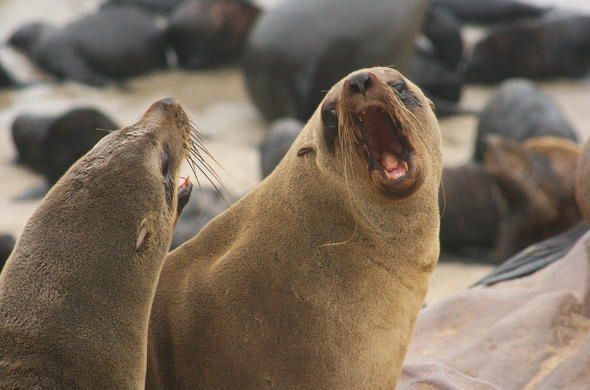
THE Directorate of Veterinary Services has confirmed Namibia’s first recorded case of rabies in a Cape fur seal at Walvis Bay.
The Ministry of Agriculture, Fisheries, Water and Land Reform confirmed the case in the seal at the Walvis Bay Lagoon on Friday.
Chief veterinary officer Johannes Shoopala in a statement says the seal was observed on 13 June, showing clinical signs strongly suspected to be rabies.
The animal succumbed to the disease and was sampled on 14 June. Windhoek’s central veterinary laboratory confirmed the positive rabies result on 16 June.
“Rabies is a fatal disease caused by neurotropic viruses of the genus Lyssavirus in the family Rhabdoviridae and is transmissible to all mammals with a 100% mortality rate,” the statement reads.
Rabies is most commonly transmitted through the bite of a rabid animal or contact with the saliva of an infected warm-blooded host. In humans, the disease is almost always fatal if post-exposure prophylaxis is not administered before the onset of symptoms.
Rabies is endemic in Namibia, where domestic dogs are the most common source of exposure to humans.
“However, this is the first case of rabies reported in a seal in Namibia. South Africa first reported rabies in Cape fur seals in June 2024, marking the first known outbreak of rabies in marine mammals in the region and one of very few globally,” Shoopala says.
The public is urged to be vigilant and report any Cape fur seals displaying suspicious behaviour to the nearest state veterinary office. Warning signs include unprovoked aggression, biting objects or other seals, disorientation, foaming at the mouth, or abnormal swimming patterns.
In line with the Animal Health Act, rabies is a state-controlled disease. The public is advised to avoid contact with Cape fur seals, the statement says.
“Do not approach, touch or feed them, regardless of how calm they appear, and keep pets and children away.”
The veterinary services directorate advised that in case of human exposure, “wash the wound thoroughly with soap and water for 10 to 15 minutes, seek urgent medical attention, and inform health workers that the animal may be rabid.”
Post-exposure prophylaxis should be administered promptly, the statement urges.
In an age of information overload, Sunrise is The Namibian’s morning briefing, delivered at 6h00 from Monday to Friday. It offers a curated rundown of the most important stories from the past 24 hours – occasionally with a light, witty touch. It’s an essential way to stay informed. Subscribe and join our newsletter community.

The Namibian uses AI tools to assist with improved quality, accuracy and efficiency, while maintaining editorial oversight and journalistic integrity.
Stay informed with The Namibian – your source for credible journalism. Get in-depth reporting and opinions for
only N$85 a month. Invest in journalism, invest in democracy –
Subscribe Now!