





The Roads Authority (RA) is investigating complaints over possible links between driving schools and Namibia Traffic Information System (Natis) driving test examiners.
RA spokesperson Hileni Fillemon told The Namibian last Tuesday that the complaints against the examiners were received following role-player consultation sessions on the proposed regulations for driving schools and instructors.
“These complaints are currently under investigation. The RA remains committed to fair, transparent and impartial driver testing,” she said.
Some driving school owners and instructors say the alleged links create a conflict of interest because examiners are responsible for assessing learner drivers.
Pedro Haifiku, owner of Mr P One Time Driving School at Walvis Bay, who supports the proposed changes by works and transport minister Veikko Nekundi to regulate driving schools, has raised concerns about driving schools allegedly being owned by Natis examiners.
“They just open a driving school, and then they put their brother there, but the driving school owner is a guy that is an examiner,” he says.
Haifiku says driving schools should be formally registered and instructors should be required to undergo testing before being allowed to teach aspiring drivers.
“Anyone today can just set up a driving school and start teaching you how to drive,” he says.
According to Haifiku, some people allegedly obtain driving licences and immediately start teaching others without having the necessary knowledge or skills.
He says instructors should be required to pass both theoretical and practical assessments, including manoeuvres such as parallel parking, reverse parking and the three point turn exercise.
“If you teach people how to drive, you must be able to at least get 100%,” Haifiku says, referring to the theoretical test.
He also calls for greater consistency among driving examiners, saying learner drivers should be tested according to the same standards regardless of whether they take their tests in Windhoek, Walvis Bay or Oshakati.
“Even at the same centre, you find some examiners testing differently,” he says.
Haifiku says the proposed reforms should, therefore, not only target driving schools and instructors, but should also ensure that examiners receive standardised training and are monitored.
Focus Driving School owner Mwenyo Iyaloo says the proposed stricter regulations could professionalise the industry, but the new certification requirements could also threaten the livelihoods of existing driving school operators.
Iyaloo says the industry is currently largely unregulated, allowing anyone with a vehicle to start offering driving lessons.
“People just decide, ‘okay, let me just get a car and go teach people how to drive’,” he says.
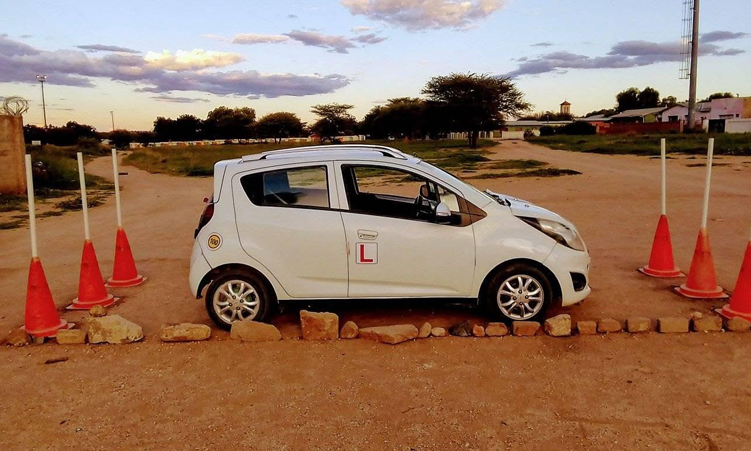
He says some people simply put an L sign on a vehicle and advertise themselves as driving instructors, despite having no experience or formal training.
“Sometimes the person doesn’t even have teaching experience. They really don’t know what they are doing,” Iyaloo says.
However, he says the requirement for instructors and driving schools to obtain proper certificates could be difficult for some existing operators.
“It’s not something that you can just get.
Otherwise, it’s just going to block our bread,” he says.
Iyaloo says the government should consider when existing driving schools began operating and how the new regulations would affect them before implementing the requirements.
He acknowledges that regulation is necessary, particularly because the current system has few barriers to entering the industry.
“Nowadays, everyone has a driving school,” he says, adding that increased competition has already affected established businesses.
Iyaloo says driving schools should be regulated in the same way as the taxi industry, where operators must obtain permits and meet specific requirements before operating.
Another driving school owner, Isakar Komesho, also welcomes the proposed regulations, saying they would help weed out people who enter the industry without the necessary qualifications or driving licences.
Komesho says the proposed requirement for instructors to demonstrate their competence is not a concern for his business and it should be welcomed.
“Yeah, it’s good because some people are just running driving schools without the necessary qualifications. In some cases, they don’t even have a driving licence,” Komesho says.
According to a report by the parliamentary transport committee, the Namibia Bus and Taxi Association (Nabta) has raised concerns about shortcomings in driving school training, saying differences in practical requirements between licence categories could result in drivers obtaining licences without demonstrating sufficient basic vehicle control skills.
Nabta calls for improved driver licensing and training requirements, continuous driver training, stricter driving hour controls and regular vehicle inspections.
The association has also identified speeding, fatigue, reckless driving, overloading and non-compliance as major public transport risks, while calling for stricter regulation of seven-seater vehicles used for long distance commercial passenger transport.
Nabta further urges local authorities to provide safe and designated loading and offloading facilities, saying the use of informal and unsuitable areas exposes commuters, drivers and other road users to unnecessary risks.