





How poor the world would be if not for spices. Can you imagine? No cinnamon? No cardamom? No coriander? No cloves? No nutmeg? No cumin? No aniseed and no caraway? If you are like me, that would be too ghastly to even contemplate.
Spices, as flavour-bearing ingredients, have little to offer by themselves. If you disagree, just put a single clove in your mouth and keep it there for a little while. Not a very pleasant experience, I have been told. Or try eating a stick of cinnamon. I’ll forgive you if you spit it out because it is just plain vile. Disgusting, even.
The magic of spices stems from their ability to combine with other seemingly dull ingredients to create little moments of magic. Add a little cinnamon to pumpkin or a stick of vanilla to cream and you have little angels dancing on your tongue. The transformation is instant and complete. It cannot be questioned, no matter how long these combinations have been around. Some matches are indeed made in heaven. Here are some of the world’s classic pairings:
• Chinese five spice (cassia, star anise, cloves, Sichuan pepper and fennel) with pork.
• Mulling spices (cinnamon, cloves, allspice and nutmeg) with dried fruit and red wine.
• Pumpkin spices (cinnamon, clove, ginger, nutmeg, and allspice) with dishes that include pumpkin and squash.
• Jerk spices (cinnamon, allspice, black peppercorns, cloves, thyme and hot peppers) with chicken.
• Mixed spices (cinnamon, coriander, caraway, nutmeg and cloves) with hot cross buns.
• Apple pie spices (cinnamon, nutmeg, allspice, ginger and cardamom) with dishes that include apples.
• Christmas spices (cinnamon, allspice, cloves, ginger and nutmeg) for food and drinks around Christmas.
This list is not exhaustive, but it shows that most spices are not restricted to sweet or savoury dishes. Furthermore, our short list also shows that certain combinations of spices recur all the time and that, as such, they cannot be considered mere cultural artefacts. They are truly universal applications that transcend cultural preferences. Cinnamon, allspice, ginger, cloves, peppercorns and nutmeg are the spicy glue that connect and tie humankind together. They are the bridges that allow for cross-cultural collaborations and cross-overs. Without spices, we’d struggle to connect and understand, and fusion and innovation would be near impossible. Given how important spices are in our culinary world, it is only logical that they would also be connected to our most precious and intimate culinary experiences and memories.
I have strong memories attached to the smell of cinnamon, milk, butter and cream. As a child, these aromas meant someone was preparing ”, bread-and-butter pudding or ”.
Much later on, the same ingredients make me yearn for crème brûlée or crema catalana. Thus the world of my childhood and the world I travelled as a young adult became connected. One was merely an extension of the other and the first helped me to understand the second.
In my world of food, Keetmanshoop and Barcelona do have something in common. It is up to each one of us to seek and discover it. With each new destination and experience, we connect a new node to the larger network that makes up our lives.
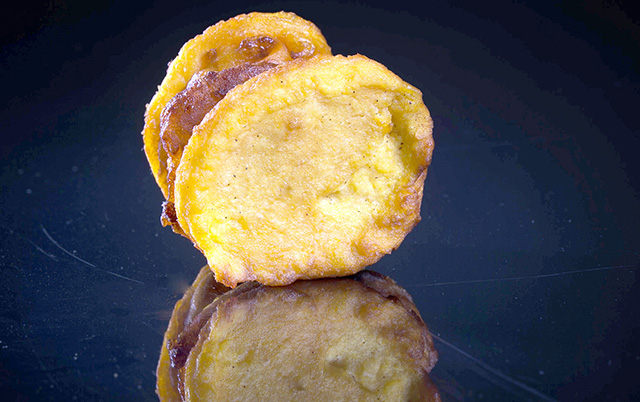
One dish that was very popular during my childhood was pumpkin fritters. Pumpkins were very popular back then, maybe because we did not have the variety of fresh vegetables we have today. But everyone who was anyone made pumpkin fritters. For Sunday lunch with cinnamon, nutmeg and sugar to complement the roasted leg of lamb.
Many years later, while visiting the United States of America, someone brought me a slice of pumpkin pie. The connection was instant. No wonder business giants such as Starbucks saw the potential for products that tap into people’s spice memories.
In 2003, the company developed a pumpkin spice latte sold during the autumn months in the northern hemisphere. It was a smash hit: Between 2003 and 2015, the company sold more than 200 million units of the beverage. It started a pumpkin spice trend that included nearly every kind of sensory product, from candles and air fresheners to pasta sauce and cough drops. Clearly there is great financial potential in memories, and spices are the key that can help unlock that potential.
I wanted to tweak the pumpkin fritters I grew up with. Give them a little make-over to bring them closer to some of the great places I’ve visited and the experiences I had.
So, I decided to use a chai spice mix to expand the traditional cinnamon and nutmeg spice profile I grew up with. My chai may be slightly different from yours, and that is great. Go with what gives you joy.
As for the pumpkin: I learnt some time ago that butternut is a great substitute when you’re fresh out of pumpkin.
• 20 green cardamom, toasted and ground
• 10 grams black peppercorns, ground
• 6 grams dried black tea leaves, ground
• 6 grams cinnamon, ground
• 6 grams fennel seeds, toasted and ground
• 2 cups cooked butternut, finely mashed