




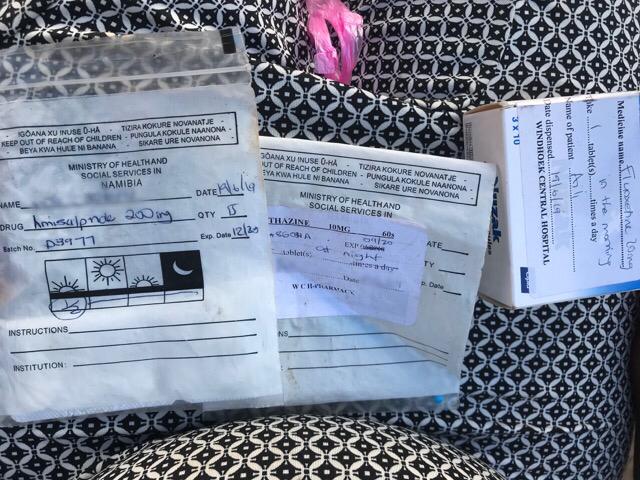
THE psychiatric centre situated behind the Windhoek Central Hospital is battling a shortage of anti-psychotic and anti-depressant medication for patients, and have resorted to referring them to private pharmacies.
Medicines in short supply include amisulpride and fluoxetine.
Amisulpride is an anti-psychotic medicine used to treat symptoms like hallucinations, delusions, thought disturbances, lack of interest and apathy, among others – that are associated with mental disorders like psychosis and schizophrenia (acute and chronic).
Fluoxetine is an anti-depressant known as an SSRI (selective serotonin re-uptake inhibitor). It is often used to treat depression, and sometimes obsessive compulsive disorder and bulimia. Fluoxetine also helps many people recover from depression, and it has fewer side effects than older anti-depressants.
During a visit to the centre last week Thursday, The Namibian heard a nurse informing a member of the public, Weyuru Shipondo (35) that there was no medicine. Shipondo had gone to the centre to collect medicine on behalf of his girlfriend Aili Tobias (23), who relies on anti-depressants on a daily basis.
The nurse told Shipondo that it is not a matter of the government not having funds, but there has been no supplies from the manufacturers, adding that this has been an ongoing problem for the past three years.
The nurse, who declined to be identified, said the centre experiences difficulties sourcing the medication and they are now waiting for the medical board to approve sourcing from various other manufacturers and pharmacies.
Shipindo said he has been sent back and forth from the hospital because they do not have medication needed for his girlfriend.
When The Namibian visited their home in Havana later on Thursday, Tobias was sitting outside their shack.
Tobias told The Namibian that she has been using the medication since 2014. She said she does not know her condition, although the nurse said some of the drugs prescribed on her medical passport were for depression.
Tobias said her condition had forced her to quit school in Grade 9 because she would occasionally faint in class.
Shipindo said he had asked medical staff at the centre to conduct more tests on Tobias to find out what was wrong with her, but they simply informed him there was no need for further examination and that Tobias should take her medication for life.
Speaking softly in Oshiwambo, Tobias explained that she takes the medication every day otherwise she becomes withdrawn from people.
As the breadwinner, Shipindo says he gets worried for her safety, especially when he is at work. He works for G4S security company where he does both night shifts as well as day shifts.
However his salary is not enough to buy the medicine at a private pharmacy, in addition to other responsibilities.
“Last year she fainted while I was at work. When I came home and asked her what was wrong she just started crying so we called the ambulance and they charged me N$900,” he said.
Shipindo said he still has not settled that bill because he cannot afford it.
Tobias, who is looking for a job as a domestic worker, says she cannot live at the north with her parents and three-year-old son because she will have problems accessing medication.
Windhoek clinical psychologist Shaun Whittaker said it is very difficult for psychiatric patients who have been using this kind of allopathic medicine on a long-term basis, to cope without psychotropic medication as they often experience withdrawal symptoms such as headaches, restlessness or sleeplessness.
“Some patients become dependent on the medication, while others could even go into toxic shock which could put their health at risk. It is always advisable for patients to come off this medication slowly over a long period of time,” he said.
He added that there is the possibility that the depression could come back, or that psychiatric symptoms could resurface if patients skip taking the medication.
Whittaker explained that allopathic medication is an effective short-term solution for some psychiatric conditions.
“Patients with severe conditions should take the medication for three to six months, as skipping a few days could disrupt the effectiveness of the medicine,” he said.
However, he noted that there are many other kinds of anti-depressants or anti-psychotics that could be prescribed for patients at the mental health facility.
“The shortage of amisulpride or fluoxetine is not necessarily a crisis,” he explained.
Health executive director Ben Nangombe yesterday confirmed the shortage to , adding that anti-depressants and anti-psychotic medication are currently out of stock.
“There needs to be better coordination,” he admitted.
When addressing staff members on Thursday, Nangombe said there are some officials who are failing to do the basic things right with respect to the ordering of medicines and clinical supplies.
“Even before they confirm which Central Medical Stores (CMS) or regional medical depots, they report to me or to newspapers about stock-outs,” he said.
In an age of information overload, Sunrise is The Namibian’s morning briefing, delivered at 6h00 from Monday to Friday. It offers a curated rundown of the most important stories from the past 24 hours – occasionally with a light, witty touch. It’s an essential way to stay informed. Subscribe and join our newsletter community.

The Namibian uses AI tools to assist with improved quality, accuracy and efficiency, while maintaining editorial oversight and journalistic integrity.
Stay informed with The Namibian – your source for credible journalism. Get in-depth reporting and opinions for
only N$85 a month. Invest in journalism, invest in democracy –
Subscribe Now!