



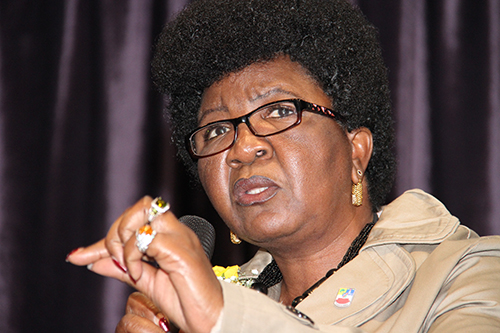
FOREIGNERS who want to sell their property in Namibia such as land or a house will soon be forced to first offer it to a local authority, a Namibian citizen or central government.
This is part of the amendments presented in the National Assembly last week by urban and rural development minister Sophia Shaningwa (right). Even though the amendments are also set to ban foreigners from buying land in any town, they can still acquire land through companies in which they should not have majority shares.
According to the latest amendments to the Local Authorities Bill, which will be discussed in the National Council in a few weeks, a Namibian property owner situated in a local authority who intends to sell property should only sell it to a fellow citizen.
“A foreign national who owns immovable property in a local authority area before the commencement of this section and intends to alienate the property may first alienate the property to the local authority, failing which to a Namibian citizen, failing which to the State, or failing which to a foreigner with a waiver from the State,” the new amended bill said.
For instance, a foreign property owner in Windhoek who wants to sell their land or house will first offer that property to the City of Windhoek. If the municipality does not want it, then the foreigner is obliged to sell that land to a Namibian citizen who might be interested.
If there is no Namibian interested, the land will be offered to the government. When passed, the Act will be called the Local Authorities Act, 1992, and will come into operation on a date to be determined by the urban and rural development minister by notice in the Government Gazette.
Shaningwa said foreigners will not be allowed to buy land in Namibia anymore.
“We have gone back to the Cabinet decision that dictates that foreigners must not be allowed to acquire land in Namibia and that they may only lease it.”
She did not specify the number of years the lease may run but foreigners can still buy property through co-owing a minority stake in companies with Namibians.
Members of parliament three weeks ago questioned whether the proposed legal amendments had enough teeth to discourage selling of land through close corporations.
Shaningwa answered last week that for a close corporation to get land or any state property, it should at least be 51% Namibian-owned and registered.
Max Weylandt, a scholar who analysed the Local Authority Bill last month for IPPR after it was tabled in parliament, told The Namibian that it seems the idea behind the bill is to encourage foreigners to enter into agreements with locals.
“So maybe large international companies can set up local property holding groups or something. Or maybe we will just see a lot more middlemen/shelf companies,” he added.
Weylandt however believes the government should be policy-driven and not pressure-driven.
Meanwhile, deputy minister of agriculture Anna Shiweda criticised the clauses in the Local Authority Act in parliament last month, which will divide the country into zones and forbid some Namibians from acquiring land in certain areas because of how much they earn.
Shaningwa said the clauses will remain in place when she answered Shiweda last week.
“The designation of areas for low-income groups is constitutional. We have the constitutional mandate to introduce laws to advance people who were previously disadvantaged,” she said.
Simply put, the new law will give the minister powers to decide where in local authority areas people must buy land or property based on their income levels. It also stipulates that those with higher incomes cannot buy land in areas designated for people with low incomes.
Another clause passed was about giving the minister powers to deal with a local authority council that is failing to perform as expected.
In an age of information overload, Sunrise is The Namibian’s morning briefing, delivered at 6h00 from Monday to Friday. It offers a curated rundown of the most important stories from the past 24 hours – occasionally with a light, witty touch. It’s an essential way to stay informed. Subscribe and join our newsletter community.

The Namibian uses AI tools to assist with improved quality, accuracy and efficiency, while maintaining editorial oversight and journalistic integrity.
Stay informed with The Namibian – your source for credible journalism. Get in-depth reporting and opinions for
only N$85 a month. Invest in journalism, invest in democracy –
Subscribe Now!