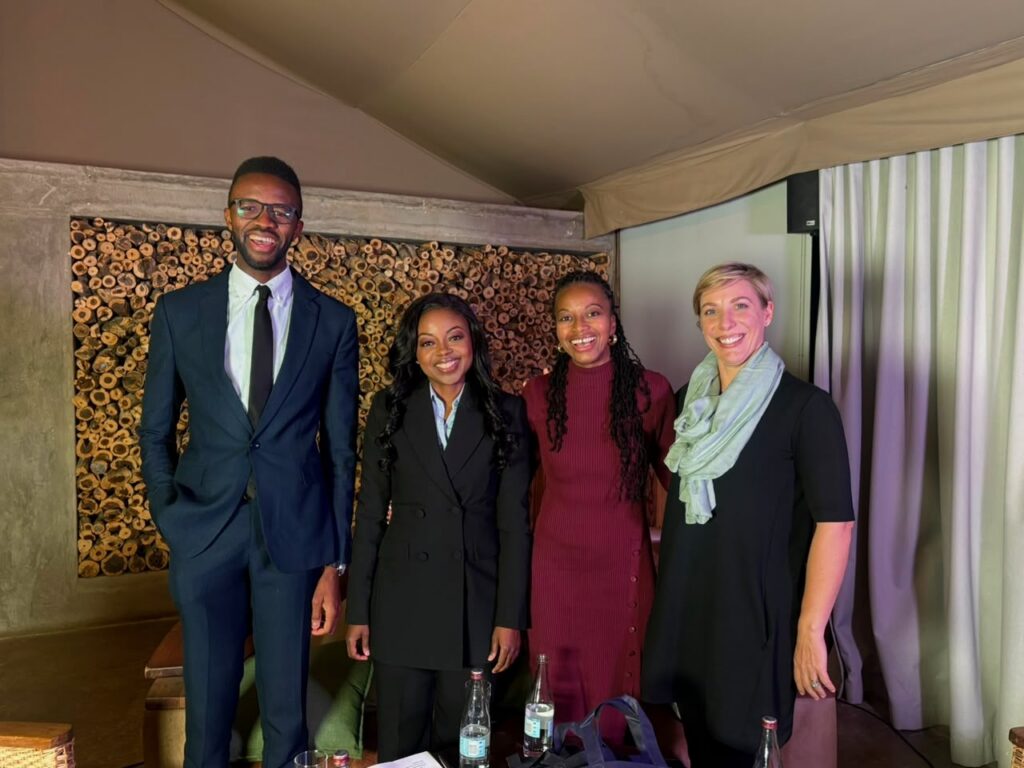
Improving governance rather than simply increasing funding will be key to transforming Namibian sport, experts said during the Namibia Institute of Corporate Governance ‘Fireplace Conversations’ last Thursday.
The discussion brought together Namibia Sports Commission board member Dominic le Roux, former Fifa normalisation committee member Dina Shituula and Namibia Institute of Corporate Governance (NICG) chairperson Desmond Nikanor to examine governance challenges facing the country’s sport federations.
While acknowledging that limited funding remains a major obstacle, the panellists argued that stronger leadership, transparency and accountability are essential to building public trust and attracting investment.
Nikanor said governance principles are the same – regardless of whether they are applied in sport, business or public institutions, but noted that sport presents unique challenges because of the many stakeholders involved.
He said sport organisations are accountable to athletes, the government, sponsors, supporters and international governing bodies, making governance decisions more complex than in many other sectors.
Addressing concerns over federations failing to submit audited financial statements, Nikanor said the issue should not automatically be blamed on a lack of resources.
“We first have to establish whether they are unable or unwilling,” he said.
Nikanor warned that failure to comply with governance requirements damages credibility and makes it difficult for governments and sponsors to justify investing in sport organisations.
“It would be irresponsible for me to approve sponsorship of a body if I cannot account for where those funds go.”
Le Roux said ethical leadership remains the foundation of good governance and stressed that athletes ultimately suffer when governance systems fail.
“If we don’t improve leadership behaviour, you have a lack of trust within federations, poor communication and poor decision-making. It affects the athletes ultimately, yet we expect them to perform,” she said.
She called for standardised governance requirements across sport federations, including clearer separation between boards and operational management, while suggesting constitutions should be aligned to strengthen oversight.
Shituula, who has served on Fifa’s normalisation committee for the Namibia Football Association, said governance reform requires courageous leadership willing to embrace transparency and scrutiny.
She said independent governance structures and stronger accountability are necessary to restore confidence in sport administration.
“Governance issues that linger become a much bigger problem,” she said, warning that poor decisions made today could have consequences for many years.
Shituula said meaningful governance reform requires leaders who are willing to accept scrutiny and implement difficult changes.
Reflecting on reforms undertaken at the Confederation of African Football (CAF), she said transparency and independent governance structures are essential for restoring confidence in sport administration.
“Reform requires leadership courage. We take offence when we are being scrutinised,” she said, adding that governance issues left unresolved eventually become much bigger problems.
“The opposite is also true: Things that are happening today, we’re going to see the detriment of that in 10 years’ time.”
Shituula called for athletes to play a greater role in decision-making, arguing that governance structures should reflect the needs of those they ultimately serve.
She said athletes need formal channels through which they can influence decisions.
“As an athlete, you want to be given the best, you want to be given the most, but sometimes it’s just not possible,” she said.
She urged the government to prioritise upgrading existing sport infrastructure rather than investing in an expensive new national stadium.
Namibia should first renovate Independence Stadium to meet CAF and Fifa requirements, she said.
“We cannot afford a N$3-billion stadium,” she said. “But I believe we do have enough money to renovate the existing stadium.”
The discussion also highlighted the need for athletes to play a greater role in decision-making.
Nikanor said athletes should not only be viewed as beneficiaries of sport, but should also be formally represented on federation boards and through players’ unions.
Audience members echoed the call for reform, with former Namibia Football Association executive Jochen Traut arguing that strategic planning had been central to the success of countries such as Morocco and should become standard practice in Namibia’s sport federations.
The panellists agreed that governance reforms should precede increased investment in sport.
“Governance can be done with no funding, and it has to be the precursor,” Nikanor said.