



Hospital Year announced Completed?
Ondangwa Referral Hospital 2007 No
Nkurenkuru District Hospital 2014 No
Otjiwarongo Referral Hospital 2014 No
Gobabis Hospital upgrades 2020 Partial
Windhoek District Hospital (Havana) 2022 (revived from 2016) No
The government has yet to build or upgrade at least five district or intermediate hospitals it promised at Ondangwa, Nkurenkuru, Otjiwarongo, Gobabis and Windhoek – in one case, 19 years ago.
The hospitals are incomplete, stalled or have not yet gotten off the ground after the government announced plans for them between 2007 and 2024.
The health ministry spokesperson, Walters Kamaya, yesterday said the projects remain incomplete because of funding constraints, contractors’ failures, adverse world economic conditions and Covid-19 pandemic delays.
“The health ministry, in consultation with the Ministry of Finance, is sourcing financing in the new medium-term expenditure framework for this year,” he said.
The Ondangwa Referral Hospital, first proposed in 2007, was raised as an issue at a business fundraising dinner at the Ondangwa Trade and Industrial Exhibition last Saturday.
The cost of the hospital was estimated at N$100 million in 2015.
Namibia Nurses Union secretary general Junias Shilunga said on Monday it is a matter of public record that the government has not built a single referral hospital since independence.
“This is deeply worrying, especially after 36 years of independence,” Shilunga said.
He said the country still relies on old and dilapidated hospitals inherited from the apartheid government, despite the country’s growing population.
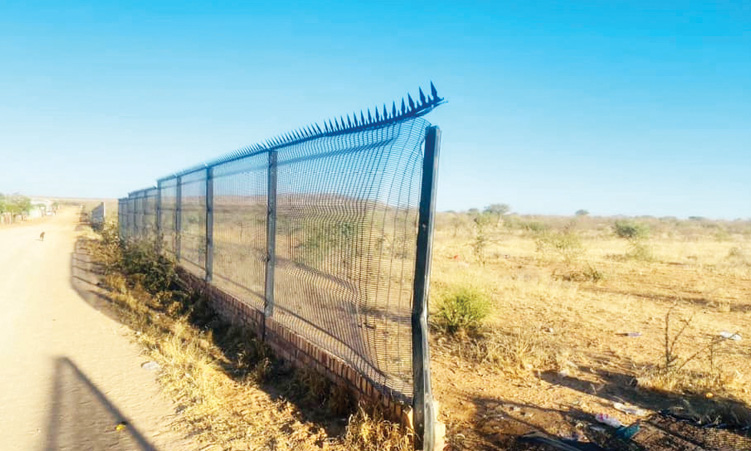
The land for the Otjiwarongo hospital was allocated and a fence was erected. But the project has seemingly been abandoned.
Shilunga believes that these were important projects that could have eased the burden on Windhoek’s hospitals.
“Imagine a patient in severe pain being transported for more than 10 hours by bus from Katima Mulilo to Windhoek for health services,” he said.
A resident of Nkurenkuru, George Dinyando, says the delay in building the hospital has affected residents of the region.
“Some women are forced to give birth while travelling, while others face preventable complications,” he says.
A resident of the Ohangwena region, Laimi David, who travels 80km to get to the Onandjokwe hospital, says it is challenging and risky.
“Pregnant women are forced to travel far for care, which is stressful and dangerous. It’s painful and unfair that basic hospitals are so out of reach,” she says.
The Namibian reported in 2017 that more than N$4 million had already been spent on planning and feasibility studies for the Ondangwa Referral Hospital.
The state-of-the-art 1 000-bed hospital was expected to have an oncology centre, a maternity block and a cardiac unit.
The hospital was planned to relieve the over-stretched Onandjokwe hospital that was built in 1911 at Oniipa in the Oshikoto region.
Kamaya said the ministry is updating the feasibility studies, environmental impact assessments and transport impact assessments for the Ondangwa and Nkurenkuru hospitals.
In the Omaheke region, upgrades at the Gobabis hospital, announced around 2020, have faced repeated delays.
The project includes an intensive care unit (ICU) and theatre upgrades, but multiple deadlines were missed between 2021 and 2024.
In 2025, the government cancelled contracts with underperforming contractors, leaving the project incomplete.
Kamaya said the Gobabis ICU and theatre upgrades began in 2024 with an initial completion target of 2025.
“The two components were delayed due to non-performance of the contractors. The Gobabis theatre was completed on 6 March, while the ICU is scheduled for completion in April,” Kamaya said.
WINDHOEK HOSPITAL
The recently revived district hospital in Windhoek’s Havana carries the largest cost, now revised up to N$3.2 billion after being announced at N$2.9 billion in 2022.
The 500-bed hospital was scheduled for completion in 2027 to relieve the over-stretched Katutura Intermediate Hospital and was expected to launch shortly after the announcement in 2026.
To date only preliminary work for the project has begun, with bulk access roads, water and electrical infrastructure construction having started in July 2025 and expected to be completed by the end of April.
The Windhoek hospital project was revived between 2016 and 2017, with the government announcing in 2021 that construction would begin in 2022.
Kamaya said internal bulk earthworks and service tenders are to be launched in April, paving the way for the hospital’s construction, while additional funding is still being sourced for the project.
Havana resident John Martin says he has lost hope in the project.
“Sometimes it is difficult to even get a taxi at night here. Once someone in our neighbourhood was stabbed but died because they did not make it to the Katutura hospital,” he says.
Parliament health committee chairperson Nono Katjingisua said last Wednesday that the committee recently inspected capital projects across various regions.
The committee visited the Gobabis hospital project where Katjingisua said the contractors were close to completing work on the ICU and theatre.
She blamed the delay at the Havana hospital on administrative processes involving multiple stakeholders.
“The information on hand is that they will start 1 April,” she said.
However, she acknowledged a lack of clarity regarding other key projects. “About Ondangwa and Rundu, I don’t have any information,” she said.
In an age of information overload, Sunrise is The Namibian’s morning briefing, delivered at 6h00 from Monday to Friday. It offers a curated rundown of the most important stories from the past 24 hours – occasionally with a light, witty touch. It’s an essential way to stay informed. Subscribe and join our newsletter community.

The Namibian uses AI tools to assist with improved quality, accuracy and efficiency, while maintaining editorial oversight and journalistic integrity.
Stay informed with The Namibian – your source for credible journalism. Get in-depth reporting and opinions for
only N$85 a month. Invest in journalism, invest in democracy –
Subscribe Now!