



Namibian Institute Of Public Administration And Management (Nipam), Windhoek, 4 March 2026.
___________________________________________________________
Good morning,
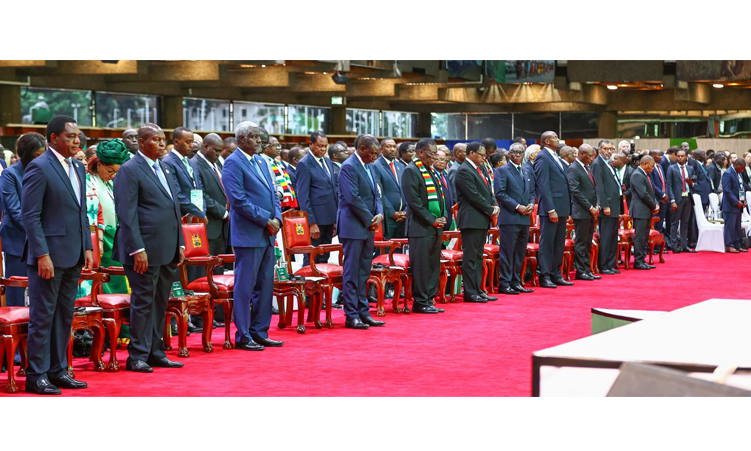
It is an honour and a privilege for me to address you at this very important meeting of the National Anti-Corruption Strategy Steering Committee (NACSSC). A meeting of this nature is not only aimed at evaluating the progress made in the implementation of the National Anti-Corruption Strategy, but it is also an opportunity to renew our national commitment to the prevention of corruption and strengthening of good governance, as espoused in our Sixth National Development Plan (NDP6). Monitoring, evaluating and tracking progress made in the implementation of the assigned respective strategic objectives and actions to all implementing institutions under the strategy are critical keys to achieving effective governance and public service delivery.
Our government has, since independence, recognised the importance of effective governance to enhance and fast-track our national development agenda. Therefore, significant efforts have been made towards strengthening measures to combat corruption. It is for this reason that the cabinet approved the implementation of the strategy at its decision-making meeting held on 9 December 2021. This bold decision was just one among many other strides made towards the improvement of processes, systems and institutions to root out corruption in our governance system. As the government, we firmly believe that corruption and good governance cannot go together.
To promote good governance, national anti-corruption strategies and relevant legal frameworks must be developed. Institutions such as the Anti-Corruption Commission (ACC), the Financial Intelligence Centre (FIC), the Office of the Prosecutor General, the Office of the Auditor General, the Office of the Ombudsman and other institutions have been established. It is critical that such institutions are adequately funded to be capable of carrying out their mandates effectively. Most importantly, these institutions must complement one another. They must create synergies that enable them to share intelligence and swiftly act as one when acts of corruption rear their ugly heads. There is no need to work in silos. Work together. You are one, fighting a common enemy that is corruption.
The eighth administration views corruption through serious lenses. When president Netumbo Nandi-Ndaitwah was sworn in as the fifth president of Namibia in March last year, she equated corruption to cancer and urged public servants to maintain high ethical standards at all times. “Corruption in all its manifestations,” she said on that day, “should be avoided at all costs.”
Her language and tone have not changed since that day. In her booklet ‘My Leadership Vision for Namibia’, the president leaves no room for ambiguity as to where she stands on corruption. Her anti-corruption stance is deeply rooted in her five non-negotiable principles, which are the hallmarks of her strong, honest and principled leadership. These are pragmatism, integrity, accountability, meritocracy and inclusivity.
For context, let me quote from that booklet. On integrity, she says: “I want to emphatically stress that any acts of corruption, whether implicit or explicit, will absolutely not be tolerated and will be dealt with through all applicable laws of the country. Corruption is the cancer that eats away at the very fabric of our developmental efforts and initiatives as a nation. It is of utmost importance to understand that national development and effective service delivery are grossly compromised in an environment where corruption is permitted to thrive. Therefore, as the leadership, we will ensure that all institutions entrusted with the crucial responsibility of fighting corruption are adequately empowered to execute their functions effectively. Simply stated, under my leadership, any individual who involves themselves in acts of corruption will face the full wrath of the law, and this will be done without prejudice.”
On accountability, the president says: “My very sincere conviction is that the value of accountability goes along with the sense of patriotism. The sense of our patriotism as a people will be determined by our measure of accountability to our national laws, policies and guiding principles. I am thus convinced that accountability to one another is at the heart of nationhood. Our collective sense of accountability will inevitably develop in us the desire to want the best for ourselves and others, and to ensure that we all enjoy the spoils of our resources. Therefore, being accountable simply means that as leaders, we are merely stewards entrusted with the various resources of the country, and as such, we must be answerable when it comes to the utilisation of these resources.”
There should be no room for corruption. Those tasked with rooting it out must do so without fear or favour. The people out there want us to serve them with honesty, fairness and accountability. Once we do that, our offices, and we as individuals, will earn their unqualified respect.
There is equally a need to decentralise these offices to all regions of Namibia to bring services closer to the people who may wish to report corruption and related unethical conduct to the Anti-Corruption Commission and other agencies. Transparency, fairness and accountability foster socio-economic development. This is the main objective of this strategy. It is, therefore, important for all sectors to commit themselves to its implementation.
The first National Anti-Corruption Strategy and Action Plan was implemented from 2016 to 2019. It laid a strong foundation for the second strategy. The first strategy had six strategic objectives, with 75 actions implemented by 22 institutions comprising civil society, the private sector and the public sector. The second National Anti-Corruption Strategy and Action Plan (2021–2025) had eight strategic objectives and 95 actions implemented by 44 lead institutions.
The second strategy is ending this financial year, 2025/2026. Therefore, the independent evaluation consultant, appointed with the generous financial support from the United Nations Development Programme (UNDP), will provide a synopsis on evaluation findings and the way forward for the development of the third National Anti-Corruption Strategy and Action Plan 2026 to 2030. I urge governors, public officials, members of civil society and the private sector to give the necessary support and cooperation and make constructive inputs during the consultation process for the development of the third strategic plan, which will take place during March 2026 in all fourteen regions.
This is a national strategy which demands support from all sectors of society. We all have a stake in it. Corruption knows no status or title. If we do not confront it effectively, it will destroy the economic gains made to date and we will all become the ultimate victims of corruption. Corruption can undermine service delivery, widen inequality, weaken confidence and trust in public institutions by citizens, and ultimately compromise the future of the entire nation.
Namibia is a signatory to regional, continental and global legal instruments such as the United Nations Convention Against Corruption, the African Union Convention on Preventing and Combating Corruption and the Southern African Development Community (SADC) Protocol Against Corruption. Our anti-corruption programmes should therefore speak to the provisions of the global conventions we have committed ourselves to through ratification, not to please the outside world, but because it is the right thing to do to enhance effective governance as defined by the core values of transparency, accountability, the rule of law and democratic participation of all citizens.
The implementation of the actions outlined in the strategy must impact positively on the citizens we serve. Citizens are the masters of our destiny. They must therefore be able to appreciate the improvement and progress made in the prevention and eradication of corruption across the country. Public institutions in particular must at all times be ready to provide relevant information to the secretariat of the strategy regarding measures taken in compliance with actions implementation. Integrity committees which have been established in various offices and ministries must be reactivated and supported. They too must fully commit themselves to internal training related to ethical values.
Collaboration between all stakeholders – public sector representatives, civil society members and private sector representatives – is key to the successful fight against corruption. All stakeholders across Namibia must keep their hands on deck and take ownership of the present strategy and the third National Anti-Corruption Strategy that will be developed soon.
The government remains committed to fighting corruption across the board. It equally remains committed to providing the necessary support to institutions tasked with the mandate to prevent and combat corruption.
Let us all hold hands in unison. That way, we shall drive Namibia in the right direction, characterised by transparency, fairness, integrity and justice for all.
I thank you.
In an age of information overload, Sunrise is The Namibian’s morning briefing, delivered at 6h00 from Monday to Friday. It offers a curated rundown of the most important stories from the past 24 hours – occasionally with a light, witty touch. It’s an essential way to stay informed. Subscribe and join our newsletter community.

The Namibian uses AI tools to assist with improved quality, accuracy and efficiency, while maintaining editorial oversight and journalistic integrity.
Stay informed with The Namibian – your source for credible journalism. Get in-depth reporting and opinions for
only N$85 a month. Invest in journalism, invest in democracy –
Subscribe Now!