



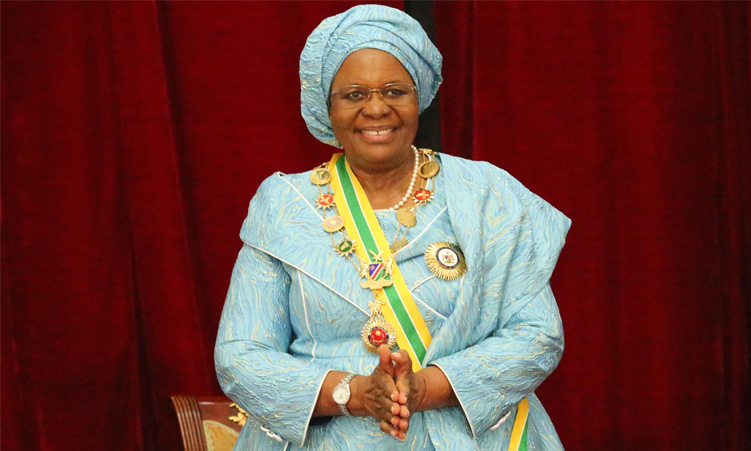
President Netumbo Nandi-Ndaitwah says women can influence the growth of democracy as they are the majority of voters.
She said this on Saturday at the 63rd Anniversary of the Pan-African Women’s Day celebration at the Independence Arena in Katutura, Windhoek.
The day, celebrated on 31 July, remembers the struggle for independence and self-determination across Africa. The date marks the day in 1962 when African women gathered in Dar es Salaam, Tanzania, and formed the Pan-African Women’s Organisation (Pawo).
This is the first pan-African organisation to rise against colonialism thus becoming the foundation for Africans’ fight for the independence of the continent.
“It has been recorded that women-led institutions have a higher success rate. Not only in the private and the economic sphere, but especially in women’s contribution to peace-making efforts. Therefore, there is nothing limiting women from rising and using our comparative advantage to benefit our societies. After all, women are the majority voters and can influence the growth of democracy,” she said.
She highlighted the efforts of Pawo’s founders, visionary African women like Putuse Appolus, Jeanne Cissé and Ruth Neto, citing that it is because of them that African women can stand tall having made meaningful contributions to the liberation of Africa.
Nandi-Ndaitwah said many have lost their lives and more are permanently disabled.
The day was held under the theme ‘Advancing Social and Economic Justice for African Women through Reparation’, inspired by the African Union theme for 2025, namely ‘Justice for Africans and People of African Descent Through Reparations’.
“This is also an event when we have to remember Julius Nyerere, the first president of Tanzania, who created space for the formation of Pawo and officiated it at the 1962 conference,” she said.
RESTORATION
She said the theme calls for the restoration of justice in Africa through reparations.
A process, she said, Namibia started 19 years ago when the Namibian parliament passed a motion calling on Germany to accept that they have committed genocide in Namibia, whereby they have to apologise and pay reparations
In 2015, she said the government, working with the descendants of the victims of the genocide, has been engaging the German government on genocide apology, and reparations. She added that it was hoped a common ground would be reached between the two parties on the matter.
CONFRONT INJUSTICES
Nandi-Ndaitwah said the day ignites a flame of solidarity among women across the continent to advocate for comprehensive, inter-sectoral reparative justice frameworks that confront historical injustices and current systematic inequalities faced by African women and girls and strengthen the capacities of African women overall.
“These objectives remind us of the multifaceted challenges faced by women and the girl child daily in Namibia and Africa. Many grapple with economic instability, limited access to quality education, and widespread gender-based violence.”
Political analyst Sakaria Johannes says women in leadership can have a positive impact towards democracy and also contribute towards development.
“If society empowers women, it can also have gender equality,” he says.
In an age of information overload, Sunrise is The Namibian’s morning briefing, delivered at 6h00 from Monday to Friday. It offers a curated rundown of the most important stories from the past 24 hours – occasionally with a light, witty touch. It’s an essential way to stay informed. Subscribe and join our newsletter community.

The Namibian uses AI tools to assist with improved quality, accuracy and efficiency, while maintaining editorial oversight and journalistic integrity.
Stay informed with The Namibian – your source for credible journalism. Get in-depth reporting and opinions for
only N$85 a month. Invest in journalism, invest in democracy –
Subscribe Now!