



Windhoek, 24 October 2025
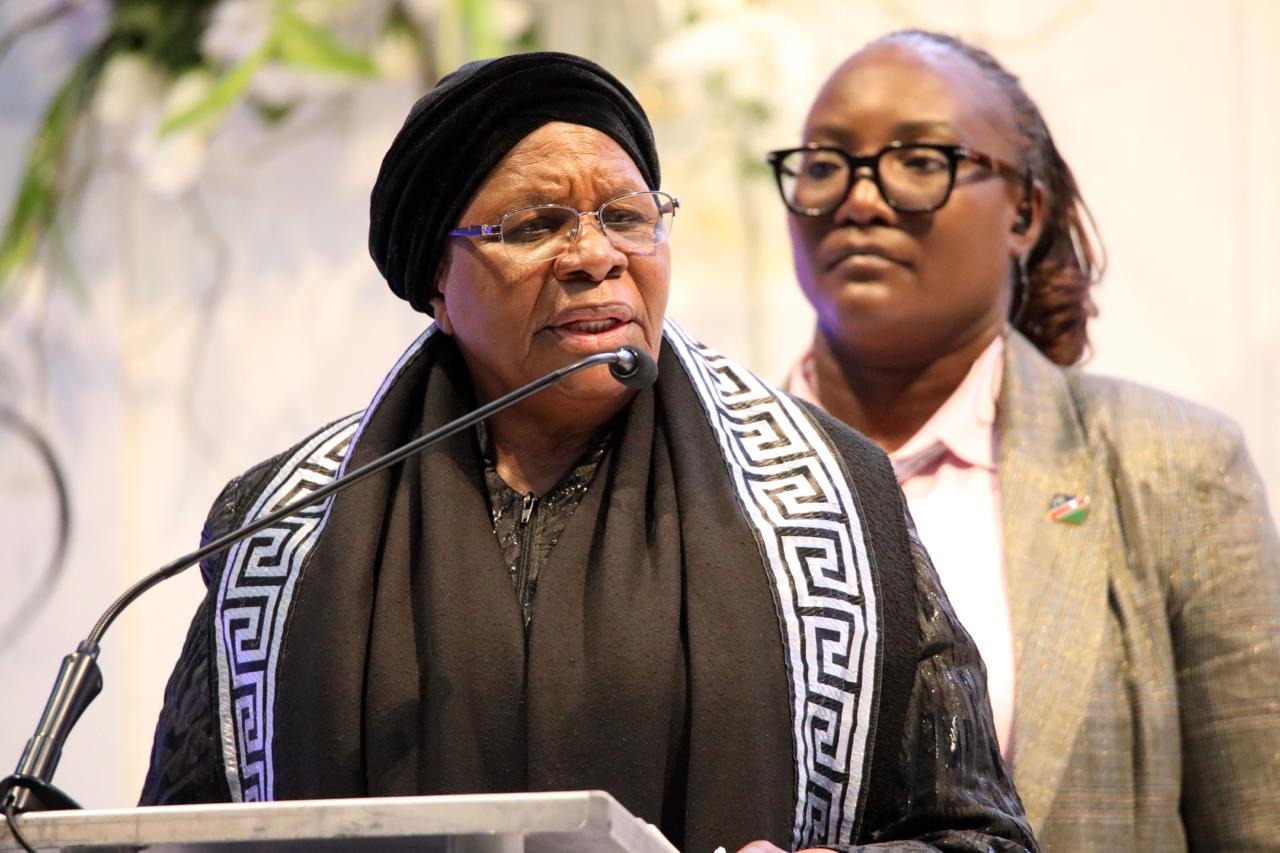
These two days have marked a strong beginning to the Namibia Public-Private Forum. However, this forum will only have a real and lasting impact if each one of us, individually and collectively, does our part. We must act with discipline, urgency, and diligence on what has been discussed here.
What stood out most over these two days was the unity of a nation striving for a common goal. As our founding president reminded us, we will definitely emerge victorious.
I wish to thank all presenters, stakeholders, and participants for the honesty, openness, and respect that guided our discussions. The tone of engagement showed that we can speak frankly, differ respectfully, and still move forward together. That spirit of partnership is what will carry Namibia from dialogue to delivery.
The private sector reminded us that progress begins with trust. When the government and businesses meet each other halfway, we create the right environment for growth. We must make it easier to do business in Namibia by reviewing and amending policies that hold us back, simplifying processes, cutting unnecessary delays, and aligning our institutions. Predictable and fair systems build confidence, and confidence attracts investment, creates jobs, and drives inclusive growth.
We have talked enough; now is the time for action. To build on this momentum, I would therefore like to inform you of some of the directives that are underway for implementation without delay.
In the agricultural sector, the ministry must enhance its plant health capacity before the end of this financial year by deploying specialised skills to address emerging phytosanitary challenges. It must expedite the establishment of the structure to commence implementation of the transformation of the agri-food sector implementation plan, which identifies priority investment areas and clarifies stakeholder roles, by December 2025.
The home affairs ministry must ensure that the migration bill is enacted before the end of this financial year. It must improve the infrastructure at Hosea Kutako International Airport by adding more counters in the arrival hall to curb long queues at arrivals. It must review the visa regime and simplify visa application forms to make it easier for investors and visitors to access the special visa programme, with serious investors given five-year permits.
On finance, the Namibian government is poised to implement a series of tax reforms designed to bolster both competitiveness and fairness within the economy. These initiatives align with global trends that advocate for increased tax-to-gross domestic product ratios to facilitate economic growth and promote reduced inequality through a progressive taxation framework.
On trade and investment matters, manufacturing and value addition require special incentives, which are currently proposed under the Export Processing Zone law. However, since the finalisation of the bill may take more time, I am directing that the Special Incentives Policy for manufacturing be completed within the next two months and made operational.
The time it takes to start a business in Namibia has long been a concern and rightly so. It places us at a disadvantage in the race to unlock growth, create jobs, and foster innovation. While the process involves several institutions, it is imperative that the Business and Intellectual Property Authority, as both the gateway and gatekeeper of formal business, must drive this transformation.
My vision is clear: to make doing business in Namibia simple, seamless, swift, accessible, and integrated. I want it to be an enabling, one-stop experience – one that becomes an incentive in itself to invest and innovate in our country.
I am encouraged by the progress we are already making. The Cabinet has approved the Business and Intellectual Property Authority’s acquisition of a fit-for-purpose building, which will open in early November 2025. This new facility will serve as Namibia’s One-Stop Business Hub, bringing together all essential business services under one roof – a tangible step toward the Namibia we envision.
Together, let us build a Namibia where doing business is not a challenge to overcome but an opportunity to seize.
The Competitiveness Report by the Namibia Investment Promotion and Development Board offered two key lessons. First, Namibia continues to perform strongly in governance and financial management. Second, we must accelerate progress in innovation, digital readiness, and skills development. These are not weaknesses but opportunities to do better. Let us align our education system with the needs of the labour market and equip our young people with practical and digital skills. In this way, we will build a confident generation ready to compete and lead.
The high-level panels captured the essence of this forum. The government cannot do everything alone. Real transformation happens when we create more space for private-sector participation while the government focuses on enabling, regulating, and ensuring fairness. This is how we move from potential to progress and from planning to prosperity.
We also reflected on the immense potential of our mining industry. Namibia is richly endowed with strategic minerals that the world needs. If well managed and sustained, mining can be a true game changer that lifts our economy to new heights and improves livelihoods across the country. But to fully benefit, we must develop the specialised skills that this sector requires. Namibians must be equipped to take up the high-value jobs of the future rather than depending on outside expertise.
The United Nations session added an important global dimension. Through the Global Accelerator on Jobs and Social Protection, Namibia is walking hand in hand with international partners who share our vision of inclusive prosperity. Their four focus areas – youth employment, entrepreneurship, expansion of social protection, and the transition from informal to formal economies – align seamlessly with our national priorities, the African Union Agenda 2063, the Sustainable Development Goals, and the Pact for the Future adopted at the United Nations last year under the co-facilitation of Namibia and Germany.
Together, we must ensure that this public-private partnership, which we have recommitted ourselves to over the past two days, delivers tangible results for our people.
Our sectoral working groups also brought forward practical and powerful ideas. The agriculture, water, and fisheries cluster reminded us that food security is both a matter of dignity and development. We must modernise irrigation, expand agro-processing, and promote Namibian products to strengthen local industries.
The creative industry, sport, and tourism group reminded us that culture is also an economy. Our music, film, crafts, and tourism hold immense potential to create jobs, build national pride, and share the Namibian story with the world. The public and private sectors must collaborate closely to nurture and invest in this creative power.
The sessions on health, housing, land, and sanitation reminded us that inclusive development begins with dignity. Access to quality healthcare, affordable housing, serviced land, and proper sanitation are not privileges; they are rights. We must act with urgency and unity to make these rights a lived reality for every Namibian.
I am very impressed with how the Namibia Investment Promotion and Development Board has structured the thematic working groups for this forum and with the great expertise shown by each of you. I have therefore decided to transform some of these thematic working groups into three task forces: task forces on economic recovery, on health, and on housing, adding a few government members. They will receive their terms of reference next week and report back to me in two months, a deadline they have set themselves in their presentations – specifically, the end of January 2026.
As we conclude this forum, I am encouraged by the unity of purpose that filled every session. Everyone spoke with one goal in mind: to make Namibia a conducive environment for all. This is how progress begins – through honesty, cooperation, and the courage to act.
We now need to develop the character and the collective discipline to achieve what we have gathered here to discuss. Progress demands more than good ideas; it requires consistency, humility, and follow-through. We must stay focused on our shared goals and deliver on our promises. The time for talk is over; this is the moment to translate plans into measurable action that improves lives.
If there is one thing I am 100% convinced of after what I have seen and heard over the past two days, it is that Namibia does not lack intellectual capacity. I have witnessed some of the most brilliant minds, the most innovative ideas, and the most inspiring plans for our country. That gives me pride and confidence. Namibia has the brains, the will, and the heart; now, we must match it with discipline and delivery.
Let us remember that this country belongs to all of us. Its future is our shared responsibility. Each of us has a role to play in building a Namibia we can all be proud of. That duty is non-negotiable. It is a sacred responsibility we owe to those who came before us and to those who will inherit this land long after we are gone. The future of this country depends on the decisions we make today.
Great societies are built by men and women who plant trees under whose shade they may never sit. That is the kind of vision and selflessness that must guide us.
Before I declare this historic Namibia Public-Private Partnership dialogue officially closed, allow me to express my heartfelt congratulations and appreciation to the organisers, sponsors, and all the hardworking faces behind it.
I thank every participant for the respect, honesty, and energy that defined these discussions. Let us continue with one heart and one mind, because Namibia’s true success will never be measured by what divides us but by what unites us.
I thank you.
In an age of information overload, Sunrise is The Namibian’s morning briefing, delivered at 6h00 from Monday to Friday. It offers a curated rundown of the most important stories from the past 24 hours – occasionally with a light, witty touch. It’s an essential way to stay informed. Subscribe and join our newsletter community.

The Namibian uses AI tools to assist with improved quality, accuracy and efficiency, while maintaining editorial oversight and journalistic integrity.
Stay informed with The Namibian – your source for credible journalism. Get in-depth reporting and opinions for
only N$85 a month. Invest in journalism, invest in democracy –
Subscribe Now!