Windhoek, 5 October 2026.
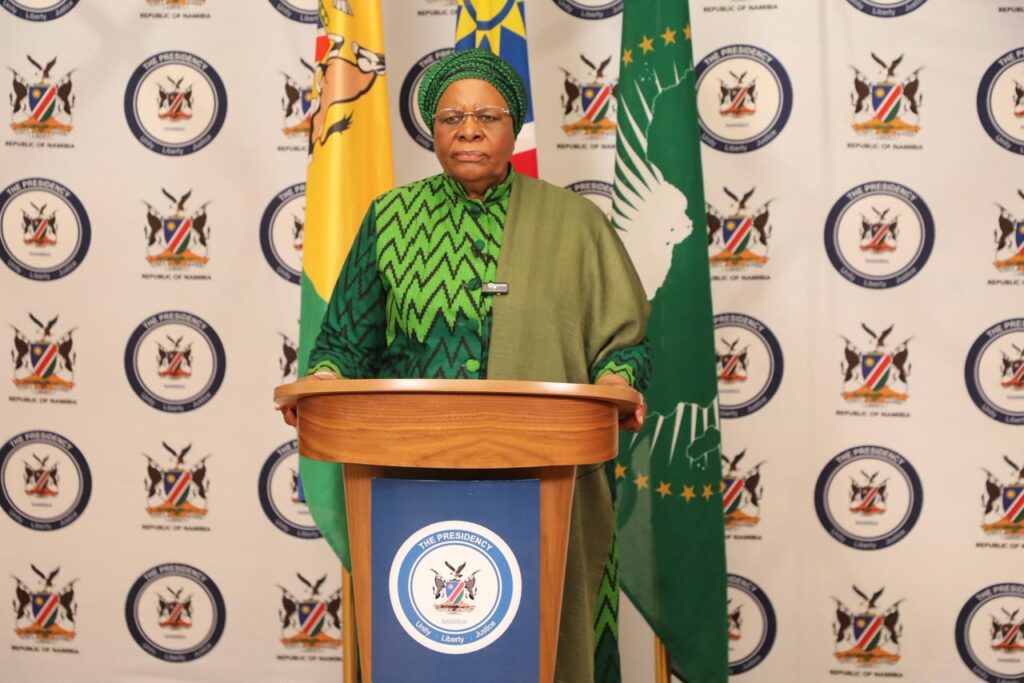
High-level address by H.E. Dr Netumbo Nandi-Ndaitwah, President of the Republic of Namibia, on the foot-and-mouth disease outbreak.
Fellow Namibians,
The outbreak of foot-and-mouth disease in the Karasburg Veterinary District of the //Kharas Region has brought uncertainty and distress to farmers, workers and businesses across our livestock industry. Livelihoods are at stake. Government is acting to contain the disease, and I call on every Namibian to support this effort.
The livestock and meat industry is one of the cornerstones of our economy. From the farmer and farmworker to the transporter, processor and exporter, its value chain sustains families and communities far beyond the affected areas. Protecting that value chain is a national responsibility.
Our immediate task is clear. We must contain the outbreak, prevent its spread and protect unaffected herds, so that normal production and trade can resume as quickly and safely as possible.
The outbreak was confirmed on 23 September 2026 through laboratory testing of samples collected during veterinary surveillance. Namibia has experience in responding to foot-and-mouth disease in the zone north of the Veterinary Cordon Fence. We must now draw on that experience and ensure that our response meets the demands of this outbreak.
When the disease was detected, the Minister of Agriculture, Fisheries, Water and Land Reform and I were attending the United Nations General Assembly in New York. Our response mechanisms were activated immediately. I thank the Acting Minister, Dr. Charles Mubita, the Ministry’s leadership, veterinary officials and all personnel who acted promptly and continue to work under difficult conditions.
As confirmed cases increased, I directed the Joint Cabinet Committee to convene urgently on 3 October 2026. Cabinet met the following day to assess the situation and determine the interventions required under the Animal Health Act.
As of 5 October 2026, surveillance teams have inspected 29,313 animals across 68 farms. There are 127 confirmed positive cases across 15 farms. Twenty surveillance teams have been constituted, and 10 roadblocks established across the //Kharas Region to support the response.
Cabinet has directed the immediate implementation of the relevant provisions of the Animal Health Act and the strengthening of disease-control and biosecurity measures. The responsible institutions must act with urgency and coordinate their work to contain the outbreak.
The Critical Containment Response Plan, approved by Cabinet on 4 October 2026, includes establishing a containment buffer zone in the Karasburg Veterinary District to prevent the disease from spreading to unaffected regions. It also provides for repairs to the Namibia–Botswana border fence and the erection of veterinary cordon fencing in high-risk areas along the border with South Africa to strengthen animal movement control.
Fellow Namibians,
I recognise the strain that movement restrictions and disruptions to trade are placing on farmers, workers and businesses. For many families, this uncertainty concerns their next income and their ability to sustain their livelihoods. These concerns must remain central to our response. The measures we take now are necessary to prevent wider losses and safeguard the industry’s recovery.
We are also mindful of the financial pressures on farmers and businesses servicing loans with financial institutions. Government will continue to assess these effects and engage relevant stakeholders to ensure that this animal health crisis does not lead to prolonged financial distress for otherwise viable farmers and businesses.
Through the Directorate of Veterinary Services, teams are conducting surveillance, testing, farm inspections and livestock movement tracing. Their findings will guide our decisions. Where conditions permit, restrictions may be adjusted. Where risks remain, controls will be maintained or strengthened.
The Veterinary Public Notices issued by the Directorate of Veterinary Services remain the official and authoritative source of animal health guidance. I urge all stakeholders to comply fully with these notices and cooperate with the officials implementing them.
Government is also engaging the European Union on consignments of Namibian meat products produced before 23 September 2026. Under European Union legislation, consignments certified by Namibia’s Veterinary Competent Authority before confirmation of the outbreak are likely to be permitted entry. Similar engagements are underway with other trading partners to limit disruptions to trade while we address the disease situation.
We will provide our partners with verified information and uphold international veterinary requirements. Maintaining confidence in our veterinary systems is essential to protecting Namibia’s reputation as a reliable producer and exporter. We will also continue pursuing opportunities to diversify and strengthen our export markets.
Fellow Namibians,
This response requires all hands on deck. Government must lead and coordinate, but success depends on the cooperation of everyone across the livestock and meat value chain. Every livestock owner, trader, transporter, auctioneer and industry stakeholder has a role to play.
I call on livestock owners to remain vigilant, cooperate with surveillance teams and ensure that animal identification and movement records are accurate, complete and up to date. Traders, transporters and auctioneers must observe movement controls and comply with veterinary instructions. Our collective discipline will help protect unaffected herds and the livelihoods that depend on them.
The Namibia Livestock Identification and Traceability System is central to this effort. It enables officials to track livestock movements, identify potentially exposed animals and make timely disease-control decisions. Keeping reliable records is therefore a practical contribution to the protection of the entire industry.
Our veterinary services and laboratories must have the resources they need to respond effectively. Government will continue strengthening surveillance, laboratory capacity, traceability and long-term biosecurity to improve our preparedness for future outbreaks.
I thank the stakeholders and partners who have already offered support. I call on businesses supplying livestock products, critical materials and emergency supplies to act responsibly. This outbreak must not become an opportunity to exploit distress through inflated prices. Our efforts must support containment and recovery.
The Ministry of Agriculture, Fisheries, Water and Land Reform, supported by the Ministry of Information and Communication Technology, will continue providing regular updates. I ask the media, industry stakeholders and the public to rely on verified information and avoid circulating unconfirmed reports that cause confusion or undermine the response.
Fellow Namibians,
We must meet this difficult period with resolve and a shared sense of responsibility. Every measure we take, and every act of cooperation, must serve our common purpose of containing the disease and protecting livelihoods.
Government will continue to lead this effort. I call on all Namibians to do their part, support affected communities and work together to safeguard this industry on which so many of our people depend.
I thank you.