



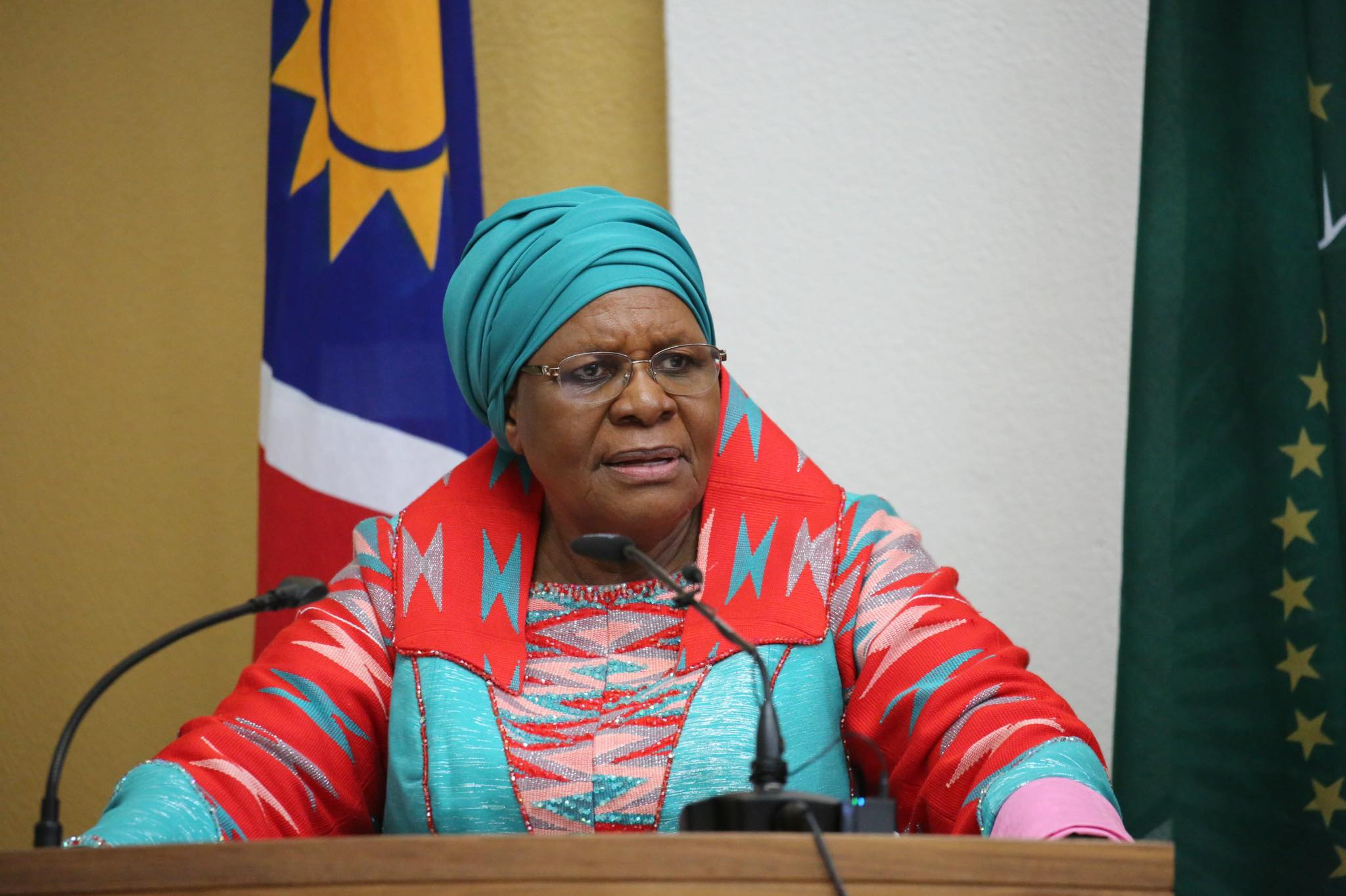
President Netumbo Nandi-Ndaitwah at the University of Namibia, Windhoek, 21 July 2025.
In my inaugural address on 21 March 2025, when I assumed office as the fifth president of the Republic of Namibia, I emphasised that the Swapo party election manifesto, the party’s political programme and the Constitution of the Republic of Namibia shall be my guiding instruments throughout my presidency.
You may further recall that during my first Cabinet address on 25 March 2025, I made it categorically clear that the oath of office that I took on inauguration day mandates me to speak and take decisions on behalf of the Namibian people and to lead the national development agenda.
Therefore, I am here today to launch the sixth National Development Plan (NDP6) and to account to the nation on the steps taken, as well as notable achievements attained during the first three months of the eighth administration.
Our inclusive development agenda seeks to uplift the social wellbeing and improve the quality of life for all Namibians. One of the key objectives of the concluded NDP5 was to escape the “middle income trap”. International bodies, in particular the Bretton Woods institutions, had classified Namibia as an upper-middle-income country based on income per capita. This classification was flawed in principle as it overlooked the skewed distribution of resources and undermined the Namibian government’s ability to access development grant funding and affordable financing.
The most recent re-classification of Namibia to a lower-middle-income country on 1 July 2025 is deemed more responsive to the reality of the structural imbalances of our economy and the large inequality gap. Based on this revised classification, Namibia will be more eligible to access grant funding and financing instruments on more affordable terms. This is beneficial to our developmental agenda and ambitions to foster inclusive growth and shared prosperity. This does not mean, however, that there are no challenges to the re-classification. We must commit to hard work and grow the economy to take our people out of poverty.
With only four and a half years remaining to Vision 2030, this NDP6 is the final instalment, aiming to achieve our objective of transforming Namibia into a developed and industrialised nation. The formulation of the NDP6 has been informed by Vision 2030 and its mid-term review, the NDP5 terminal report, Swapo party manifesto implementation plan, regional consultations, as well as guiding international development frameworks including the United Nations Sustainable Development Goals, African Union Agenda 2063 and SADC Vision 2050, among others.
It must be pointed out that our unemployment rate is high because, among other drivers, our industrial capacity remains limited.
It is for this reason that NDP6 aims to propel the country
towards an advanced industrialised stage, placing due policy
emphasis on mineral resources beneficiation and value-addition
to stimulate economic growth and development.
With the Namibian population currently just over 3 million people and expected to reach 3.5 million by 2030, predominantly young adults of working age. This youth population presents an opportunity and not a burden for the Namibian economy.
Under the theme ‘Fostering Economic Growth, Inclusiveness and
Resilience for Quality Sustainable Development’ the NDP6 is
designed to promote sustainable economic growth and address six underlying challenges of poverty, unemployment and inequalities. The NDP6 has been structured into four pillars, nine thematic areas, and 47 focus areas.
The four pillars are:
a) economic growth, transformation and resilience,
b) human development and community resilience,
c) environmental sustainability, and
d) good governance and effective public service delivery.
Our development agenda is shaped by the National Planning
Commission which finalised the NDP6 through an inclusive and
consultative process and approved by Cabinet on 25 June 2025.
The NDP6 will now serve as the blueprint policy document for
the eighth administration, considering that the Swapo Party
Manifesto Implementation Plan has been mainstreamed into that
plan. The implementation, monitoring and evaluation plan for
NDP6 will be finalised by the end of July 2025.
Namibia has embarked on a bold transformation in governance,
anchored in accountability, coordination and effective service
delivery that puts people first. Our first three months marked a
decisive shift towards a governance culture that is strategic, responsive and performance-driven. The bottom-line why I am
here today is to update you on key achievements attained during
our first three months in office. The report will centre on (1)
leadership and governance, (2) policy priorities and (3)
legislative reforms.
On leadership & governance:
Towards forming a lean, efficient and inclusive government: I
appointed the vice president, prime minister, deputy prime
minister, Cabinet ministers and deputy ministers on 22 March
2025. An inclusive and effective Cabinet of 14 ministers and seven deputy ministers. All 14 regional governors have now been
appointed and have assumed office, after having attended a
two-day compulsory orientation workshop.
Towards cultivating citizen-centred governance: A new
performance culture has taken root across the public service.
Ministers have been directed to align their performance
agreements with NDP6. The process of signing these
agreements will commence this month.
Cabinet members are committed to work unreservedly in
meeting and exceeding the commitments made, guided by my
five leadership values of: pragmatism, accountability, integrity, meritocracy and inclusivity (Paimi).
Paimi will be a pointer as we navigate through five years of our mandate coupled with the calling of unity of purpose and one heart, one mind.
Namibia is part of the international community, as per SADC
tradition where newly elected presidents undertake introductory
visits to neighbouring countries within 90 days to cement
bilateral relations. I have visited some of my counterparts in
Angola, Botswana, Zambia, Zimbabwe, Mozambique, Tanzania
and South Africa.
I have also attended the United States(US)-Africa Business Summit in Luanda, Angola, to promote Namibia as a preferred investment destination, while engaging the US government on the trade tariffs and prospective projects for investment.
Furthermore, Namibia hosted the first Commonwealth Trade
Ministers Meeting and Commonwealth Business Summit from 16
to 20 June 2025. In this context, Namibia became the first
country, among the 56 Commonwealth countries, to ever host
such a meeting outside the United Kingdom. The Business
Summit served as a platform to strengthen public-private 9
dialogue, partnerships and unlock trade and investment
opportunities. Given the success of these Meetings, the
Government has decided to institutionalise an annual business
summit in Namibia in collaboration with the Commonwealth
Secretariat and other international business organisations.
On 30 June 2025, Namibia launched the first shipment under the
Africa Continental Free Trade Area, successfully exporting a
shipment of 45 000 tonnes of salt to Nigeria and Cameroon,
opening up a new frontier for trade on the continent.
Namibia also successfully hosted and concluded a state visit by Narendra Modi, the prime minister of the Republic of India, where our two countries entered into five cooperation agreements
in the fields of health and medicine, technology, agriculture,
entrepreneurship and trade.
On institutional reform and innovation: The Office of the Prime Minister launched innovation boot camps in the //Kharas and Hardap regions, applying design thinking to generate homegrown solutions.
These efforts will be expanded to other regions. In pursuit of
smarter public service, Namibia has forged strategic partnerships
to co-develop a national one-stop-shop model that brings
integrated government services closer to communities.
Implementation of key policy priorities: In my inaugural state of
the nation address, I outlined the seven identified priority
sectors and eight critical economic enablers. The seven
identified priority sectors are agriculture, sports, youth
empowerment, quality education and training, creative
industries, quality health and social welfare, and land, housing
and sanitation.
Agriculture, mining, energy, oil and gas, tourism, water,
fisheries and transport and logistics are the most critical
enabling economic areas. Let me now take you through the
specific progress made during the reporting period:
PRIORITY SECTOR ONE – AGRICULTURE
All nine green schemes under the Ministry of Agriculture,
Fisheries, Water and Land Reform (MAFWLR), covering a total
of 5 600 hectares of irrigable land, remain operational. As of this
reporting period, 3 403 hectares are actively under cultivation,
with harvesting currently underway – the aim is food security. By 11 June 2025, green schemes produced 9 947 tonnes of maize, 300 tonnes of potatoes and 39 tonnes of sunflower.
The identification of suitable land for the establishment of super
farms has commenced, as well as selection of appropriate
strategic partners to drive this initiative. The government is in
the process of operationalising the Uvhungu-Vhungu dairy farm
in the Kavango East region. Debushing has already started.
In addition to maintaining operations at existing schemes, we
have identified two new sites for green scheme development,
namely Katima farm in the Zambezi region and Ekoka in
the Ohangwena region, thereby expanding the footprint of irrigated agriculture.
Furthermore, we have successfully acquired farm Richlyn,
measuring 8 305 hectares in the Omaheke region for
resettlement purposes.
The Office of the Prime Minister, in partnership with the World
Food Programme (WFP), initiated a food security project on 13
hectares of land in Otjombinde constituency, in the Omaheke region, towards arresting hunger and malnutrition. Following the success of this pilot, the initiative will be rolled out to all
remaining 13 regions. I am also pleased to inform the Namibian
people that the procurement process for Neckartal Dam
irrigation design is under review by the review panel.
Furthermore, a seed processing facility has been established,
with refurbishment underway at Omahenene, Omusati region
and new facilities under construction at Katima Mulilo, Zambezi
region, and at Katwitwi in the Kavango West region. A feasibility study is planned for a combined seed and fertiliser facility under a public-private partnership (PPP) model. As the government we have also activated infant industry protection and improved the seed and fertiliser subsidy scheme.
During May to June 2025, the Namibian Correctional Service
produced food worth N$13.9 million from food production projects at Divundu, Oluno and Hardap Correctional Facilities, saving the government an amount of N$6.7 million.
Livestock value chains are improving, especially for communal,
resettled and emerging farmers. A protocol signed with China on
8 May 2025 will enable mutton and chevon exports. The line ministry has introduced a cost-effective model for cattle distribution and continued small-stock support. In the Ohangwena region, 180 goats were distributed to nine farmers under a revolving scheme during the reporting period.
Over N$101 million was disbursed in livestock support.
By June 2025, the OPM had provided drought relief to 1.4 million
people (384 935 households), valued at N$1.3 billion.
A food voucher system now covers 144 930 households via 493 retailers across nine regions, namely the Oshana, Khomas,
Omaheke, //Kharas, Hardap, Kavango West, Kavango East,
Kunene and Oshikoto regions.
Flood relief reached 9 184 people across eight regions, namely the Khomas, Oshana, Oshikoto, Omusati, Ohangwena, Kunene,
Zambezi and Hardap regions. Backlogs in food distribution are
to be cleared by August 2025, with expansion of the voucher
system and finalisation of the flood reconstruction plan.
PRIORITY SECTOR TWO – SPORT
As of June 2025, all 14 regions had identified at least one site,
with 16 sites confirmed in total, to establish sport centres of
excellence.
CAF category stadiums: Site selection and assessment for CAF
categories 2 and 3 stadiums with seat capacity of 10 000 and
30 000, respectively, was completed by June 2025. Windhoek’s
CAF category 3 Independence Stadium is progressing as
planned with a multi-disciplinary team which submitted a
feasibility study in February 2025. Construction of CAF category
2 stadiums at Eenhana and Nkurenkuru has commenced.
Mariental has been confirmed as the third stadium site.
Sustainable league support: In support of grassroots
development and professional league performance, the government is finalising a funding formula to guide sport sponsorship allocation. Consultations with sport federations were conducted in May 2025 and internal validation of the draft model is underway. The formula is expected to be finalised by the end of
July, with fund disbursements commencing in August 2025. A
national call for youth development initiatives from leagues was
launched in May 2025.
African Union Sports Council Region 5 Games: Following
Mozambique’s withdrawal due to a devastating cyclone, Namibia
stepped up to successfully host the Region 5 Youth Games which I officially launched on 5 July 2025. In preparation, we invested
N$127 million to urgently refurbish key sport infrastructure in Windhoek and Swakopmund, including facilities at the University of Namibia (Unam) and Vineta. In the process, two netball courts, a football stadium, basketball and tennis courts, hostel renovation and equipment were attended to.
This swift national effort not only ensured readiness but also
created 955 direct temporary jobs ranging from suppliers to
volunteers, interns and drivers, and 699 indirect jobs through
service providers and hospitality teams. The refurbishment of
sports facilities for the Region 5 Games was completed within
record time, a commendable effort by all stakeholders involved.
PRIORITY SECTOR THREE – YOUTH EMPOWERMENT
The National Youth Fund has been capitalised with N$257 million and will be accessed through financial institutions such as Development Bank of Namibia, AgriBank, NamPost and the Environmental Investment Fund. A guarantee facility from Nasria was secured in May 2025 to improve access to non-collateralised lending for young entrepreneurs. The fund will become operational mid-August 2025. Additional support of N$165 million has been mobilised from NamibRe towards the National Youth Fund.
Namibia also received N$33.4 million under the Global Accelerator 1 programme to support youth entrepreneurship and job creation in the biomass sector. Under the Equipment Aid Scheme and the Micro, Small and Medium Enterprise (MSME) Development Fund, over 200 youth-led businesses were selected countrywide for support during the reporting period.
Beneficiaries include:
a) 196 MSMEs which received production equipment and
capacity building by 11 July 2025; and
b) drawn from all 14 regions, 28 youth were trained in
gemstone and jewellery processing, 64 in agro-processing
standards and 13 in cosmetics production.
New beneficiaries will continue to be identified and the next call
for enterprise support programmes will be issued in the first
week of August 2025 by the line ministry. The above are golden
opportunities that our youth must exploit maximally.
Entrepreneurial centres and mentorship support: Efforts are
underway to repurpose existing industrial parks into fully
operational entrepreneurial centres. The list of viable sites will
be finalised before the end of August 2025.
Skills development and apprenticeships: A joint technical
committee comprising of the ministries of education, innovation,
youth, sport, arts and culture, and finance, was established to
coordinate implementation of the youth fund, agricultural
cooperatives and internship/apprenticeship programmes.
A consolidated national work-integrated learning framework is
being finalised for Cabinet approval, following consultations with
the Namibia Training Authority, National Planning Commission and tertiary institutions.
Graduate employment and absorption: Our objective is to place
at least 5 000 graduates annually into internships, with an 80%
post-internship retention rate, into formal employment.
By June 2025, a total of 734 internships and trainees were
facilitated across key public institutions during the reporting
period as follows:
a) The Ministry of Communication and Information Technology (MICT) facilitated 511 of which 22 were placed at NBC; 65 at
MICT; 92 at Telecom; 9 at New Era; 23 at Nampa, and 300
at MTC;
b) 61 graduate internships were facilitated by the Ministry of
Agriculture, Fisheries, Water and Land Reform and were
placed at three rural development centres, namely: 38
interns at Ongwediva, 17 at Okashana and six at Ben Hur.
c) The Ministry of International Relations and Trade facilitated
a total of 162 placements of which 155 were recruited by
Namibian businesses and seven were placed on MSC Cruise
ships.
I take this moment to appreciate those offices, ministries and agencies (OMAs), public enterprises and private sector organisations that have responded to the government’s call to offer internship and apprenticeship opportunities to our students and graduates.
Please do more, and I call on others to follow this example.
PRIORITY SECTOR FOUR – QUALITY EDUCATION & TRAINING
The Namibian government is committed to ensuring universal
access to free, equitable and quality education and vocational
training across Namibia.
Free higher and vocational education: Work is underway to fully eliminate tuition fees for students enrolled in public higher
education institutions and vocational training centres as from
the 2026 academic year. To ensure a smooth transition, a national task force of stakeholders was formed. Consultations on
admission, financing, institutional designation and record-
keeping regulations are ongoing and set to conclude by end of
this month (July 2025).
In response to this policy reform, the Namibia Student Financial
Assistance Fund (NSFAF) funding model is under review, as the
institution is being reintegrated into the line ministry.
Funding and quality standards: A funding formula for higher
education institutions and technical and vocational education and training (TVET) was implemented in April 2025 to ensure predictable and equitable resource allocation. In line
with the launched minimum standards for higher education in
February 2025, with implementation now underway across
public higher education institutions.
Education sector impact studies: Terms of reference are being
developed for two national studies: (1) a diagnostic assessment
of the current state of free basic education and (2) an impact
assessment of Namibia’s new school curriculum.
Infrastructure expansion and TVET reform: The construction
and bidding process for new schools and hostels is ongoing.
TVET reforms are advancing, with governance restructuring and
curriculum expansion in key sectors aimed at addressing regional
disparities and improving education outcomes. Operational and
capital budgets for higher education institutions and TVET
centres have been prioritised to sustain quality outputs.
PRIORITY SECTOR FIVE – CREATIVE INDUSTRIES
Recognition and talent empowerment: Towards revitalising the
National Arts and Creative Industry Awards, the existing national
steering committee is being revised to incorporate all key
stakeholders and to expand its mandate. This process will be
concluded by the end of August 2025.
Creative infrastructure and equipment fund: Draft amendments to the Arts Fund Act have been prepared to enable the establishment of a creative industry infrastructure and
equipment programme. The fund is expected to be launched
before the end of August 2025. It will support music and
visual arts studios, equipment and materials to enhance local
creative productive capacity.
Industry development and job creation: The Ministry of
Information and Communication Technology (MICT) launched
World Music Day and accompanying artist capacity-building
initiatives at Mariental on 21 June 2025.
During the reporting period, Namibia hosted 16 international film
productions and supported eight local productions, together creating over 180 jobs and contributing more than N$14 million to the economy.
To bridge the digital divide and enhance broadband access
across communities, nine new network towers are currently under
construction in the Omaheke, Zambezi, Kavango East, Kavango
West and Kunene regions through the Universal Service Fund.
PRIORITY SECTOR SIX – QUALITY HEALTH & SOCIAL WELFARE
Significant milestones have been marked in our mission to
expand primary health care and deliver quality services to all 22
Namibians, particularly in rural areas. Progress is made in the
following areas:
a. Public health campaigns have intensified with national roll-out
of the voluntary HPV vaccine in May 2025, and
dissemination of awareness materials for malaria and
cholera.
b. On 02 July 2025, the Katutura Health Centre launched a
decongestion pilot project with extended clinic hours at the
24-hour facility. From 1 August 2025, the Okuryangava
Clinic at Windhoek will also become a 24-hour facility, in a
move to further decongest Katutura Health Centre and
Katutura Intermediate Hospital.
c. Seven sites have been identified for the construction of
new clinics during this financial year, at Mambushe in
the Kavango East, Ompundja in the Oshana, Okondjatu in
the Otjozondjupa, Onamukulo and Onamafila in the Ohangwena,
Malengalenga in the Zambezi and Epupa in the Kunene region.
d. The ground-breaking of the Khomas District Hospital at Havana
was completed in April 2025 with bulk earthwork services
commenced as well as preliminary access roads and
electrical services.
e. To strengthen institutional capacity through human resources,
the recruitment of community health workers is ongoing.
To date 604 medical positions have been advertised with
interviews conducted during the reporting period.
f. Fifty-two undergraduate scholarships for the 2025
academic year have been awarded for various health-related fields, to augment local medical specialists and critical skills in the country, with graduation expected in 2030.
g. Thirty-six ambulances were purchased in June and distributed to all 14 regions. An additional five ambulances were donated,
three by the World Health Organisation and two by Langer-Heinrich Mine. The procurement of 60 fully equipped mobile health vans, which are essentially mobile health clinics, is underway, targeting services across all 14 regions.
The procurement of six new medical transport trucks is planned
for this financial year.
Mental health expansion: A mental health rehabilitation centre with 48-bed capacity at Rehoboth is being renovated in
collaboration with the Ministry of Works and Transport. This centre
will provide long-term rehabilitative care, thermal therapy and
post-operative recovery, addressing a long-standing service gap.
Cost-efficient mechanisms for the procurement of pharmaceuticals and supplies: We have commenced bilateral engagement with the governments of Egypt and India towards establishing a transparent procurement system that will enable the government to procure pharmaceuticals and supplies directly, and no longer through middlemen.
Advancing universal health coverage: Namibia’s universal
health coverage (UHC) policy was officially launched in February
2025. To support digital health implementation, network
infrastructure has been expanded to 18 clinics and five health centres in the south.
Medical infrastructure and pharmaceuticals: The Cabinet has
approved to establish a pharmaceutical manufacturing plant at
Okahandja under a PPP or joint venture initiative. A multisectoral team is now seized with the expression of interest for advertisement.
A new Central Medical Store is also planned for, with the tender
preparation already initiated and funding secured, and a site
identified between the Katutura and Central hospitals in Windhoek.
PRIORITY SECTOR SEVEN – LAND, HOUSING & SANITATION
The government continues to advance inclusive urban and rural
development through the provision of affordable housing. A total
of 3 492 housing units are under construction, including the
completion of mass housing units at Windhoek (362) and Opuwo
(24), while the balance of these housing units are developed
under the Schack Dwellers Federation of Namibia across all 14
regions.
As part of our infrastructure response to urban safety, phase 1
of the police village project focusing on bulk services such as
water, electricity, sewer and roads has been successfully
completed. The police village will not only provide decent
housing but also help stabilise and strengthen law-enforcement
presence in our communities.
Formalisation of informal settlements: This is actively
progressing in Windhoek, and at Walvis Bay, Rundu, Keetmanshoop and Oshakati. A total of 31 settlements are now undergoing formalisation. Land servicing in brown field areas of 10 000 erven has also commenced in Windhoek (5 000), Walvis Bay (1 250), Rundu (1 250), Oshakati (1 250) and Keetmanshoop
(1 250), improving access to basic infrastructure and paving the
way for future development.
Improved sanitation services: Access to sanitation has
significantly improved. A total of 1 019 toilets were completed
during the reporting period, including 76 in the Omusati, 164 in
the Oshana, 33 in the Kavango West, 203 in the Otjozondjupa, 16 in the Omaheke, 30 in the Kunene, 43 in the Erongo, 207 in the Ohangwena, 17 in the Hardap, 50 in the //Kharas and 180 in the Oshikoto region.
Strengthening subnational governance: In June 2025, the line
ministry held consultative meetings with all regional and local
authority councils to enhance governance, accountability and
decision-making at subnational level. In addition, special
investigations were conducted into land governance at Katima
Mulilo and Bukalo. These investigations led to the
implementation of remedial measures to regularise land
transactions and strengthen record-keeping.
For the above discussed priority sectors to achieve their desired
outcome, they will be supported by economic enablers. In this
context, I will now provide a progress report on the critical
economic enablers as follows:
ECONOMIC ENABLER ONE – MINING
In pursuit of increased national ownership and value addition,
the Ministry of Industries, Mines and Energy (Mime) has started
to develop a policy on mandatory minimum percentage local
equity participation in all new mining ventures.
Concurrently, efforts to legislate mineral beneficiation are being
advanced with technical support from the African Development
Bank’s African Legal Support Facility, which provides legal
assistance to African governments.
Furthermore, initial consultations have commenced with the
Bank of Namibia (BoN) regarding the establishment of a national
gold reserve, with attendant legislative framework currently
under development.
In our drive to promote tourism and stimulate the economy, the
government implemented the visa-on-arrival system on 1 April
2025. I am proud to share that, as of 30 June 2025, visas
totalling 115 857 have been issued, generating N$171 million in revenue for the state.
ECONOMIC ENABLER FIVE – WATER
It is a fact that water is an essential component in life. Based on
that narrative, drilling, installation and rehabilitation of boreholes
is an ongoing programme of the government. During the reporting
period, a total of 67 contracts were awarded for the installation of boreholes across 11 regions as follows:
a. Omaheke (11), Hardap (2), //Kharas (2), Oshikoto (4),
Ohangwena (6), Kavango East (7), Omusati (9),
Otjozondjupa (20), Zambezi (6), Kavango West (7), and
Kunene (11).
b. Thirty-five or 52% have been successfully installed, while 32 are currently under installation.
c. Forty contracts were awarded for the drilling of boreholes
in the following regions: Otjozondjupa (6), Erongo (3),
Hardap (4), //Kharas (4), Khomas (3), Kavango East (5), Kavango West (5), Ohangwena (5) and Oshikoto (5).
Seventeen boreholes have already been drilled, with the remaining 23 currently in progress.
The Ohangwena Aquifer development: The Ohangwena Aquifer will give much-needed water to the needy areas once completed. Currently, we have recorded overall progress of 80%.
Water supply security: Progress has been made on strategic
water infrastructure. During the period under review, the commissioning of the Oshakati treatment plant commenced on
17 July 2025, with capacity of providing water security for
residents in the Oshana, Oshikoto and Ohangwena regions.
ECONOMIC ENABLER SIX – FISHERIES
Fisheries is one of the economic drivers. Following protracted
negotiations to resolve the impasse with the aggrieved group of unemployed fishermen (Okapale), the matter has now
been conclusively addressed allowing for renewed focus on
sector’s growth and stability with a good number of fishermen
employed.
As part of ongoing efforts to enhance productivity and stakeholder benefits, the total allowable catch (TAC) for monkfish was increased by 6%. This adjustment directly benefits 40 rights holders and supports the livelihoods of 2 214 employees within the sector.
ECONOMIC ENABLER SEVEN – TRANSPORT AND LOGISTICS
Aviation and airport development: The government has
established a technical committee to guide key infrastructure
and aviation sector initiatives. The committee has developed terms of reference for consultancy services to undertake a comprehensive feasibility study on the establishment of a new national airline and upgrading of Hosea Kutako International Airport (HKIA).
For HKIA, the procurement process for consultancy services related to the airport’s expansion has reached final evaluation, with award notifications expected during this month.
Railway development: An agreement was signed between TransNamib and Windhoeker Maschinen Fabrik on 29 April 2025, for the refurbishment of locomotives and wagons, for which the refurbishment commenced in June 2025.
Contracts for the Kranzberg-Tsumeb-Grootfontein railway line
were awarded, with contractors scheduled to commence on 1 August 2025.
Procurement commenced on 10 April 2025 for a feasibility study
on the Grootfontein–Katima Mulilo rail corridor and will close for
evaluation during this month.
Road infrastructure: In addition to roads already under
construction, during the period under review, the following has
been achieved:
a) Khorixas-Kamanjab section contract was signed on 16 April
2025 and the contractors are now seized with
establishment of the site.
b) Opuwo-Okanguati Road contract was signed on 9 May
2025 and the contractor has since commenced with site
establishment.
c) In rural areas, construction of low-volume sealed roads and
gravel roads is ongoing in the Zambezi, Ohangwena, Kavango East, Kavango West, Omusati, Oshikoto and Otjozondjupa regions.
KEY LEGISLATIVE DEVELOPMENTS
During my maiden state of the nation address on 24 April 2025,
I called on you, the public, to make submissions on any laws you consider to be a hindrance to service delivery. The response was very positive, and these laws are all now on the dashboard at the Ministry of Justice and Labour Relations, where they are receiving attention. I want to thank you, fellow Namibians, for responding to my call.
Over and above those identified through the public call, several
priority bills have progressed, with two already tabled for debate
in the parliament, namely, the land bill and the regional councils
amendment bill, while others are at different stages of the law-
making process.
The government activities are far-reaching covering a wide range of areas.
Disability mainstreaming and integration of marginalised
communities:
a. Through the students with disabilities grant programme, 140
students were approved for funding to cover tuition. At the
same time, over 2 900 learners from marginalised
communities received transport assistance.
b. In support of persons with severe disabilities, over 370
assistive items were distributed across seven regions: the Erongo,
Otjozondjupa, Oshikoto, Oshana, Hardap, //Kharas and
Kunene regions. Service access was also expanded through land
allocation, the provision of wheelchairs, and sunscreen
distribution for persons with albinism.
c. During the months of April and May 2025, over 32 000
households benefited from targeted food support
programme worth N$34.7 million, while a national outreach for identity documentation for marginalised communities was launched in June.
In the area of national security and counter-terrorism, the Namibian Police Force (NamPol) has successfully established the
National Counter Terrorism Centre in June 2025, enhancing our
capacity to prevent and respond to potential threats.
The government is committed to laying the digital foundation for
long-term transformation and service delivery. The digital legal
identity model governance framework has been established to
drive the implementation of electronic identity documents (e-IDs) in Namibia. On 26 June 2025 we successfully launched the public
awareness programme to foster stakeholder collaboration.
We have recorded a high prevalence of drug-related crime. Drug
trafficking and substance abuse remain among the most pressing social challenges causing drug menace to our nation today. The Namibian Police will continue to intensify patrols in the fight against drug and human trafficking. Police efforts are complemented by the launch of the #EndGBVNamibia campaign by the Ministry of Gender Equality and Child Welfare in collaboration with MICT, on 4 June 2025 in Windhoek.
To maintain our territorial integrity, the security cluster conducts regular surveillance and patrols along the territorial land, air and
maritime borders, including along the Chobe and Zambezi rivers.
Additionally, the Namibian Defence Force (NDF) rendered assistance to evacuate flood victims and distribute drought-relief aid to communities in the affected regions during periods of
flooding.
I also wish to report that the process of according veteran status
has resumed, with:
a) 405 veterans having received notification of their successful
applications granted by the Veterans Appeal Board,
b) 218 applicants were vetted during May 2025 and are due
to start receiving their improvement of welfare grant (IWG) by the end of this month (July 2025).
c) Under the individual veterans’ projects scheme, 62
veterans received their once-off cash grant for the projects
in June 2025. Internal verification processes are at an
advanced stage to disburse this projects grant to the
remaining 315 eligible beneficiaries.
The government undertakes to ensure that payment of the
once-off lump sum is affected to all beneficiaries who have been
notified, during the current financial year.
In regards to defence industries, the line ministry convened an
engagement with key stakeholders of the August 26 Group of
Companies on 21 June 2025 to evaluate the performance of the
industry and to come up with institutional reforms that will capacitate the defence industry aimed at improving
performance.
These developments reflect our unwavering commitment to innovation, security and excellent public service delivery.
CONCLUSION
We have established a strong foundation in these first three months in office, however, considerable work remains through the
implementation of the NDP6.
Going forward, the prime minister and ministers will be providing regular progressive reports on their respective sectors.
I count on the concerted efforts of all Namibians, in particular the
youth, academia, civic organisations, the business community,
churches, traditional authorities and our development partners.
Let’s continue to work together, united by common purpose and a shared vision, to overcome challenges and build a more inclusive, united and prosperous Namibia.
Having given you the account of our work, three months in the office, it is now my singular honour to officially launch the sixth National Development Plan (2025-2030).
I thank you.
In an age of information overload, Sunrise is The Namibian’s morning briefing, delivered at 6h00 from Monday to Friday. It offers a curated rundown of the most important stories from the past 24 hours – occasionally with a light, witty touch. It’s an essential way to stay informed. Subscribe and join our newsletter community.

The Namibian uses AI tools to assist with improved quality, accuracy and efficiency, while maintaining editorial oversight and journalistic integrity.
Stay informed with The Namibian – your source for credible journalism. Get in-depth reporting and opinions for
only N$85 a month. Invest in journalism, invest in democracy –
Subscribe Now!