




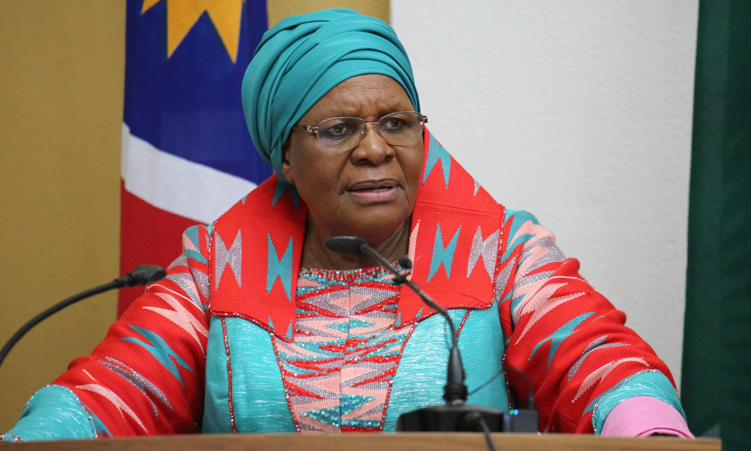
Speech by president Netumbo Nandi-Ndaitwah, delivered on Workers’ Day, 1 May 2025, at Oshakati, in the Oshana region.
Thank you, directors of ceremonies; distinguished workers; members of the media; ladies and gentlemen,
This is the first time since independence that we commemorate Workers’ Day without the presence of our founding president Sam Shafiishuna Nujoma. Comrade Nujoma, himself a railway worker, was instrumental in ensuring that the National Union of Namibian Workers (Nunw) remained aligned to the liberation movement, Swapo.
Today, our bonds remain strong because we all understand that workers are the backbone of our economy.
From the outset, I must thank Nunw for having invited me to celebrate Workers’ Day with you. I am happy to return to the Oshana region so soon after my visit just a week ago to assess the flood situation in the northern regions on Saturday, 19 April 2025, which was the 65th anniversary of Swapo. I believe the management of the flood remains under control.
Director of ceremonies, I welcome with great appreciation this year’s theme: ‘Workers Demand Justice through Natural Resource Beneficiation, Value Addition, Living Wages, and Youth Employment’. This theme is a clear interpretation based on the Swapo theme as stipulated in the party’s election manifesto. I, therefore, thank and congratulate Nunw for having chosen the most appropriate theme. A theme that resonates with the Swapo election theme: ‘Unity in Diversity; Natural Resources Beneficiation, Youth Empowerment for Sustainable Development’. This is a clear indication that the cooperation that exists between Swapo and Namibian workers continues in word and action.
Against that backdrop, let me take this opportunity to express my profound gratitude and appreciation for the unreserved and continuous political support the workers have given to Swapo during the most difficult time of our liberation struggle and after our hard-won independence. The same support manifested itself at the 2024 presidential and National Assembly elections where you voted for Swapo and me to the highest office in the land, thus making me the president of the republic of Namibia. Now that we have voted and given Swapo and its president the five-year mandate, we are duty bound to implement the Swapo manifesto that is centred around job creation and efficient and effective service delivery to our people.
These themes are befitting, considering the unacceptably high unemployment rate which stands at 36.9%, with youth unemployment at 44.4%, as highlighted in the recent report of the Namibia statistics agency (NSA). Furthermore, these themes underpin the call to respond to my words that, “we are too few to be poor”. We must meaningfully utilise our natural resources to lift our people out of poverty.
There are those who might say that it is impossible to create a society that is prosperous and just for all citizens. But I can assure you that it can be done. All we need to do, as our third president used to say, is to pull together in the same direction.
The commemoration of Workers’ Day today comes after I delivered my maiden state of the nation address on 24 April 2025, during which I outlined the eighth administration’s seven key priority areas and eight economic enablers, as contained in the Swapo manifesto for 2025-2030 and its implementation plan. Those priorities reflect our shared commitment to inclusive growth, social progress, and a shared prosperity for all Namibians driven by local content.
The seven key priorities for the next five years are agriculture, sport, youth empowerment, quality education and training, creative industries, quality health and social welfare, and land, housing and sanitation. While the eight economic enablers are mining, energy, oil and gas, tourism, agriculture, water, fisheries, and transport and logistics. Both the seven key priorities and eight economic enablers are the drivers of the eighth administration, which aims for the full implementation of the Swapo election manifesto. This comprehensive plan has been enriched and translated into an implementation plan, which will be integrated into the national development plan (NDP6) and all ministerial strategic plans. Part of our focus is to address the high unemployment rates and poverty, as stated above.
To give meaning to the two themes, there should be no “business as usual”, and every sector of our society, including our workers, has a role to play. As president of this country, I would like to see a productive workforce. I want to see harmonious labour relations, where workers and employers see themselves as two sides of the same coin and treat each other fairly.
I must point out that since the appointment of ministers on 22 March 2025, there has been no let-up. And the same impetus must continue in pursuit of excellence and quality service delivery to our people throughout the eighth administration.
Director of ceremonies, fellow workers, as we celebrate Workers’ Day today, allow me to pay homage to Namibian workers over generations for their unwavering commitment to building a continually evolving economy that is more robust and resilient, with a strong social framework that ensures the well-being of our people. In the same vein, I also commend and salute our essential workers, men and women in uniform, teachers and nurses who, among others, continue to serve selflessly during adversities and difficult conditions such as drought, floods, and disease outbreaks. Whether delivering healthcare, ensuring public safety, learning and teaching, or providing emergency relief, your bravery represents the true spirit of loyalty and service delivery to the nation.
Namibia is blessed with abundant renewable and non-renewable resources, which we must seize through value addition for the benefit of all our people. Sectors such as mining, energy, oil and gas, tourism, and fisheries are key economic engines with the potential to unlock employment opportunities for many Namibians. However, this potential remains out of reach if we continue to export raw materials without processing them. This presents compelling opportunities for local entrepreneurs to invest in the manufacturing sector and emerging industries such as sport and the creative sectors.
While calling for direct foreign investment in our economy, we must have deliberate programmes aimed at strengthening local businesses and entrepreneurs. We have to invest in homegrown initiatives that not only enhance the value of our resources but also transform and grow our economy, create wealth, empower our communities, create sustainable jobs and accelerate development.
Although it will take time, Namibia must move beyond being a mere supplier of raw materials to become an exporter of semi-processed to fully finished products. Our small population should not discourage us. With the right mindset and attitude, we can become a centre of production of goods and materials based on our natural resources.
From the foregoing, the government stands ready to venture into public-private partnerships and to provide a conducive environment that promotes investment and industrialisation for the realisation of our short, medium and long-term goals and objectives.
I must also reaffirm the government’s commitment to universal social protection through old-age pensions, disability grants, child support, the conditional basic grant and full payment to mothers on maternity leave. Furthermore, the government remains steadfast in its commitment to fostering an enabling environment through targeted interventions. These include a comprehensive review of the national minimum wage policy and legislative framework, as well as the establishment of the national medical benefits fund under the Social Security Act, no. 34 of 1994. These policy instruments are designed to promote social development and strengthen the protection of labour rights.
Indeed, a hungry worker cannot be productive, and a devalued worker cannot be a proud citizen of the country. Therefore, let us build a culture where labour is honoured and celebrated, and not exploited. We cannot speak of freedom and independence without addressing economic injustice. Workers cannot continue to live in poverty while contributing significantly to the growth of industries. As stakeholders, let us ensure that workers are paid living wages, while at the same time our labour force has to be productive.
One of the key priorities identified by the eighth administration is youth empowerment. We must be committed to empowering our young people to participate meaningfully in the economy. Hence the government’s decision to provide free education from primary to tertiary level. Initiatives such as the youth internship, tax incentive programme, and the national youth apprenticeship and youth internship schemes under the national training authority are designed to provide work-integrated learning, offering exposure and experience necessary for employment. The government has already established an internship programme with ministries and agencies.
I implore the private sector to heed the government’s call by offering internships, providing mentorship, creating jobs, and supporting local start-up initiatives such as the credit guarantee scheme. This will aid micro, small, and medium enterprises and young entrepreneurs in accessing finance without collateral from lending institutions, empowering them to become job creators rather than merely job seekers. This collaborative effort will build a fairer, just and strong, skilled nation.
Director of ceremonies, fellow workers, the protection of workers is a fundamental right enshrined in the Namibian Constitution. Nevertheless, social injustices continue to confront the labour sector, despite its significance to our democracy. Against this background, I decided to merge the functions of justice and labour relations in order to ensure social protection for our workers, aiming to promote effective coordination and implementation of labour legislation.
Within this context, I, therefore, urge all stakeholders in the labour fraternity, particularly trade unions and employers, to ensure the protection of labour rights, including the right to join an organised trade union. Further, I urge labour activists to be strategic in initiating and proposing sustainable solutions that will shape a stronger labour force. The government remains your partner in progress; we must work hand in hand for the benefit of our people. We must ensure that labour relations are harmonious in the country for industry to thrive and the welfare of workers to be respected.
It must be through our strong bond that we must tackle inequality, promote social dialogue, protect the rights of all workers, enforce safe working environments, and eradicate all forms of discrimination in the workplace.
In three days’ time, on 4 May to be exact, we are again going to pause our ordinary duties to commemorate a dark chapter in our liberation struggle history to remember the heroes and heroines who lost their lives in the Cassinga massacre in pursuit of Namibia’s self-determination. The 28th of May has also been declared Genocide Remembrance Day, to pay homage to Namibians who suffered during the atrocities of genocide under imperial Germany.
As we mark this Workers’ Day, let us honour those who paid the ultimate price for the peace and freedom we are enjoying today. The heroes and heroines of the national liberation struggle, from our forebears to our contemporaries, the majority of whom were workers at that time who formed Swapo, the social transformation vehicle of our motherland. As I stated during the 65th Swapo anniversary on 26 April 2025 at Kamanjab in the Kunene region, together we must uphold the values that define us as Nunw and work tirelessly to ensure that the fruits of our hard-won freedom and independence reach every Namibian across the country.
Let this day mark the beginning of a new era, where Namibians do not merely work to survive, but strive to lead a prosperous nation.
In conclusion, I invite Namibian workers and organised trade unions to support the eighth administration’s stance of a zero-tolerance policy to fight against corruption and unethical behaviour in our society. We must be committed to excellence and quality service delivery to our citizens, expecting nothing less than dedication, integrity, transparency, and accountability from those we serve.
Let us move forward with courage and determination to build a Namibia where every worker earns a fair wage, where our resources uplift all, and where the youth inherit not only the land but also diverse opportunities.
The ‘Workers Demand Justice through Natural Resource Beneficiation, Value Addition, Living Wages, and Youth Employment’ theme must remain the clarion call in the Land of the Brave.
Long live the workers of Namibia! Long live the Namibian spirit of solidarity!
I wish you all a meaningful and happy Workers’ Day.
Thank you.
In an age of information overload, Sunrise is The Namibian’s morning briefing, delivered at 6h00 from Monday to Friday. It offers a curated rundown of the most important stories from the past 24 hours – occasionally with a light, witty touch. It’s an essential way to stay informed. Subscribe and join our newsletter community.

The Namibian uses AI tools to assist with improved quality, accuracy and efficiency, while maintaining editorial oversight and journalistic integrity.
Stay informed with The Namibian – your source for credible journalism. Get in-depth reporting and opinions for
only N$85 a month. Invest in journalism, invest in democracy –
Subscribe Now!



