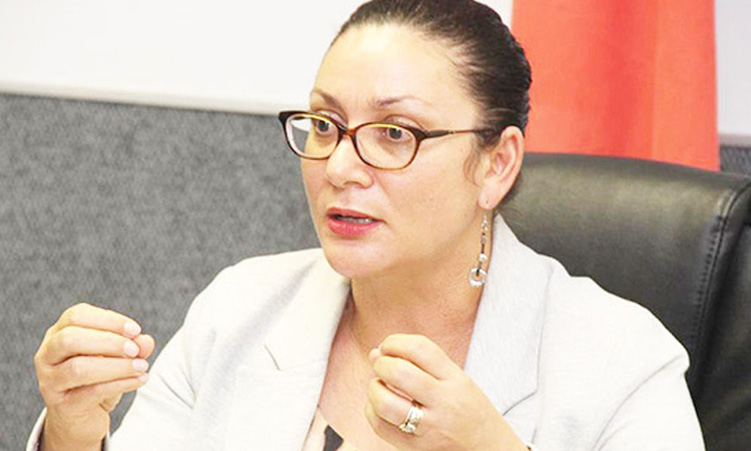
FORMER minister of gender equality Rosalia Nghidinwa has conceded that the national day of prayer last year did not help to reduce gender-based violence (GBV) cases in the country.
She said this during her last day in office as minister last Friday.
According to Nghidinwa, the ministry faced numerous challenges during her time, including the GBV cases which continued to escalate even after former President Hifikepunye Pohamba called for a national prayer day on 6 March, following 15 cases of passion killings that were reported during that time.
Nghidinwa described GBV as an animal which cannot be seen with the naked eye, hence the need for a prayer day.
“Yes, the prayer day did not help and things did not change, but the prayers will continue and we will give GBV cases to God to deal with, because He sees the inside of a person and can understand them better than we do,” said Nghidinwa.
She said there is a serious need for more social workers in the country to counsel people and assist with GBV cases.
According to her, community-based programmes are needed for people to come and speak out about issues they are dealing with in order to confront them, before they become a danger to themselves and others.
“The youth should be encouraged to study social work to assist in dealing with GBV. There is a huge gap that needs to be filled in this regard,” said Nghidinwa. She said even though she is leaving the political realm, she will continue to be active in her community and engage them on pressing issues of society such as GBV and substance abuse.
“I was told that my community are the people that hold the table which I stood on, and because I had known them and had always looked after them from where I was, I know now that I will fall back into their open arms,” said Nghidinwa.
She said the ministry dealt with three main departments: gender, community and child welfare, and she feels satisfied that she has been able to contribute positively to these areas.
“The Swapo Party has already implemented gender equality in its structures and soon it will be compulsory for all political parties to do so, according to the SADC Protocol on Gender,” said Nghidinwa.
At her farewell dinner last week, two children from a children’s home performed a dance in her honour, saying Nghidinwa has been like a mother to them, and that they will always love her for being in their lives.
The hall was packed with colleagues, friends and relatives who all had something kind to say to her and wished her a restful retirement from her political duties.
Nghidinwa (62), who is a nurse by profession, served as a deputy minister of labour from 2000 for five years, then served as minister of home affairs before she was appointed minister of gender in 2012.
She lost her husband in 2009, and is a mother of six children. Nghidinwa also raised her sister’s children and adopted other vulnerable children as well.
In an age of information overload, Sunrise is The Namibian’s morning briefing, delivered at 6h00 from Monday to Friday. It offers a curated rundown of the most important stories from the past 24 hours – occasionally with a light, witty touch. It’s an essential way to stay informed. Subscribe and join our newsletter community.

The Namibian uses AI tools to assist with improved quality, accuracy and efficiency, while maintaining editorial oversight and journalistic integrity.
Stay informed with The Namibian – your source for credible journalism. Get in-depth reporting and opinions for
only N$85 a month. Invest in journalism, invest in democracy –
Subscribe Now!