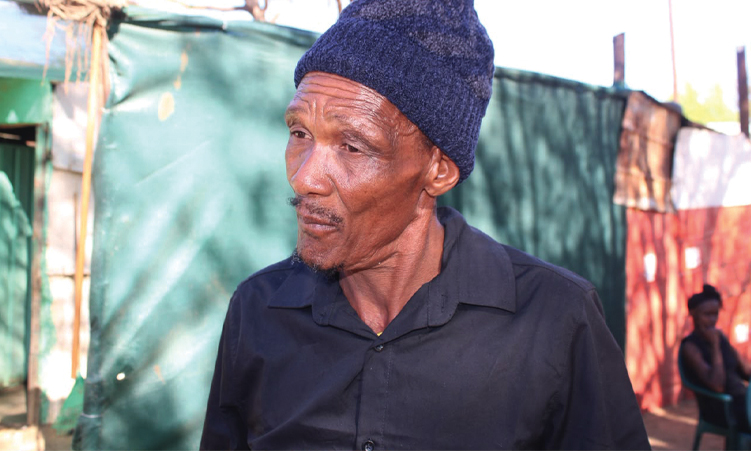





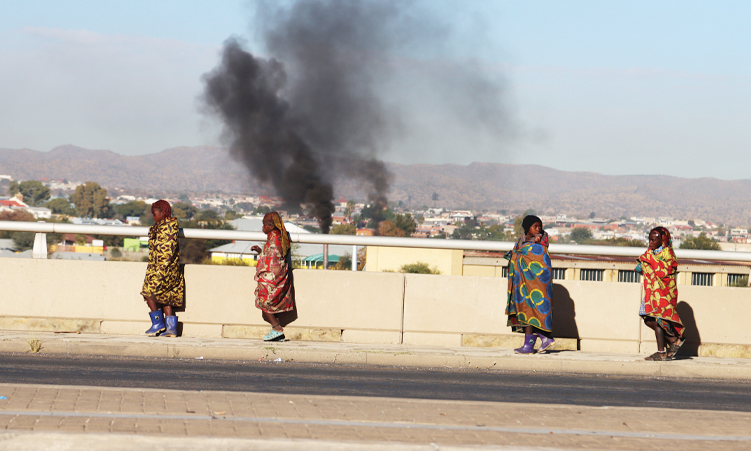
Oshana police commander commissioner Andreas Shilelo has warned long-distance bus operators and drivers against transporting Angolan children and undocumented foreign nationals to Windhoek and other parts of Namibia.
Shilelo issued the warning during a meeting with bus owners and drivers at Oshakati on Saturday.
He said transporting Angolan children to urban areas could amount to human trafficking under Namibia’s immigration laws.
“You are transporting these Angolan children, some aged between seven and 15 years, from the northern regions to Windhoek, Swakopmund, Walvis Bay and Lüderitz. They don’t have national documents, but you load them in your buses,” he said.
“It’s getting worse and the government wants to take action. Whoever is found transporting them will get in trouble,” Shilelo warned.
He said the police had received information from members of the public and bus drivers that some of the children, whom he said were believed to be from the Gambue and Mwila communities in southern Angola, were being transported to Windhoek at night.
“We understand that when you transport them, they don’t even leave the bus to relieve themselves or to buy cooldrinks. They only relieve themselves when they arrive in Windhoek,” he said.
Shilelo also warned operators against transporting all undocumented nationals, saying they might have ill intentions and assisting them could implicate drivers.
Bus owner Dave ya Hashili, however, disputed some of the claims, saying the Angolan children, commonly known in Namibia as ‘penge ondola’ board buses during the day.
He said some of the children refuse to leave the buses when drivers instruct them to do so.
“Sometimes they get into a bus and when you tell them to leave the bus, they refuse. These people are stubborn, wild and have no discipline,” he said.
Ya Hashili claimed some of the children hide under the bus seats.
He also questioned Shilelo’s statement that the police do not know where the children sleep in Windhoek.
“In Windhoek they sleep along Independence Avenue in town, at China Town and Katutura Shoprite,” ya Hashili said.
He called on the government to strengthen border controls and adequately capacitate police roadblocks.
Bus owners and drivers at the meeting said the children enter Namibia through the Ohangwena region and the Omahenene border post.
‘NOT OUR RESPONSIBILITY’
Namibia Bus and Taxi Association (Nabta) secretary general Pendapala Nakathingo yesterday said the association supports the police’s efforts to address the movement of Angolan children but rejects the suggestion that bus and taxi operators should face human trafficking charges for transporting them.
“In terms of transportation regulations, if law enforcement and the country find it unfit for those children to be transported through Namibian public transport, it is the prime responsibility of law enforcement, regional and town councils, because those children are being loaded at various towns,” he said.
“The government or law enforcement cannot subject buses and taxi drivers as committing an offence while leaving those who are responsible, because those children never came from Angola from buses and taxis.
“They came on their own, they passed through the villages and towns, but now law enforcement or the government wants to subject buses and taxis to an offence they have never committed.”
Nakathingo said the association supported law enforcement efforts if the children’s entry into Namibia constituted an offence, but rejected holding transport operators criminally responsible merely for transporting them.
“We are supporting the law enforcement and any other authorities, but we cannot accept being subjected to that particular criminal offence that is not our responsibility,” he said.
He said taxi drivers sometimes find themselves in a pickle when the children approach them for transport, claiming they need to travel to access healthcare.
“You might find one or two groups of those individuals from Endola and ask a taxi driver to take them to Oshakati to hospital. You cannot deny them,” Nakathingo said.
He said denying someone access to healthcare or refusing to take them to a health centre could be viewed as rejecting people from a country that had assisted Namibia during the liberation struggle.
He said the association was concerned about the increasing number of Angolan children and other individuals entering Namibia.
JOINT COMMITTEE
Nakathingo proposed the establishment of a joint committee comprising the police, taxi representatives, immigration officials, regional councils and local authorities to address the issue.
“Because they are mushrooming in Windhoek and every town. Forming a joint committee will be coordinating, and when you see those children get into our buses or taxis, we will inform law enforcement immediately or take them to the nearest immigration official or law enforcement,” he said.
Meanwhile, Shilelo urged bus drivers and members of the public to contact the police whenever they see Angolan children travelling to urban areas.
“If they ask you to take them to urban areas, ignore them,” he said.
He also asked why some Namibians give the Angolan children money.
“We also have our own children who are vulnerable. You might see them on the street begging,” Shilelo said.