



The Brain Function Research Group (BFRG) mourns the premature passing of its former PhD student in Windhoek on 24 November.
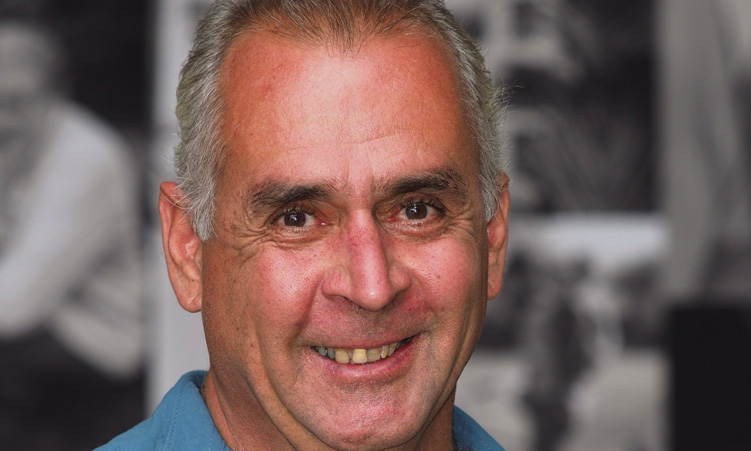
Conrad (Nad) Brain (62) was the first of an impressive succession of Onderstepoort veterinarians who joined the BFRG to do a PhD.
He also was the first to perform implantation surgery under the open sky. He implanted radiotelemetric thermometers in baboons and had to stay within signal range of his study animals.
His supervisors were Mary Seely, then director of the Gobabeb Namib Research Institute, and Duncan Mitchell, and he graduated in 1994.
Brain studied the conservation physiology of a small baboon troop trapped in the lower reaches of the Kuiseb River in the Namib Desert, which often does not flow for a whole year.
He habituated the troop by living with it, in the usually dry riverbed, despite the constant threat of hyenas.
He was assigned a position in the male rankings of the troop, but not in the top three.
He learnt enough about baboon vocal communication to know in advance what the intentions of the troop were.
At a time when primates were thought to require drinking water once a day at least, Brain discovered that his troop could go for more than 100 days without access to it.
He demonstrated that their survival depended on extracting water from alien plants, like the toxic castor oil plant Ricinus that washed down in floods and grew in the riverbed, and on a seasonal fruiting of seven fig trees in their habitat.
He made a crucial contribution to thermal physiology by showing that a few licks at water at a seep could reduce afternoon hyperthermia in the baboons.
He was the first in the world to use the market research technique of thurstone scaling to quantify ranking in a social animal species; the separation between high-ranking females was much greater than that between low-ranking females.
He has been the only BFRG PhD student whose research became the subject of a television film called ‘Baboons Against the Odds’ (1997).
But Brain’s troop was doomed. A lack of water for evaporative cooling required the baboons to rest in the riverbed in the heat of the day, and they chose the same site repeatedly.
It became infected with ticks which encrusted the mouth parts of the infant baboons, and they could not suckle.
More than 20 were born during his research, and only one survived – the progeny of a low-ranking female.
It remains a mystery why the grooming behaviour of baboons does not include removing ticks.
After graduating, Brain joined the Etosha Ecological Institute and became the chief veterinarian of Namibia’s Etosha National Park.
To fulfil his duties in the massive park, he obtained his pilot’s licence, which he later upgraded to a commercial pilot’s licence. I
It was he, as veterinarian (not pilot) who flew from Etosha in a Dakota DC-6 plane, with a load of immobilised lions that became the founder population of lions of the Pilanesberg National Park, South Africa.
After a spell in Etosha, he joined Wilderness Safaris in Namibia in the dual role of conservationist and pilot/guide, flying tourists between remote safari destinations in sub-Saharan Africa.
While with Wilderness Safaris, he worked with researchers from the Leibniz Institute for Zoo and Wildlife Research in Berlin, Germany, on the biology of desert ungulates (hoofed animals) in Namibia.
Later, he helped to establish, and then led, Ecowings Namibia, which “deployed aerial surveillance to combat wildlife crime and bolster ongoing conservation” in Namibia.
Brain was never without a smile or a mischievous practical joke, and always had a story.
He almost never sat down.
He had been married to film-maker Ginger Mauney, who lived with him at the Kuiseb River, and who survives him, as does their son, Kimber.
Brain was the son of the late CK ‘Bob’ Brain, the former director of the Transvaal Museum in Pretoria, which is now the National Museum of Natural History.
He became the loving custodian of the Land Rover that was the subject of the children’s book ‘Leonard the Land Rover’, written by Liz McClain, formerly with the department of physiology, and Brain’s sister, Ginny Brain.
– The Brain Function Research Group is attached to the Witwatersrand University in Johannesburg, South Africa.
In an age of information overload, Sunrise is The Namibian’s morning briefing, delivered at 6h00 from Monday to Friday. It offers a curated rundown of the most important stories from the past 24 hours – occasionally with a light, witty touch. It’s an essential way to stay informed. Subscribe and join our newsletter community.

The Namibian uses AI tools to assist with improved quality, accuracy and efficiency, while maintaining editorial oversight and journalistic integrity.
Stay informed with The Namibian – your source for credible journalism. Get in-depth reporting and opinions for
only N$85 a month. Invest in journalism, invest in democracy –
Subscribe Now!