







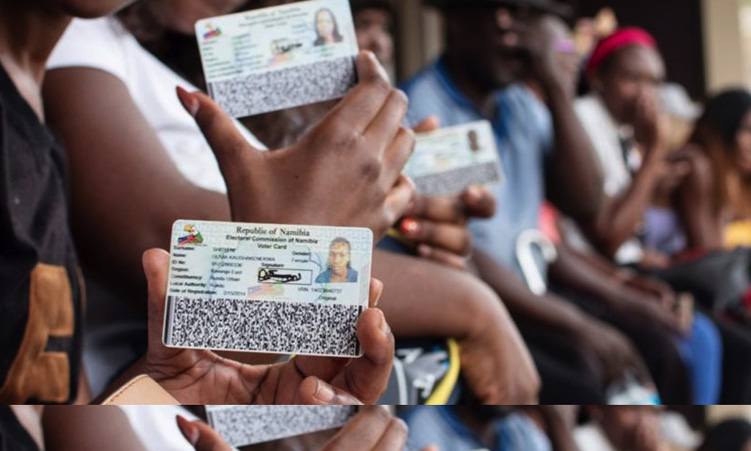
Political parties say the Electoral Commission of Namibia’s just-concluded supplementary registration period for voters was not sufficient to accommodate everyone.
The supplementary registration period started on 4 August and ran until 19 August.
The Electoral Commission of Namibia (ECN) says 19 359 eligible voters registered between 4 and 10 August, covering all 121 constituencies and 59 local authorities of Namibia.
During the first week of the supplementary registration period, 12 270 voters changed their constituency, and 4 181 applied for duplicate voter registration cards.
Landless People’s Movement national youth command leader Duminga Ndala says the registration period was too short and the commission should make it longer next time to accommodate everyone.
She says there is usually a high voter turnout during regional and local authority election registration.
“Given last year’s chaotic registration people have lost confidence in the ECN as an institution. People no longer trust the ECN …
“This is why people are not so keen to register,” she says.
Another issue Ndala points out is service delivery, which many political parties and individuals have promised the people, but failed to deliver.
As a result, she says people have lost trust in political processes, even when land and job creation promises are at the core of political parties.
Ndala says political parties and stakeholders must learn to keep their word to earn public trust and also create more awareness of voter registration.
“As a political party we’ve reached out through awareness campaigns, but we don’t know to what extent it has reached people,” she says.
United Democratic Front spokesperson Mabasen Narib says although registration turnout was better this year, the ECN faced challenges in some areas, indicating it was not prepared for the challenges developing on the ground.
“Uis, for instance, which has now transitioned into a village council … here we saw many challenges, particularly with people who had to change constituencies,” he says.
Narib says the registration period is too short and that the ECN needs to beef up its approach to ensure would-be voters are given enough time to register.
Khomas region ECN electoral officer Judika Fikunawa says voters are required to have lived in a constituency for 12 months to be eligible to vote in that local authority.
Producing a water bill or police declaration is also acceptable to prove this, she says.
“You can only vote within the constituency you reside at, and if the constituency has changed, the supplementary registration was the right time for the public to register and amend those changes accordingly,” she says.