



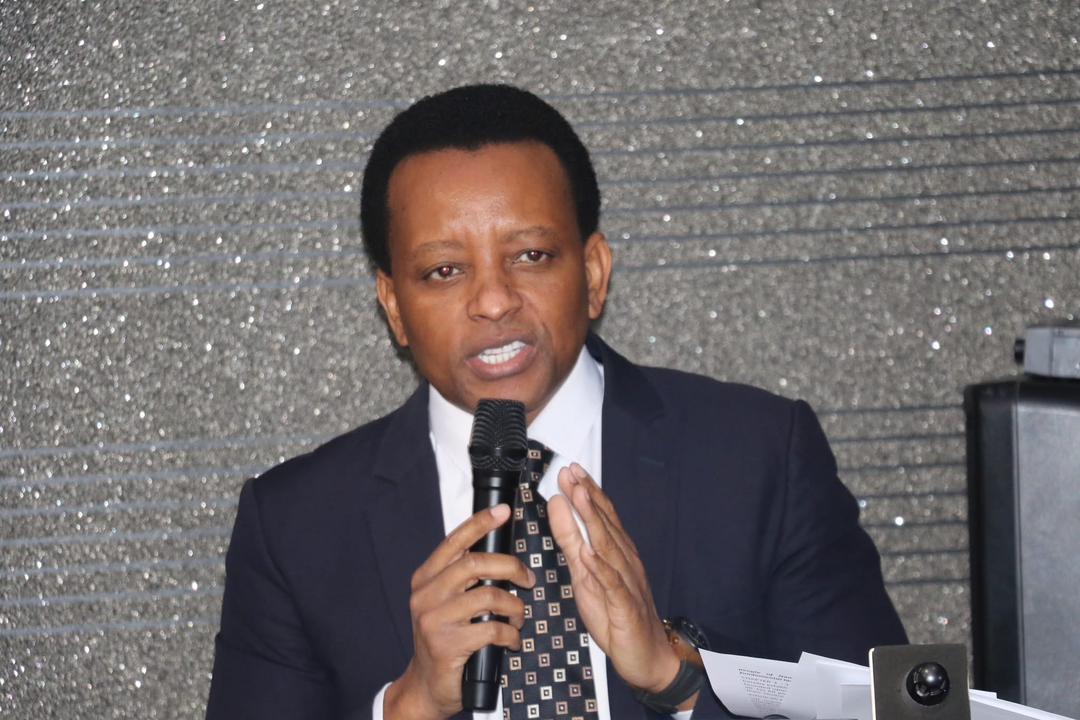
Tobie Aupindi, the chairperson of the parliamentary standing committee on natural resources, at a capacity-building workshop in the Erongo region, July 2025.
Congratulations to Nathalia /Goagoeses on her appointment as the new governor of the Erongo region.
It gives me a distinct honour to deliver these remarks, and I thank all our stakeholders for attending this workshop.
The parliamentary standing committee on natural resources was established in terms of Article 59 of the Constitution of the Republic of Namibia and Rule 37 of the rules for establishing, functioning and procedures of parliamentary standing committees. It was constituted on 22 April 2025, as part of the 8th Parliament, consisting of twenty-four members, deputised by Tuulukki Abraham. The committee is an extension of the National Assembly itself, with full powers and immunity.
The committee has a constitutional mandate to exercise parliamentary supervision and oversight in respect of matters that directly or indirectly affect Namibia’s natural resources, and to consult and liaise with government, state-owned entities, and the private sector on matters pertaining to these resources.
I would sincerely like to extend my appreciation to the members of parliament who are part of this committee and who will participate in these important deliberations from today until Saturday.
These engagements are part of the members’ most sacred responsibility in fulfilling our parliamentary duties. Sometimes it may seem that stakeholder engagements are merely consultations or goodwill exercises between parliament and other state functionaries.
Some institutions, both private and governmental, think they are doing parliamentary committees a voluntary favour by participating. This is not the case. In fact, some institutions avoid appearing before committees, sending staff who lack accountability or executive powers.
I say this to set the tone for the next four and a half years. Our powers as MPs come from the Constitution of the Republic of Namibia, our flagship document adopted 35 years ago.
Chapter 1 – The Republic
Article 1(1): The Republic of Namibia is established as a sovereign, secular, democratic, and unitary state founded upon the principles of democracy, the rule of law and justice for all.
Article 1(2): All power shall vest in the people of Namibia who shall exercise their sovereignty through the democratic institutions of the state.
Article 95 – Promotion of the welfare of the people
Maintenance of ecosystems, essential ecological processes and biological diversity of Namibia, and utilisation of living natural resources on a sustainable basis for the benefit of all Namibians, both present and future. The government shall provide measures against the dumping or recycling of foreign nuclear and toxic waste on Namibian territory.
Article 44 – Legislative power
The legislative power of Namibia shall be vested in the National Assembly, with the power to pass laws with the assent of the president, subject to the powers and functions of the National Council.
Article 45 – Representative nature
Members of the National Assembly shall be representative of all the people and be guided by the objectives of the Constitution, the public interest, and their conscience.
Article 41 – Ministerial accountability
All ministers shall be accountable individually for the administration of their own ministries and collectively for the work of Cabinet, to both the president and parliament.
It is our responsibility to safeguard natural resources and hold those responsible to account. We must be unapologetic and intentional in protecting strategic processes, biodiversity, and long-term national interests as enshrined in the Constitution.
As a committee, we aim to enhance sectoral productivity and efficiency, address challenges, and promote sustainable economic growth. This engagement is timely, as we meet with stakeholders to assess progress in areas such as energy, electricity security, renewable energy, green hydrogen, and other future-facing initiatives. We will also explore developments in oil and gas, environmental management, tourism, agriculture, land, mining, fisheries, and marine resources.
We expect all invited stakeholders—especially accounting officers, executive directors, directors, and chief executives—to attend in person and not delegate responsibility to junior officers.
Article 59 of the Constitution gives the National Assembly power to make rules for its business, including the power to subpoena persons to appear before committees and provide evidence. Officials who systematically avoid invitations will, in future, be compelled to appear.
The natural resources committee will continue to demand people-centred, ethical leadership within the sector—leadership that prioritises the wellbeing of Namibians over profit. Many of our citizens continue to suffer under economic hardship because of greed and inaction.
As former US president Ronald Reagan once said, quoting Carl Sandburg:
“The republic is a dream. Nothing happens unless first a dream.”
He went on:
“All we need to begin with is a dream that we can do better than before. All we need to have is faith, and that dream will come true. All we need to do is act, and the time for action is now.”
We look forward to fruitful engagements.
I thank you.
In an age of information overload, Sunrise is The Namibian’s morning briefing, delivered at 6h00 from Monday to Friday. It offers a curated rundown of the most important stories from the past 24 hours – occasionally with a light, witty touch. It’s an essential way to stay informed. Subscribe and join our newsletter community.

The Namibian uses AI tools to assist with improved quality, accuracy and efficiency, while maintaining editorial oversight and journalistic integrity.
Stay informed with The Namibian – your source for credible journalism. Get in-depth reporting and opinions for
only N$85 a month. Invest in journalism, invest in democracy –
Subscribe Now!