




The petroleum amendment bill has been criticised for creating a power vacuum over parliament, leaving the president unaccountable if passed.
The bill, which is now at a committee stage, is seeking to put the oil and gas sector under the Office of the President, with management by the upstream petroleum unit.
This takes away the powers of the Ministry of Industries, Mines and Energy.
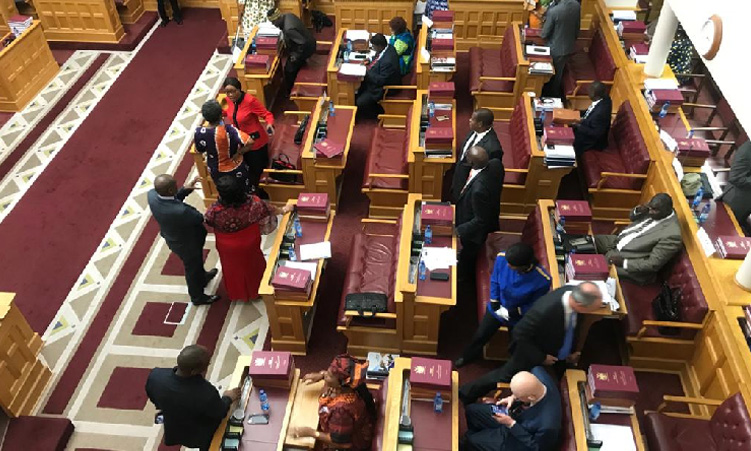
Speaking in the National Assembly on Tuesday, Independent Patriots for Change (IPC) parliamentarian Michael Mulunga said the bill, in its current form, removes the president’s supervisory role, turning her into the sole operator of the entire industry.
“We are trading a system of safe, shared oversight for a system of absolute executive control – where the only thing protecting our billions is the hope that the person at that desk never makes a mistake.
Is this a necessary modernisation to get the oil flowing fast, or a blueprint for elite capture?” Mulunga questioned.
He claimed that this risks turning Namibia into a classic “resource curse victim”, as the bill relies almost entirely on the integrity of individuals instead of the strength of independent institutions.
He said the president delegating powers to a minister who remains accountable to parliament is a classic shell game.
“If the president makes decisions behind the scenes, she cannot answer for it in parliament,” Mulunga said.
He said the minister would be a political liability without operational authority, effectively making him a messenger sent to take the heat in the National Assembly for decisions he did not make.
“In law, if you can be fired without cause by the person you report to, you are not an independent technocrat – you are a political staffer,” he said.
Defending the bill, works and transport minister Veikko Nekundi says the idea of a power vacuum is being misconstrued, arguing that the president’s responsibilities are clearly defined by law, which ensures accountability.
He says the president’s powers differ from those of the director general heading the unit and urged parliamentarians not to confuse the two.
“The Constitution is clear that the president has the power to establish any unit, office, or department,” Nekundi says, adding that the bill is being discussed based on concerns about the upstream petroleum unit.
He says if the sector is not regulated well, it could spiral out of control, confirming that these concerns are being addressed under the Presidency.
The minister says the bill aims to protect the oil commodity from being undermined and to promote local content and participation in compliance with national laws.
However, IPC’s Michael Mwashindange disagrees, saying the unconstitutional bill should be revised to comply with constitutional provisions, clarify non-negotiable fiscal parameters, embed parliamentary oversight of key fiscal decisions, and mandate full transparency of contracts and revenues.
In an age of information overload, Sunrise is The Namibian’s morning briefing, delivered at 6h00 from Monday to Friday. It offers a curated rundown of the most important stories from the past 24 hours – occasionally with a light, witty touch. It’s an essential way to stay informed. Subscribe and join our newsletter community.

The Namibian uses AI tools to assist with improved quality, accuracy and efficiency, while maintaining editorial oversight and journalistic integrity.
Stay informed with The Namibian – your source for credible journalism. Get in-depth reporting and opinions for
only N$85 a month. Invest in journalism, invest in democracy –
Subscribe Now!