



Windhoek motorists are rightly outraged.
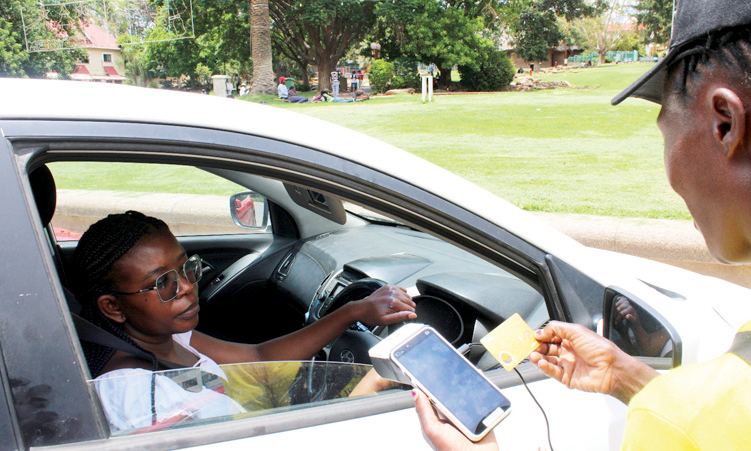
The city’s recent rollout of a cashless parking system, requiring payment via parking or bank cards only, has sparked confusion and widespread frustration.
What was presented as modernisation has instead exposed a deeper problem: When digital systems advance faster than inclusion, ordinary citizens bear the burden.
Motorists were unprepared for a system that excludes cash entirely. Many drivers do not own bank cards, while others struggle to top up proprietary parking cards.
The result has been delays, penalties, and growing public anger. Compounding this is the perception of zero consultation; residents and small businesses feel they were not meaningfully engaged before a system affecting daily mobility was imposed.
Namibia is not alone. Kenya’s experience offers a cautionary tale, where moves to limit cash saw businesses fined for refusing it, sparking debate about financial exclusion. Rapid transitions disproportionately affect informal traders, low-income earners, and the elderly. These lessons matter for Namibia, where cash remains critical for a large segment of the population.
Financial institutions acknowledge that cashless transitions are complex. Analysis from Standard Bank highlights that without deliberate inclusion strategies, digital ecosystems can deepen inequality. Technology must be matched with accessibility and user trust.
In this context, Windhoek’s rollout appears less like innovation and more like an incomplete transition.
The narrow payment design is central to the controversy. There is no integrated support for widely used local digital platforms and no easy mechanisms to convert cash into digital value.
For students, pensioners, and informal workers, this creates immediate exclusion. By contrast, transport services continue to accept hybrid payments, recognising that inclusion requires flexibility.
If municipal authorities were serious about a sustainable ecosystem, they should have incorporated hybrid options from the outset. Accessible kiosks for converting cash to credit should have been established, and meaningful public consultation should have preceded implementation. Digital transformation without stakeholder engagement erodes trust.
This is not opposition to digital payments; it is opposition to exclusion disguised as progress. A system forcing reliance on specific cards ignores the lived realities of many Namibians. Evidence across Africa shows that poorly implemented transitions create backlash.
Windhoek must recalibrate. Public services should be inclusive, transparent, and user-centred.
This means multiple payment pathways and policies shaped through consultation.
Innovation should expand access, not restrict it.
Technology should serve people, not the other way around.
– Timo Neisho
In an age of information overload, Sunrise is The Namibian’s morning briefing, delivered at 6h00 from Monday to Friday. It offers a curated rundown of the most important stories from the past 24 hours – occasionally with a light, witty touch. It’s an essential way to stay informed. Subscribe and join our newsletter community.

The Namibian uses AI tools to assist with improved quality, accuracy and efficiency, while maintaining editorial oversight and journalistic integrity.
Stay informed with The Namibian – your source for credible journalism. Get in-depth reporting and opinions for
only N$85 a month. Invest in journalism, invest in democracy –
Subscribe Now!