


After a successful edition in Germany in May, the Owela Festival descends on Windhoek as a collection of performances, exhibitions, workshops, installations, talks and a city tour built around the theme ‘The Future of Work’.
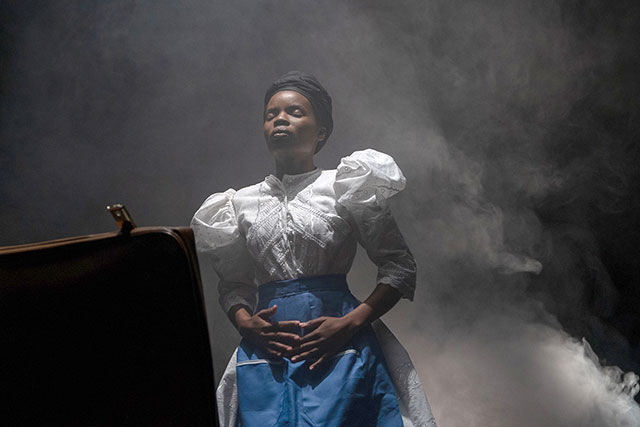
The brainchild of the Kaleni Kollectiv, which comprises German and Namibian artists with shared interest in creating an artistic research space in which they create new, innovative, transgressive, hegemony-defying art, the Owela Festival opened with a multidisciplinary exhibition critically reflecting on cultural labour and the ritualistic ‘Dance of The Rubber Tree’ at the National Art Gallery of Namibia on 4 June.
“’The future of work’ is a global conversation that is happening around what we think labour will look like in the future. While some worry about artificial intelligence taking over jobs previously occupied by people or question the future of labour unions in an increasingly ‘individualistic and self-promoting’ world, this festival aims to look at what the future of work would mean in Namibia and Germany by looking at its painful past of violence and exploitation of labour, to how we think about work, wages and rest today,” says the collective.
“Each artist has developed their own work around the theme and invites the audience to ponder about what the future of work will look like for them.”
Having since featured among much more daily lunch time conversations for critical feedback and reflection, Nelago Shilongoh and Trixie Munyama’s SÂ (Rest), a collaborative performance art showcase considering the history of black Namibian domestic workers; ‘Without Question’, an installation by Hildegard Titus expounding on the intricacies of ‘black servitude’ in post-apartheid Namibia; ‘My Body Space as an Archive’ by Veronique Mensah; För Künkel and Renata Gaspar’s ‘Correspondence on Migrating Sediment’; Julia Wissert’s presentation of short films concerned with the effects of the basic income grant on a small village by Omitara Youth as well as FreeYourMind deaf comedy with Chicken Ndemufayo and Sabino Jao Hermanteiro, the Owela Festival continues this weekend with a series of free and exciting events.
Today’s Drama Therapy workshop by Esmerelda Cloete; Bernard Akoi-Jackson’s (Ghana) ‘Points of Ellipses… (How to Do Stuff With the Stuff We Have’; Likumbi, tonight’s bass heavy psychedelic hip-hop audio visual performance by Nandele Maguni (Mozambique); China Haufiku and Nashilongweshipwe Mushaandja’s ‘Histories of Kapana’ mapping the origin of the Namibian delicacy of urban labour and leisure practices through a city tour and intervention and a talk on ‘How the Contract Labour System Affected the Namibian Woman’s Role in Work and Worker Activism’ are not to be missed.
Tomorrow the public is invited to attend ‘Water’, a performance by Gift Uzera, Muningandu Hoveka, Joanne Sitler, Chantel /Uiras and Oppas Onucheyo in which the element is embodied and its essence captured through music, as well as Akoi-Jackson’s ‘Untitled: REDTAPEONBOTTLENECK – On Dictatorship and Other Extreme Tropes of Authority’, and ‘XU¯N. – (Things)’ a multi-media, multi-sensory performance installation by a range of artists investigating how society deals with trauma, oppression and healing.
A talk on the ‘Basic Income Grant: Then and Now’ and a closing event at the National Theatre of Namibia’s Backstage featuring Damara Dik Ding and DJ Zuma will wind down the festival.
Commenting on the diverse styles, techniques and approaches to be showcased during the festival, Kaleni Kollectiv artist Hildegard Titus expounds on the collective’s ethos.
“We want art to be interdisciplinary. We want art to transcend borders. We want art to transcend traditional spaces of art. We want the public to think of art as a part of life. Not as a separate space that they have to walk into or step into,” she says.
“We want the public to see art as a daily part of life. We want them to understand that they are life and in that we want to create an alternative space by saying everyone is welcome. It is all about disrupting traditional notions of art spaces.”
A five-day festival in which all events are free and welcoming of everyone, the Owela Festival closes tomorrow but will linger in ‘Owela – The Future of Work Volume 1’ , a publication available online curating a series of relevant essays, articles and poems.
“Art needs to be accessible. Performance, theatre, exhibitions, workshops,” says Titus.
“Our doors are open to everyone and anyone, from all backgrounds. Some workshops might be of more interest to some more than others, but even still – everyone is welcome.”
For the full programme providing venues and times of the festival taking place from 4 to 8 June, follow Owela Festival on social media or visit owelafestival.com
– martha@namibian.com.na; Martha Mukaiwa on Twitter and Instagram; marthamukaiwa.com
In an age of information overload, Sunrise is The Namibian’s morning briefing, delivered at 6h00 from Monday to Friday. It offers a curated rundown of the most important stories from the past 24 hours – occasionally with a light, witty touch. It’s an essential way to stay informed. Subscribe and join our newsletter community.

The Namibian uses AI tools to assist with improved quality, accuracy and efficiency, while maintaining editorial oversight and journalistic integrity.
Stay informed with The Namibian – your source for credible journalism. Get in-depth reporting and opinions for
only N$85 a month. Invest in journalism, invest in democracy –
Subscribe Now!