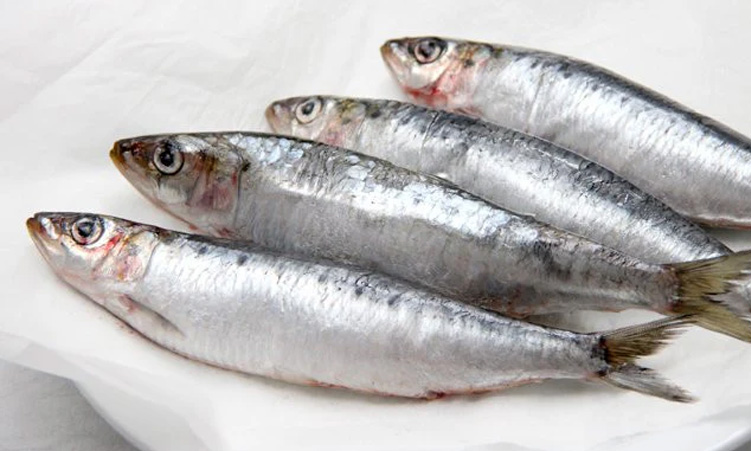
Fishing companies Tunacor and Venmar caught more than 1 000 tonnes of pilchard in the past week, despite a government ban on harvesting this nearly extinct species.
The government imposed a ban on pilchard fishing in 2018, following decades of over-exploitation, poor oversight, and repeated disregard for scientific advice.
Yesterday, fisheries minister Inge Zaamwani-Kamwi warned that the ministry would continue to closely monitor the situation and ensure adherence to current regulations and measures.
Tunacor managing director Peya Hitula this week confirmed that all midwater trawl vessels in the industry are currently catching pilchard as by-catch due to horse mackerel stock moving inside the 200m isobath. This refers to waters shallower than 200m deep.
“The seals seem to be pushing the pilchards outside the 200m isobath. All the fish caught is kept on board and processed as per Ministry of Agriculture, Water, Fisheries and Land Reform regulations, and all levies and fees related thereto are paid to the ministry.
“Once an increase in by-catch is observed, our captains are under strict orders to move the vessel to another fishing area,” he said.
Hitula said when pilchards get into their nets as by-catch, they are not authorised, according to ministry regulations, to throw the fish back into the ocean.
“This activity is also monitored by the observer on board. I am not aware of communication from the inspectorate warning our vessels.
“Yes, pilchard fishing has been under moratorium for a number of years, and over the last three years we have observed an increase in pilchard sightings. This could be an indication that the fishery is on a recovery trajectory,” he said.
Venmar Group owner Alex Kirov this week confirmed that his company has landed 0.5% pilchard by-catch between January and June.
“This is well below expected averages, considering that pilchards and horse mackerel are both pelagic species and are found in the same areas and depths,” he said.
Kirov said by-catches are unavoidable in commercial fisheries, especially in trawling, pelagic trawling and long-lining fisheries where non-targeted species are caught in the process.
“We encourage our captains to try their best to minimise by-catch during their operations, while making use of available technology and know-how,” he said.
According to him, landing pilchard by-catch is not profitable as their selling price is higher than the levies and cost of production and distribution involved.
SOLUTIONS
Johanna Shiweda, the chairperson of the Horse Mackerel Association of Namibia, says the association and its members are actively working with the ministry to reduce by-catch in the subsector and to identify practical solutions.
“Earlier this year, the association and the ministry began planning a workshop on this issue, which will include participation from independent marine scientists,” she says.
An independent survey done by the Norwegian government and commissioned by the fisheries ministry in 2024, has shown a biomass of pilchard estimated at one million tonnes.
This, the survey says, is a lot, compared to what was expected over a long period of stable low stock numbers since the collapse of the stock in the early 1990s.
Zaamwani-Kamwi yesterday told the parliament that the ministry has expressed concerns over increasing pilchard catches.
“Despite our efforts, a notable number of vessels catching persists across various areas, which underscores the complexities of by-catch management,” she said.
The minister said fishing companies deliberately net high volumes of by-catch, which impacts efforts to recover the species.
‘PENALTIES NOT EFFECTIVE’
Zaamwani-Kamwi admitted that the current penalties imposed on companies catching pilchard do not seem to be effective.
“The ministry is therefore actively exploring a range of measures to enhance compliance within our fisheries subsectors,” she said.
These measures include the moratorium, deploying more advanced monitoring and surveillance systems, and revising the current penalty regime, the minister said.
The Namibian wanted to know if the ministry is considering lifting the moratorium, and, given the challenges faced by the two remaining canneries at Walvis Bay, the ministry would allocate research or experimental quotas to support local processing and employment.
CAUTIOUSLY OPTIMISTIC
Fisheries expert Dave Russell says reports of a large return of pilchard stock is exciting news, but must be approached cautiously.
This to avoid past mistakes that led to the collapse of the species.
“We know that pilchards are a short-lived species. That means reproduction happens quickly, and therefore you can get big volumes of fish. So the idea, using a precautionary approach, would be to nurture the stock,” he says.
Russell suggests a gradual, responsible rebuilding of the industry, with close cooperation between stakeholders to protect stock health and ensure sustainable employment.
“Going forward they’ve got to be responsible and work closely between the government and industry, and develop a strategic development framework – both with scientists and the industry – to ensure the health of the stock fitting in with the United Nations’ development goals,” he says.
Adolf Burger, the managing director of Princess Brand Fishing, which operates one of the only two canneries in the country, says the company is ready to employ 450 workers and operate at full capacity should a quota be allocated to it.
“Our facility is fully prepared. The new cannery is in place and can be operational in 45 days, employing 450 workers. We can add shifts and run at optimal capacity, delivering meaningful employment and economic impact for the Walvis Bay community,” he says.
Burger says the government should act based on scientific evidence before lifting the moratorium by introducing a controlled experimental total allowable catch (TAC).
NO COMMUNICATION
Wet-Landed Small Pelagic Association chairperson Johnny Doeseb on Sunday said the association is worried about the increasing unregulated harvesting of pilchard by some companies.
“This week, yet again, we have witnessed the unauthorised landing of sardines by a particular vessel well known to the industry. This is not a new occurrence, it is part of a recurring and dangerous pattern that has been tolerated for far too long.
“These landings continue despite alarming over-catch data presented by the fisheries ministry last year, which showed that this very vessel landed pilchard worth over N$120 million, with no visible action taken,” he said.
Doeseb said the association has communicated this to the ministry and has not received any response.
“The ministry must pronounce itself so it can at least give quotas to the vessels so employment can be created.
“We have already sent the proposal to them. They have it. We are still awaiting their response. The resource is landed on a monthly basis, but nothing is happening,” he said.
The ministry’s 2024 data reveals escalating pilchard bycatch volumes.
Despite a moratorium on pilchards in 2023, a by-catch of 6 504 tonnes was recorded, with 12 610 tonnes in 2024.
“We are deeply concerned that some operators are now deliberately targeting pilchard in response to the declining size and value of horse mackerel, seeking to maximise profits at the expense of national interest and long-term sustainability. This is not only irresponsible, but also threatens to collapse the resource once again before it can be fully restored,” Doeseb said.
Confederation of Namibia Fishing Associations chairperson Matti Amukwa has confirmed that the ministry has not engaged with the associations either.
“We haven’t received any official information in this regard to take a stance. The ministry’s scientist should provide scientific information in this regard so that informed decisions on how to manage the resource can be taken,” he said.
SPECIES ON DEATH ROW
Concerns about the pilchard stock started in the mid-1990s. A news report at the time said the TAC was reduced from 125 000 tonnes in 1994 to 40 000 tonnes in 1995, and reduced again by 20 000 tonnes in 1996.
In 2017, statistics showed that fishing companies were struggling to land 3 000 tonnes per year.
Experts said concern over the possible extinction of pilchard is so deep because no recovery would be achieved if strict measures were not enforced.
In fact, scientists said, a five-year ban on pilchard fishing in Namibia would not be enough to recover the stock, even though it would minimise pressure on the species.
Four years ago, the Namibian Chamber of Environment wrote an article, titled ‘Why the Namibian moratorium on sardine fishing must continue’.
The chamber said it was tempting to bring back the sardine fishing industry, given the dire economic straits Namibia found itself in.
“Yet if the fish stocks have not yet recovered to the point where sustainable harvests are even possible, is this wise? At this point, even small harvests are likely to be unsustainable and possibly seal the fate of sardine fisheries once and for all.
“This would be the final death blow for any kind of industry based on this resource and would further damage the critical marine ecosystem associated with the Benguela Current.”