


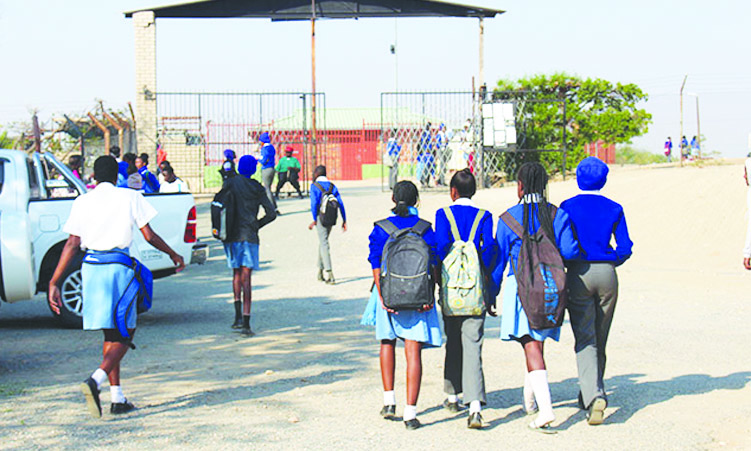
The education ministry is struggling to place over 1 000 pupils in schools nationally due to rapid population growth and a shortage of classrooms.
This follows mounting frustration from parents, particularly in densely populated regions such as Khomas, where children remain at home three weeks into the academic year.
Speaking to Desert Radio yesterday, deputy executive director for schools and formal education Edda Bohn said while national figures are still being finalised, preliminary estimates from regions point to significant shortfalls.
“In Khomas, the figures are in the 300s for Grade 1 and in the 800s for Grade 8. We are hard at work and in consultation with school principals to open more classrooms,” she said.
Bohn said existing classrooms and facilities will be repurposed to expand access and create temporary space for pupils.
“We must also realise that in the week of February, the 15-school day statistics will be collated nationally and based on that, resources will be deployed . . . we can assure the nation that all pupils will receive access to education,” she said.
She said the backlog of classrooms is a recurring challenge.
The situation is especially pressing in the Khomas region, where there is a shortage of space for Grade 8s in high schools.
“We have not been able to keep up with the population growth,” Bohn said.
Khomas education director Paulus Nghikembua yesterday confirmed the region has a number of pupils sitting at home, but could not confirm the number.
“We are trying to at least have everybody in school before Friday, specifically Grade 1s and Grade 8s,” he said.
Ohangwena education director Isak Hamatwi says there are over 500 pupils in his region still waiting for school placement, with circuits like Eenhana, Ondobe, Okongo and Otunganga mostly affected.
Oshikoto regional education director Hilma Nuunyango-George says her region has placed all pupils who previously applied for Grade 1, 8, 10 and Advanced Subsidiary (AS) level.
“Only 104 pupils for pre-primary at Tsumeb could not be placed as the schools in the town are full. However, we have 14 spaces at Ondundu Primary School, but it is a bit far and out of town,” she says.
‘DEFYING RATIOS’
Kavango East regional education director Christine Shilima says her region does not have pupils who are not attending school as they are defying the recommended pupil-teacher ratio.
“We are not adhering to the policy, otherwise the pupils are going to be at home. So, as we speak, we have got quite a number of schools with more pupils in classrooms. The situation is not under control and not conducive,” she says.
Hardap education director Paul Lewin could yesterday not provide statistics.
“My instruction was that no child should be thrown away. Often challenges arise due to the attitude of the administrative staff,” he said.
He said schools should collaborate.
‘STRUGGLING TO SLEEP’
Theresia Kakola from the Ohangwena region says she has been forced to enrol her son at a private school.
“My son struggled to sleep at night and felt that we, as parents, have not done enough to secure a school for him. I have now enrolled him at a private school with high fees, which I struggle to afford to calm his anxiety,” she says.
Community advocate Sem David says turning children away from schools does not just cause temporary inconvenience but can alter the trajectory of a young person’s life, risking them dropping out and becoming vulnerable to unemployment, crime and exploitation.
“This is not an unexpected disaster. Census data, migration trends to Windhoek and surrounding areas, and internal enrollment figures have long shown that Khomas is growing faster than its existing school infrastructure,” he says.
National Organisation of Parents in Education founder Paulus Hawanga says while government policies clearly state that no child should be denied access to education, the reality of parents seeking to register their children is that they are often met with an unfriendly reception at public schools.
This is largely due to demands for so-called voluntary school development contributions, which he says have become compulsory.
“Parents who cannot afford to pay are made to feel powerless and humiliated,” he says.
Hawanga says children are sometimes sent home because parents cannot afford registration fees, uniforms or other school-related costs.
Meanwhile, Namibia Students Union president Jessy Abrahams is urging parents to apply for placement as early as the end of a previous academic year.
Independent Patriots for Change shadow minister of education Bertha Nghifikwa suggests the government renovate existing buildings.
On the issue of schools rejecting pupils from other regions, she says this does not work due to the high number of pupils in the country who need placement, with a certain region able to accommodate only a few.
“The issue here is the staffing norm, which is not implemented correctly in schools. The staffing norm indicates how many pupils should be in a classroom, and it’s supposed to give us how many schools we need per year so that we can accommodate all pupils,” she says.
In an age of information overload, Sunrise is The Namibian’s morning briefing, delivered at 6h00 from Monday to Friday. It offers a curated rundown of the most important stories from the past 24 hours – occasionally with a light, witty touch. It’s an essential way to stay informed. Subscribe and join our newsletter community.

The Namibian uses AI tools to assist with improved quality, accuracy and efficiency, while maintaining editorial oversight and journalistic integrity.
Stay informed with The Namibian – your source for credible journalism. Get in-depth reporting and opinions for
only N$85 a month. Invest in journalism, invest in democracy –
Subscribe Now!