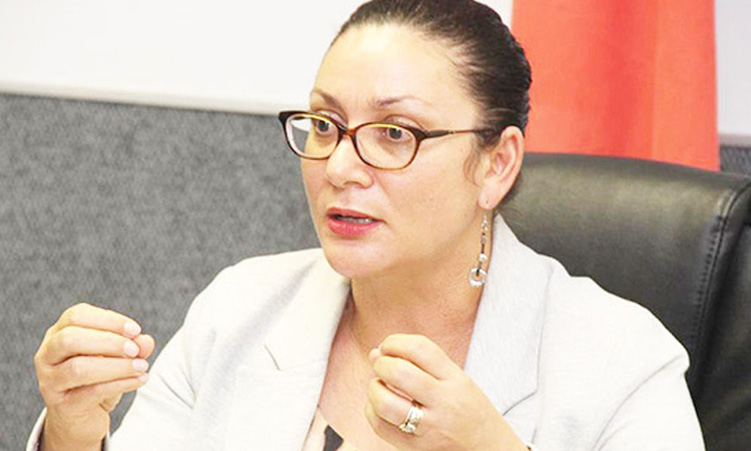
The Office of the Ombudsman has raised concerns over the legality of the Okahandja curfew recently announced by president Netumbo Nandi-Ndaitwah in response to the recent murder cases at the town.
The ombudsman, advocate Basilius Dyakugha, says while the president holds executive powers to address threats to national security, such declarations must be grounded in law and adhere to constitutional provisions, particularly when they restrict fundamental rights such as freedom of movement.
Dyakugha made the remarks during an interview with Desert FM yesterday, following public confusion and concern over whether the president’s announcement amounted to a legally binding curfew or a broader state of emergency.
“When the president speaks, she’s not just an ordinary citizen speaking, she speaks with authority and somehow she also makes executive orders in the same way. That’s why citizens have to be worried as to what the extent of the president’s speech is.
“When it involves the possibility that communities may be required to not move around at certain hours and to restrict certain rights or freedoms, that’s a little bit of a concern, because it needs to be clarified in the law. Executive powers can affect the general population’s human rights,” Dyakugha said.
The president’s declaration came about a week and a half ago during a visit to Okahandja, where she addressed community fears following the murders of three young girls: Roswinds Fabianu (6), Ingrid Maasdorp (5) and Beyoncé !Kharuxas (15).
Nandi-Ndaitwah announced that tighter security would be enforced and hinted at movement restrictions widely interpreted as a curfew.
However, Dyakugha said no state of emergency was declared, nor was a legal proclamation issued to justify such a curfew, which raises concerns about the executive overstepping constitutional limits.
“You cannot just suspend those rights without a legal basis, freedom of movement is protected under Chapter 3 of the Constitution and a proclamation is required if the president wants to restrict such freedoms,” he said.
The ombudsman said while the intent to curb violence and restore peace at Okahandja is commendable, it must not compromise the country’s democratic principles.
He cautioned against invoking executive power without parliamentary oversight.
“In Okahandja’s case, the level of threat does not appear to justify a curfew. The police have the strategies and training to handle the situation.
What was needed first was a comprehensive plan from the inspector general, not a sweeping executive order,” Dyakugha said.
He added that while citizens’ safety must be a top priority, it must not come at the expense of constitutional rights, as it is about balance.
He added that the state has the responsibility to protect the population, but not through arbitrary restrictions.
Community activist Sethy Gariseb says the implementation of a curfew at the town is essential, not only for the safety of residents but also for catching culprits on the run.
“As an activist and community leader, I believe the curfew is absolutely necessary. Earlier this year, in January, we tried several times to request meetings with the police to raise our concerns. Only one meeting was held.”
Gariseb adds: “There have been incidents where people were warned to stay away from the river water, which is very unsafe. Lives have been lost. We only have one police station at Okahandja. That’s not enough.”
He also raises concerns about ongoing issues at a nearby area, Ogandia, where he claims lives have been lost and critical evidence has yet to be recovered.
“We are still mourning. We don’t want so many movements right now. First, we need to find closure, we still haven’t found the suspects,” he says.
In an age of information overload, Sunrise is The Namibian’s morning briefing, delivered at 6h00 from Monday to Friday. It offers a curated rundown of the most important stories from the past 24 hours – occasionally with a light, witty touch. It’s an essential way to stay informed. Subscribe and join our newsletter community.

The Namibian uses AI tools to assist with improved quality, accuracy and efficiency, while maintaining editorial oversight and journalistic integrity.
Stay informed with The Namibian – your source for credible journalism. Get in-depth reporting and opinions for
only N$85 a month. Invest in journalism, invest in democracy –
Subscribe Now!