



Oil prices continued to rise on Thursday despite major countries agreeing to release a record amount of oil from their emergency reserves as they try to curb the impact of the Iran war.
Brent crude rose by over 9% in Asian trading to top US$100 (US$74.79) (N$1 229) a barrel even after all 32 members of the International Energy Agency (IEA) said they will release 400 million barrels of oil in response to supply concerns.
On Wednesday, Iran warned that oil could reach US$200 (N$3 287) a barrel as its attacks on ships intensify in the Strait of Hormuz, a key waterway for energy shipments.
An Islamic Revolutionary Guard Corps (IRGC) spokesperson says any vessel linked to the United States, Israel or their allies will be targeted.
“You will not be able to artificially lower the price of oil. Expect oil at US$200 per barrel,” they add.
“The price of oil depends on regional security, and you are the main source of insecurity in the region.”
The narrow shipping route is crucial to the global economy as about a fifth of the world’s energy supplies usually passes through it.
IEA members represent around two thirds of global energy production and consumption.
The release of reserves is more than double the previous IEA record, which came after Russia’s invasion of Ukraine in 2022.
The IEA’s decision is “historically significant” but is only a “temporary buffer”, says Martin Ma from the Singapore Institute of Technology.
Oil prices will stay high as long as there is a risk to supplies and latest jump suggests that traders are still expecting a “prolonged” disruption, he adds.
Global oil markets have been extremely volatile since the US and Israel launched airstrikes against Iran on 28 February, with Brent crude reaching almost US$120 (N$1 982) a barrel earlier this week.
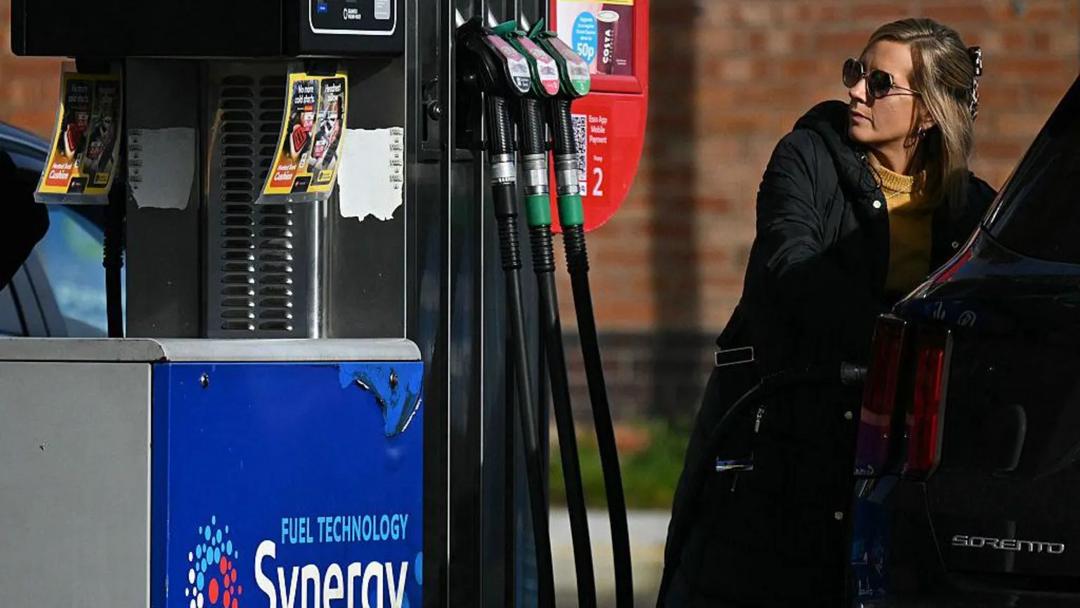
That has pushed up fuel prices around world.
In the US, the average price of petrol rose above US$3.50 (N$57.52) a gallon on Tuesday, according to the American Automobile Association.
Many countries in Asia, which are heavily reliant on energy from the Middle East, have been hit particularly hard.
Long queues were seen at petrol stations in the Philippines, Thailand and Vietnam this week as people raced to fill up with fuel.
Thai authorities have called for staff at most government agencies to work from home to conserve energy. Officials are also being discouraged from non-essential overseas travel.
The Philippines has also started a four-day work week for its government to help cut down on energy use.
– BBC
In an age of information overload, Sunrise is The Namibian’s morning briefing, delivered at 6h00 from Monday to Friday. It offers a curated rundown of the most important stories from the past 24 hours – occasionally with a light, witty touch. It’s an essential way to stay informed. Subscribe and join our newsletter community.

The Namibian uses AI tools to assist with improved quality, accuracy and efficiency, while maintaining editorial oversight and journalistic integrity.
Stay informed with The Namibian – your source for credible journalism. Get in-depth reporting and opinions for
only N$85 a month. Invest in journalism, invest in democracy –
Subscribe Now!