



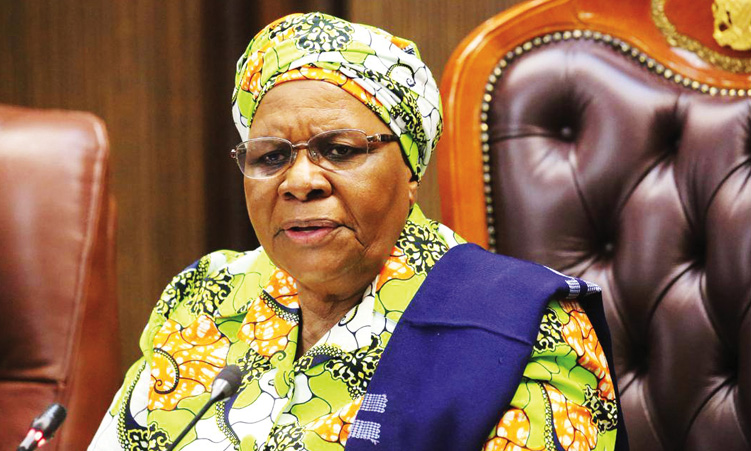
President Netumbo Nandi-Ndaitwah has proposed a shift of the up-stream oil portfolio to the Presidency, and is trying to pass an amendment to the Petroleum Act to do so.
Under the new act, the granting of licences will be under the power of the president and not the relevant minister.
Given that last year she removed the minister over corruption allegations and other issues, a desire to control licensing and downstream processing of the product that will be Namibia’s future in the next decade is quite understandable.
The problem simply is that the proposed legislation provides no protection to the Namibian public against potential future corruption.
President Nandi-Ndaitwah has something president Trump would very much like: complete immunity under the Constitution.
What most Namibians do not understand is that president Nandi-Ndaitwah is above the law.
Under the terms of section 31 of the Namibian Constitution the president can shoot someone in the middle of the street and not be charged. But they can be removed by parliament.
It is important to note that the minister who was previously in charge of the oil and gas sector was not above the law and has no immunity from prosecution.
President Nandi-Ndaitwah has, from what is publicly known, done a reasonably good job in appearing to bring corruption under control in the country.
Two ministers have been removed and the Anti-Corruption Commission is doing its job on petty corruption.
Alas, Nandi-Ndaitwah is 73 years old and will not live forever but the law she is passing now will outlive her and there can be no assurance that whoever follows her will care about corruption or even the future of the country.
Indeed, the current revision of the Petroleum Act will not need to be revised by any potentially corrupt successor; it would be perfect for taking bribes.
After the Fishrot saga, the stench of corruption, correctly or otherwise, pervades almost every government financial and commercial decision. This proposed act seems not to have learned from the Fishrot affair.
The president has centralised decision-making without the appropriate transparency provisions or oversight by parliament.
She has required under section 3b(2) of the amendment to the Petroleum Act that the director general of oil and others must make a declaration of assets and liabilities, which is just like that required of all members of parliament as was the case with former minister of justice Sacky Shanghala and minister of fisheries Bernhardt Esau.
Neither declared any fisheries interests to parliament in the period before the Fishrot affair broke in 2019.
The Namibian Constitution also grants the president immunity from liability in civil cases.
Significantly, the new Petroleum Act will extend the civil immunity from the president to all those who are appointed by the president to administer the oil and gas sector as long as they act in ‘good faith’.
When the powers were with the minister no-one was immune from prosecution.
If this is bad law drafted in a hurry, then what would be good law that would protect the Namibian people from the criminals who will almost certainly try to abuse the nation’s oil and gas resources?
Given that it is almost impossible to find where the looted and misappropriated funds are hidden, as there are 60 tax havens and secrecy jurisdictions, the idea that the likes of ‘The Fishrot Gang’ and their equivalents in the oil industry would voluntarily tell the president what assets they have hidden in Dubai or elsewhere is simply foolishness.
Moreover, had it not been for Jóhannes Stefánsson as the whistleblower and Al Jazeera highlighting the corruption allegations, the case would never have been brought to light.
First, if the legislation is to be brought into the domain of good practice, all decisions on allocation must be subject to parliamentary oversight as Panduleni Itula has already suggested.
It is also vital that the beneficial ownership of oil companies be public and that oil companies publish all their transactions through tax havens and secrecy jurisdictions.
Whereas this would be the best way for president Nandi-Ndaitwah to assure transparency, the problem is that according to the 2022 Financial Secrecy Index, the United States (US) is the most secret of jurisdictions and has four states which are tax havens, such as Delaware, where 60% of the Fortune 500 companies are registered.
The US is followed by Switzerland, Singapore, Hong Kong and Luxembourg in terms of secrecy.
These are among the most powerful and richest countries in the world, and so international transparency requirements are unlikely to be viewed with favour, given the current US administration, along with transnationals which would be affected.
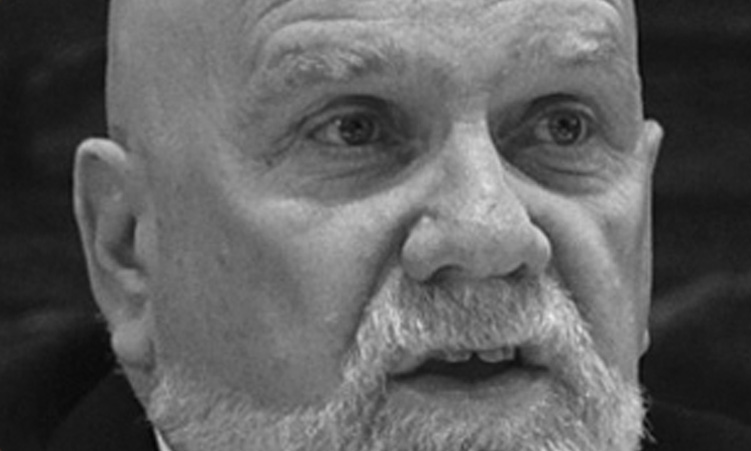
– These are the views of professor Roman Grynberg and not Griffith University where he is an adjunct professor.
In an age of information overload, Sunrise is The Namibian’s morning briefing, delivered at 6h00 from Monday to Friday. It offers a curated rundown of the most important stories from the past 24 hours – occasionally with a light, witty touch. It’s an essential way to stay informed. Subscribe and join our newsletter community.

The Namibian uses AI tools to assist with improved quality, accuracy and efficiency, while maintaining editorial oversight and journalistic integrity.
Stay informed with The Namibian – your source for credible journalism. Get in-depth reporting and opinions for
only N$85 a month. Invest in journalism, invest in democracy –
Subscribe Now!