



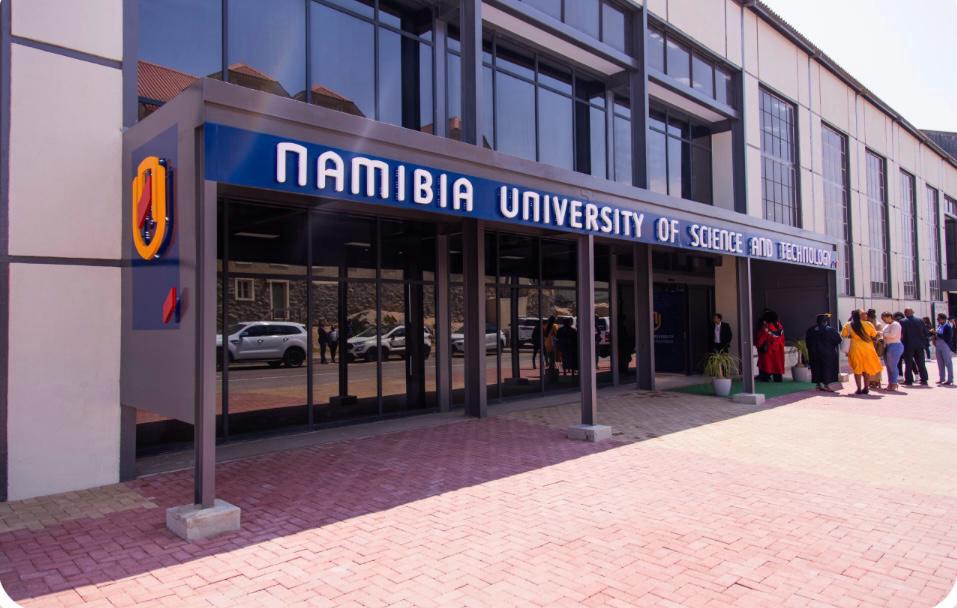
The Namibia University of Science and Technology (Nust) has recorded a sharp rise in student registrations under Namibia’s new subsidised tertiary education model, with more than 16 000 students registered for 2026 overall as of last Friday.
Nust has now reached full capacity for first-year students across all campuses.
Spokesperson Cindy van Wyk has confirmed that the registration period has closed, while late registrations close on Friday.
“Registration is progressing well under the subsidised tertiary education model,” Van Wyk says, noting close collaboration with the education ministry and the Namibia Students Financial Assistance Fund (NSFAF) to expand access while maintaining academic standards and institutional stability.
“Unfortunately, we have reached our capacity for first-year students, so we have no additional space in this category,” she says.
However, registration remains open for second-year and returning students.
Some postgraduate programmes are also still open. The university introduced 11 new programmes this year.
Although final figures are yet to be confirmed, Van Wyk says registrations have increased by at least 31% compared to last year, attributing the surge to the subsidised education model.
“We can say with confidence that the model has supported broader participation in higher education, particularly for students who were previously excluded due to financial barriers,” she says.
Students who did not secure placement in their preferred degree programmes are encouraged to consider bridging courses.
Space for these programmes is available at regional centres, including at Eenhana and Lüderitz.
The significant intake has raised questions about infrastructure and capacity.
Van Wyk says Nust has prepared extensively for the funding shift, expanding online and blended learning, strengthening digital platforms, and investing in teaching and learning infrastructure.
Late registration closes on 13 February, and lectures have already begun.
“This period is critical,” she says, urging students to finalise registration promptly to avoid academic disruption.
Van Wyk also highlights ongoing concerns around legacy student debt, warning that the sustainability of the subsidised model depends on compliance.
“The tertiary funding model can only work if students who owe NSFAF or the institution settle outstanding balances or enter into payment agreements,” she says.
DEBT REPRIEVE
To assist affected students, Nust’s office of the bursar has introduced a debt reprieve initiative. Students owing N$20 000 or less may register without upfront payment. Those owing between N$20 000 and N$50 000 must pay N$10 000 and enter into a payment plan.
Students owing more than N$50 000 must first reduce their balance below that threshold before paying N$10 000 and signing an agreement. Orphans and marginalised students may seek special assistance.
Despite the challenges, Van Wyk describes the new funding framework as significant relief for families.
In an age of information overload, Sunrise is The Namibian’s morning briefing, delivered at 6h00 from Monday to Friday. It offers a curated rundown of the most important stories from the past 24 hours – occasionally with a light, witty touch. It’s an essential way to stay informed. Subscribe and join our newsletter community.

The Namibian uses AI tools to assist with improved quality, accuracy and efficiency, while maintaining editorial oversight and journalistic integrity.
Stay informed with The Namibian – your source for credible journalism. Get in-depth reporting and opinions for
only N$85 a month. Invest in journalism, invest in democracy –
Subscribe Now!