



Put poignantly, Sam ‘Shafiishuna’ Nujoma is the greatest martyr of both our heroic struggle for independence and, in a post-conflict Namibia, our struggle for economic emancipation.
He was deeply consumed by the highest notions of a society free of injustice, discrimination and all obnoxious practices reminiscent of those who ravaged our country before constitutional democracy arrived on 21 March 1990.
Until his death, Nujoma remained the lodestar for a nation free of foreign threat or domination and a people focused on an industrialised country in the not too distant future.
He built infrastructure and established institutions to pave the way for this vision.
Nujoma’s bullish bravery was seen in his readiness to bear the harshest consequences, standing up and fighting – through Swapo’s military wing, the People’s Liberation Army of Namibia (Plan) – against a heavily armed and brutal apartheid regime.
This bore fruit when we proclaimed, in adopting the Namibian Constitution, that we are committed to a sovereign and democratic country in which justice, liberty, equality and fraternity would be secured for all citizens.
MEETING THE MOMENT
Nujoma’s revolutionary desire to dismantle the legacy of apartheid and its injustices, which still evoke emotive and painful memories, propelled him to convince a once-divided and hate-filled nation to accept his well-considered policy of national reconciliation.
He believed national reconciliation needed to be our minimum normative value and was a necessary stimulus for peace in a country still shaking off the shackles of more than a century of colonial subjugation.
His razor-sharp tact and political skills were able to disarm the remnants of the apartheid military force and Koevoet which, at independence, were grudgingly hesitant to accept the spectacular fall of apartheid and the end of state-sponsored acts of thuggery against the people of Namibia.
IN WITH THE NEW
As president for 15 years, Nujoma, with fatherly care and seamless love for his nation, drove an aggressive socio-economic transformation agenda aimed at reconstructing our society, including bringing about a fair and equitable redistribution of power and resources along egalitarian lines.
He recognised the key to transforming our state was the eradication of all systems of material disadvantage based on race, gender, class and other inequalities.
In the face of serious pushbacks from some sectors of society, he tenaciously forced through broad black socio-economic affirmative action and targeted women’s empowerment.
Memorably, he oversaw the dropping of the common law concept of marital power of husbands over their wives.
He monumentally succeeded in conceptualising and adopting policies and laws aimed at achieving gender equality.
Nujoma also drove structural and legislative reform aimed at developing fair opportunities to allow people, particularly formerly disadvantaged black Namibians and people with disabilities, to realise their full human potential.
He was a devoted champion of state-funded training in key educational areas such as science, mining, commerce and agriculture.
Positive spin-offs in these areas as a direct result of his intervention are epoch-making.
AGENT OF CHANGE
Nujoma will be remembered for generations as a social economic transformation agent par excellence in our country and sub-Saharan Africa.
A legendary statesman, he dedicated his life to banishing backwardness and underdevelopment.
At the same time, he promoted and protected constitutional imperatives and values such as human dignity, equality for all and a fair work environment for workers.
Remarkably, under Nujoma’s leadership, children’s rights – including those of children born out of wedlock – were recognised through value-laden constitutional legislation.
Well-crafted and life-changing, these policies were aimed at stabilising the social and legal status of children.
To know just how revolutionary this was, we must consider that at independence, a child born out of wedlock suffered raw discrimination: They were prohibited from inheriting from their biological father based on the maxim of an old Roman-Dutch law proclaimed by Emperor Justinian, who died in 565 AD.
It ordained that “those who are born of a union which is entirely odious to us, and, therefore, prohibited, shall not be called natural children and no indulgence whatever shall be extended to them.
“But this fact shall be punishment for the fathers, that they know that children who are the issue of their sinful passion will inherit nothing”.
ONWARD EVER
Nujoma’s dream of a nation free from poverty and underdevelopment will not dissipate with his death.
His vision must motivate us to attain real socio-economic change.
Lamentably, the epicentre of economic dominance is still vested in monopoly capital.
Tribal politics, abject poverty and crime remain markers of socio-economic inequalities. The income disparity has become starker.
Henceforth, ours is to recall and deploy Nujoma’s spirit of bravery to continue transforming our country into a prosperous nation, the dream Nujoma sacrificed his life for.
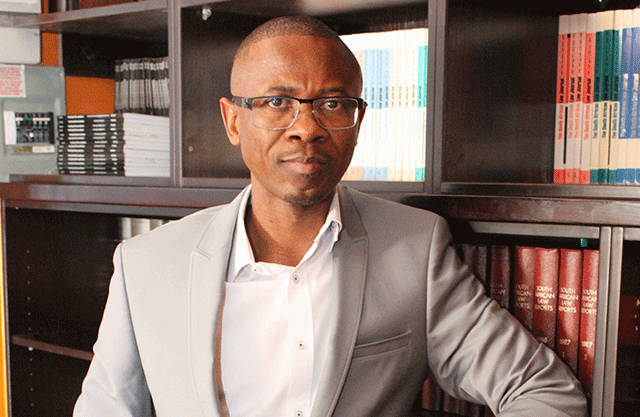
- Sisa Namandje is a legal practitioner of both the High Court and Supreme Court of Namibia. He has authored six law books.
In an age of information overload, Sunrise is The Namibian’s morning briefing, delivered at 6h00 from Monday to Friday. It offers a curated rundown of the most important stories from the past 24 hours – occasionally with a light, witty touch. It’s an essential way to stay informed. Subscribe and join our newsletter community.

The Namibian uses AI tools to assist with improved quality, accuracy and efficiency, while maintaining editorial oversight and journalistic integrity.
Stay informed with The Namibian – your source for credible journalism. Get in-depth reporting and opinions for
only N$85 a month. Invest in journalism, invest in democracy –
Subscribe Now!