Only high school graduates with 26 points and an Advanced Subsidiary (AS) level (Grade 12) qualification will be allowed to pursue a degree through the government’s subsidised funding model.
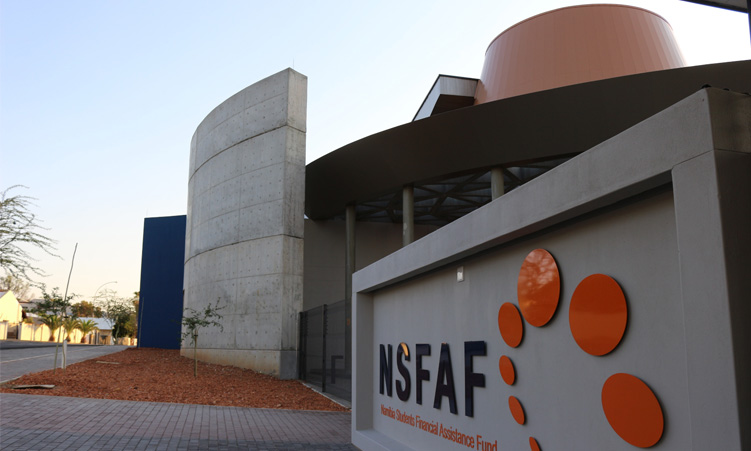
The Namibia Students Financial Assistance Fund (NSFAF) announced this on Friday.
This is in sharp contrast with the previous method which allowed Namibia Senior Secondary Certificate Ordinary Level (NSSCO) Grade 11 pupils to pursue a degree at university.
The University of Namibia (Unam), however, previously insisted that it would not enrol Grade 11 pupils.
The NSFAF says all level 7 degree programmes will now require 26 points and a Grade 12 certificate with no less than two D symbols and a C symbol or better for English in Grade 11.
A professional level 8 degree requires 32 points and a Grade 12 certificate with no less than two D symbols.
Professional level 8 science, technology, engineering and mathematics (Stem) and non-Stem bachelor’s degrees require a minimum of 32 points, with priority AS subjects for Stem degrees.
Alternative pathways are also accepted, including the completion of technical and vocational education and training (TVET) or National Qualifications Framework (NQF) level 3 or 5 qualifications.
The Students’ Union of Namibia (SUN) and the Association for Localised Interest (Asoli) say the new minimum requirements for level 7 and professional level 8 degrees are too high and would exclude many pupils from university.
“These new requirements are a step backwards for equitable access to higher education,” SUN president Shikesho Natangwe says. The union says it wants clarity from the Ministry of Education, Innovation, Youth, Sport, Arts and Culture on whether the standards will apply in 2026, and they want the requirements suspended until proper consultation with students.
“We are calling for formal engagement with student leadership before any policy is implemented,” Natangwe says.
Education minister Sanet Steenkamp on Sunday said: “You may wish to note that we have approved the minimum requirements for higher institutions.”
She called for further engagement with universities to better understand the grading framework.
According to the Namibia University of Science and Technology’s online prospectus, entry to a level 7 degree previously required 25 points in five subjects, with an E or better for English.
The new standards are removing this direct Grade 11 pathway and are raising the required points.
The union says the proposed 10% cap on alternative admission routes is unfair.
“Capping alternative admission routes at 10% is a blatant barrier that punishes capable pupils from disadvantaged backgrounds and cements inequality in higher education,” Natangwe says.
The union says there is no evidence or research to justify the new point thresholds or limits to alternative admission routes.
“Alternative admission routes are essential to prevent permanent exclusion,” Natangwe says.
The union says the policy will reduce access to tertiary education, exclude capable disadvantaged pupils, inflate higher education costs, and possibly disqualify many institutions due to unrealistic requirements.
“Students from rural and under-resourced schools are being systematically shut out of higher education and denied the opportunities they rightfully deserve,” the SUN president says.
Asoli president Josef Kauandenge says the policy will mainly benefit children from wealthy families, while those who need financial assistance most would be excluded.
“This policy shuts the door on the very pupils who need it most and hands opportunity only to the privileged,” he says.
Kauandenge says the rollout shows no proper planning or research, calling it “political grandstanding”.
In an age of information overload, Sunrise is The Namibian’s morning briefing, delivered at 6h00 from Monday to Friday. It offers a curated rundown of the most important stories from the past 24 hours – occasionally with a light, witty touch. It’s an essential way to stay informed. Subscribe and join our newsletter community.

The Namibian uses AI tools to assist with improved quality, accuracy and efficiency, while maintaining editorial oversight and journalistic integrity.
Stay informed with The Namibian – your source for credible journalism. Get in-depth reporting and opinions for
only N$85 a month. Invest in journalism, invest in democracy –
Subscribe Now!