



THE number of fake academic qualifications presented to the Namibia Qualifications Authority has continued to rise, with approximately 300 cases of this nature being filed with the police since 2015.
The latest revelation comes after another fake degree qualification was uncovered in January this year.
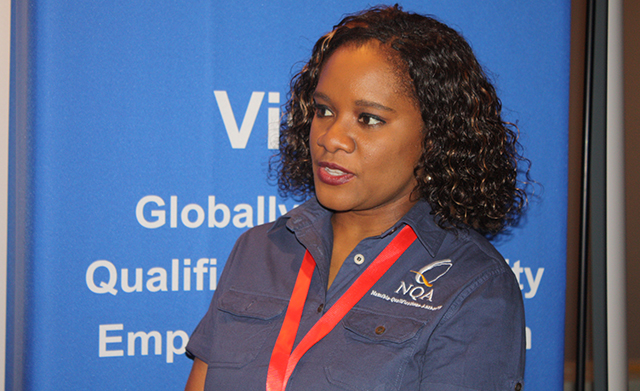
Namibia Qualifications Authority (NQA) spokesperson Catherine Shipushu yesterday said Emmanuel Saah Nyorkor (26) submitted a forged degree qualification for evaluation by the NQA, and they quickly detected that the document was forged.
Nyorkor was arrested by police at the NQA head office in Windhoek, and appeared in the Windhoek Magistrate’s Court on charges of fraud, forgery and uttering.
A police investigator, who declined to be named, saying he is not at liberty to speak to the media, yesterday told that Nyorkor, a Liberian national, was sentenced to 18 months in prison, or a fine of N$10 000 last month.
He paid the fine.
Nyorkor’s sentence follows the case of 23 young Namibians who were also arrested by the police a year ago for allegedly possessing fake qualifications obtained from bogus institutions in Zimbabwe.
These young men and women had allegedly used the fake qualifications to gain admission to several Namibian institutions of higher learning over the past few years.
The investigating officer furthermore said a case of forgery and uttering was also opened against another 139 people who had attempted to submit forged qualifications from 2014 to the NQA. The 139 individuals appeared in the Windhoek Magistrate’s Court last month, and their case was postponed to sometime later this year.
The qualifications authority said equally worrying was the mushrooming of fly-by-night educational institutions in Namibia.
Shipushu said although the NQA does not have a record of the number of bogus institutions in the country, they were aware that such institutions existed.
“We can only advise prospective students to be vigilant of such institutions, and that they should seek advice from the NQA to verify the accreditation of any institution they wish to enrol with,” she stated.
Currently, the NQA does not have the power to shut down institutions that are not accredited.
Shipushu said the amendment of the NQA Act of 1996, that would enable the authority to shut down bogus educational institutions in Namibia, was still at the ministerial level. The Ministry of Higher Education, Training and Innovation was finalising the legislation process.
The current NQA Act 29 of 1996 does not make it mandatory for institutions to get accredited before operating.
NQA chief executive officer Franz Gertze yesterday told the media in Windhoek that the qualifications’ body was working with the police to crack down on qualifications fraud, stating that the practice was lowering the country’s standards and cheating the education system.
“We cannot allow nurses with fake qualifications to go out into the job market,” he stressed.
There is also a new popular trend developing, where culprits have started forging documents supposedly evaluated by the NQA.
Last year, a total of 8 835 qualifications were evaluated. Of those whose evaluations were completed, 1 141 belonged to foreigners, while 7 694 were for Namibians.
Gertze revealed that there are currently 43 accredited institutions of higher learning in Namibia. He said the fact that there are so many institutions being accredited by the NQA was a demonstration that Namibians, including prospective employers, are starting to demand quality educational qualifications.
The qualifications’ body has so far invested N$5 million on its evaluation system since last year.