At 07h00 in the morning on the banks of a water stream on the shore of Onkani village in the Omusati region, a noise brings everything to a standstill.
The road users driving past bring their vehicles to a complete halt to buy fish.
Almost a 100 people, the majority of them women, wade into the oshanas, some shoulder-deep in the water.
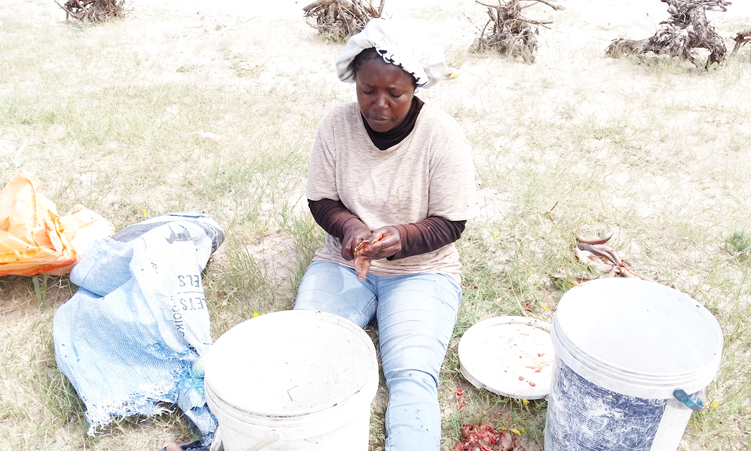
They are harvesting a slimy, thumb-sized fish known as catfish. The fish is collected here, and sold to the locals as relish or for reselling purposes.
The fish is highly sought after, with many travelling long distances to purchase it.
It takes one person about an hour, and several trips into the risky waters, for a potential payoff of about N$30, depending on the size.
Annalisa Shilongo is one of the women on the hunt.
“I wake up every day before the sun rises to fish and earn a living. On a good day, I make about N$300 in profit and on some days, I go back home with little to no sales. The little that I earn from the sales is what I use to support my family and send my children with bread to school.
“The flood waters have swept away our crops, but, on the other hand, we are grateful for the floods because we are able to earn a living from it,” she says.
Shilongo, a single mother of two, says her extended family depends on her as the sole breadwinner.
“I live with my elderly mother and I have to shoulder all the household responsibilities. I had to look for ways to offer the little support I could and support my family,” she says.
She adds that the need to look after her relatives is what drove her into fishing for catfish.
Kosiana Shiimi is another fisherman grateful for the flood water, citing that the water has brought them opportunities to make money.
“Now is the time to make money. I come here as early as possible to collect enough fish to sell and to take home. At the moment, we are no longer relying on the relish from the shops because we are consuming the fish that we collect from the water streams. The business is doing well and we are grateful,” he says.
Shiimi, who is currently unemployed, plans to use what the floods have accorded him to earn an income.
“I am unemployed at the moment, so I use most of my time to collect fish and sell it to the road users. I sell fresh fish and sometimes I dry them up and sell to those who prefer dry fish. Some people buy in bulk because they store it to consume at a later stage and others like the fresh fish,” he says.
In an age of information overload, Sunrise is The Namibian’s morning briefing, delivered at 6h00 from Monday to Friday. It offers a curated rundown of the most important stories from the past 24 hours – occasionally with a light, witty touch. It’s an essential way to stay informed. Subscribe and join our newsletter community.

The Namibian uses AI tools to assist with improved quality, accuracy and efficiency, while maintaining editorial oversight and journalistic integrity.
Stay informed with The Namibian – your source for credible journalism. Get in-depth reporting and opinions for
only N$85 a month. Invest in journalism, invest in democracy –
Subscribe Now!