




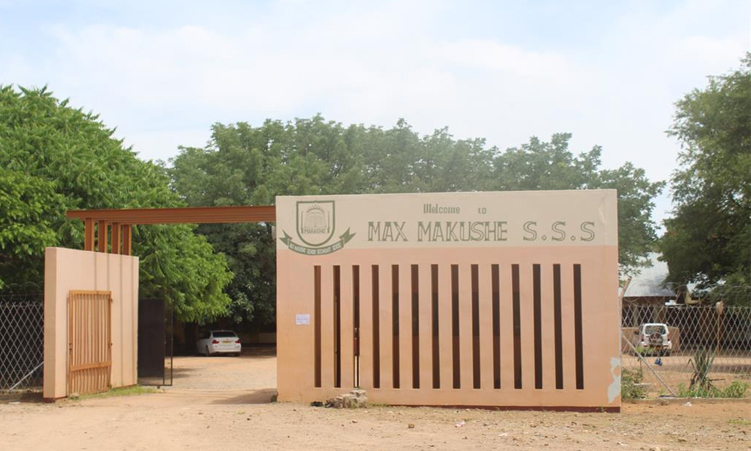
At least two school hostels at Mukwe in the Kavango East region had to close following a power outage.
Circuit inspector Theofillus Kadhimo has confirmed that the powerline from the Shadipwera substation that feeds Ndiyona Combined School and Max Makushe Senior Secondary School and surrounding areas has been down since Friday.
“The food that was delivered on Friday has gone bad, and we can’t have the pupils back at school. We were hoping the power would be restored by Saturday, but due to the Northern Regional Electricity Distributor (Nored) strike, there is no power at these schools,” he says.
The situation has affected over 2 000 pupils from remote villages.
Max Makushe Senior Secondary School hosts more than 1 200 pupils, while Ndiyona Combined School accommodates 709 pupils and 23 teachers – all of whom depend on hostel services during the school term.
Another affected school is Augustinus Mashika Senior Secondary School, which accommodates 370 pupils and 11 teachers.
Regional education director Christine Shilima yesterday confirmed that hostel facilities cannot operate without electricity, because the water systems rely on electrically powered pumps.
She said the school closures affect boarding facilities, but not classroom teaching.
“Teaching and learning will continue. Electricity is not a condition for lessons to take place, because classes are conducted during the day,” she said.
She explained that most schools in the region obtain water from community boreholes, many of which are solar-powered and therefore unaffected by the outage.
Assessments are still underway at Divundu Combined School and Martin Ndumba Combined School to determine whether similar disruptions have occurred.
“In the Rundu circuit no report was forwarded to me. Meanwhile, in the Rundu Rural constituency, electricity supply was restored on Sunday, allowing pupils there to return to their hostels,” Shilima said.
She admitted to communication challenges in remote parts of the Ndiyona constituency, where poor radio reception may delay messages reaching some parents.
“School board chairpersons are informing parents not to send pupils back until power is restored, but we know some areas have limited signal,” she said.
Shilima said pupils who may reach the hostel will be accommodated before a final decision will be taken on Monday if power is not restored.
HEALTH AND SAFETY RISK
Daniel Hausiku, a parent, says the lack of electricity not only disrupts schooling, but also threatens pupils’ health, safety and living conditions.
“Pupils will not have proper meals that need to be cooked. They may spend the whole day eating the same food, like bread or juice, which is not good for their health,” he said yesterday.
Hausiku said hostel environments without lighting make the children feel unsafe, especially at night.
“There are no lights, and anything can happen. Someone may take advantage of the darkness to enter the hostel and threaten pupils. They are not safe in that situation,” he said.
Hausiku said the outage also affects teachers’ ability to prepare lessons effectively, as many rely on electronic materials and printing.
He warned that parents may face additional financial pressure if pupils are repeatedly sent home due to the disruption.
LATEST OFFER REFUSED
Nored employees were continuing their strike yesterday after unsuccessful negotiations with the company on Friday.
Mineworkers’ Union of Namibia (MUN) regional organiser Reginald Kock yesterday said the company has refused employees’ latest offer.
“We communicated to them late last night that we are dropping our demand from 6% to our 5.8%. The offer is on the table until 12h00 today [Sunday],” he said.
The company had, however, not responded to the newest offer by 12h00 yesterday.
The distributor’s employees are demanding a 6% pay increase for the 2025/26 financial year, as well as the payment of a 14th cheque for the 2024/25 financial year.
Nored on Friday agreed to the 14th cheque and offered a 3.5% pay increase. The employees have, however, rejected the 3.5% increase.
The company has twice been in court in an attempt to rule the strike illegal on the basis that Nored employees are considered essential workers.
The High Court last Monday dismissed an urgent application from Nored to block the strike, and the workers subsequently announced that they would start their strike on Thursday.
The mineworkers’ union has repeatedly dismissed the company’s claims that all Nored employees, including administrative and general staff, are considered essential.
“We appreciate the fact that some of our employees are essential – the technical staff. They are not participating in the strike,” Kock said.
He said striking workers on Friday agreed to help unload equipment from South Africa for use by technical staff.
The equipment included poles used for electricity lines that needed to be replaced due to heavy rains.
“There is an impact on the community that we appreciate, but the technical staff is in place to mitigate any serious threats,” Kock said.
The Namibian on Friday reported that Nored customers were unable to buy electricity tokens. Nored said it expected the industrial action to have an effect on its service provision.
Workers are currently striking at the Rundu, Katima Mulilo, Opuwo, Ongwediva, Ondangwa, Ohangwena, Eenhana, Okongo, Nkurenkuru, Kongola, Outapi, and Okahao centres.
The Namibian has contacted Nored acting chief executive Meriam Kondjeni, who referred the matter to spokesperson Simon Lukas, who could yesterday not be reached.
In an age of information overload, Sunrise is The Namibian’s morning briefing, delivered at 6h00 from Monday to Friday. It offers a curated rundown of the most important stories from the past 24 hours – occasionally with a light, witty touch. It’s an essential way to stay informed. Subscribe and join our newsletter community.

The Namibian uses AI tools to assist with improved quality, accuracy and efficiency, while maintaining editorial oversight and journalistic integrity.
Stay informed with The Namibian – your source for credible journalism. Get in-depth reporting and opinions for
only N$85 a month. Invest in journalism, invest in democracy –
Subscribe Now!